How to remove excrement stains from carpet fast
Removing excrement stains from carpet, known in professional cleaning as faecal contamination removal, requires immediate solid waste removal, a safe cleaning solution, and proper odour neutralisation to fully restore hygiene. Speed matters more than anything else here. The longer waste sits in carpet fibres, the deeper it penetrates and the harder it becomes to treat. This guide covers every step you need, from the tools to gather before you start, through the cleaning process itself, to the ongoing care that keeps your carpet fresh and hygienic long after the accident.
What do you need to remove excrement stains from carpet?
Gathering the right supplies before you start prevents you from making a bad situation worse mid-clean. Reaching for the wrong product in a panic is one of the most common reasons stains become permanent.
Personal protection and waste handling:
- Disposable gloves (nitrile or rubber)
- Paper towels or old cloths you can discard
- Sealable plastic bags for waste disposal
- A plastic scraper or old spatula
Cleaning agents:
- Non-bleach liquid dish soap
- White vinegar
- Cool water
- Baking soda
- An enzyme-based cleaner (available at pet supply stores)
Utility tools:
- A spray bottle
- Clean white cloths or microfibre towels
- A wet/dry vacuum (optional but useful)
Always patch test any cleaner on a hidden section of carpet before applying it to the stain. This step is non-negotiable for wool-blend or high-end carpets, where even mild solutions can cause discolouration.
| Cleaning agent | Purpose | Notes |
|---|---|---|
| Dish soap and white vinegar mix | Breaks down residue and lifts stain | Use cool water only |
| Enzyme cleaner | Destroys organic odour molecules | Needs 10–60 minutes dwell time |
| Baking soda | Neutralises lingering odour | Leave for approximately 1 hour |
| White vinegar (undiluted) | Deodorises and disinfects | Dilute for delicate fibres |
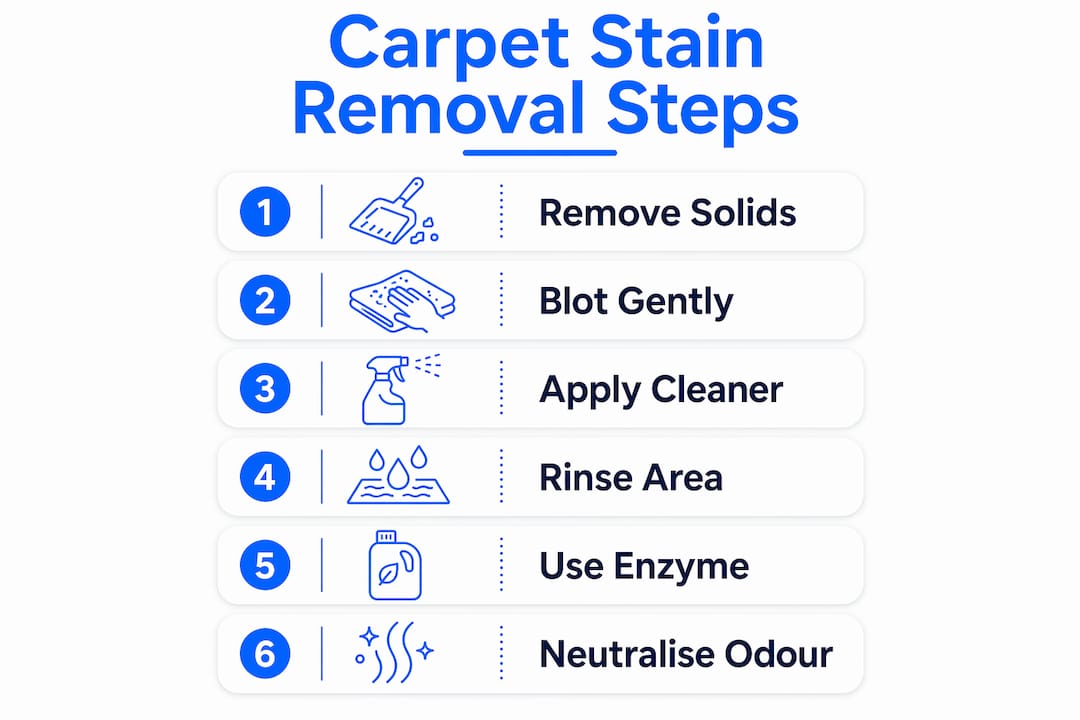
How to remove excrement stains from carpet step by step
This is the process professional cleaners follow. Work through each step in order and resist the urge to rush.
Step 1: Remove solids immediately
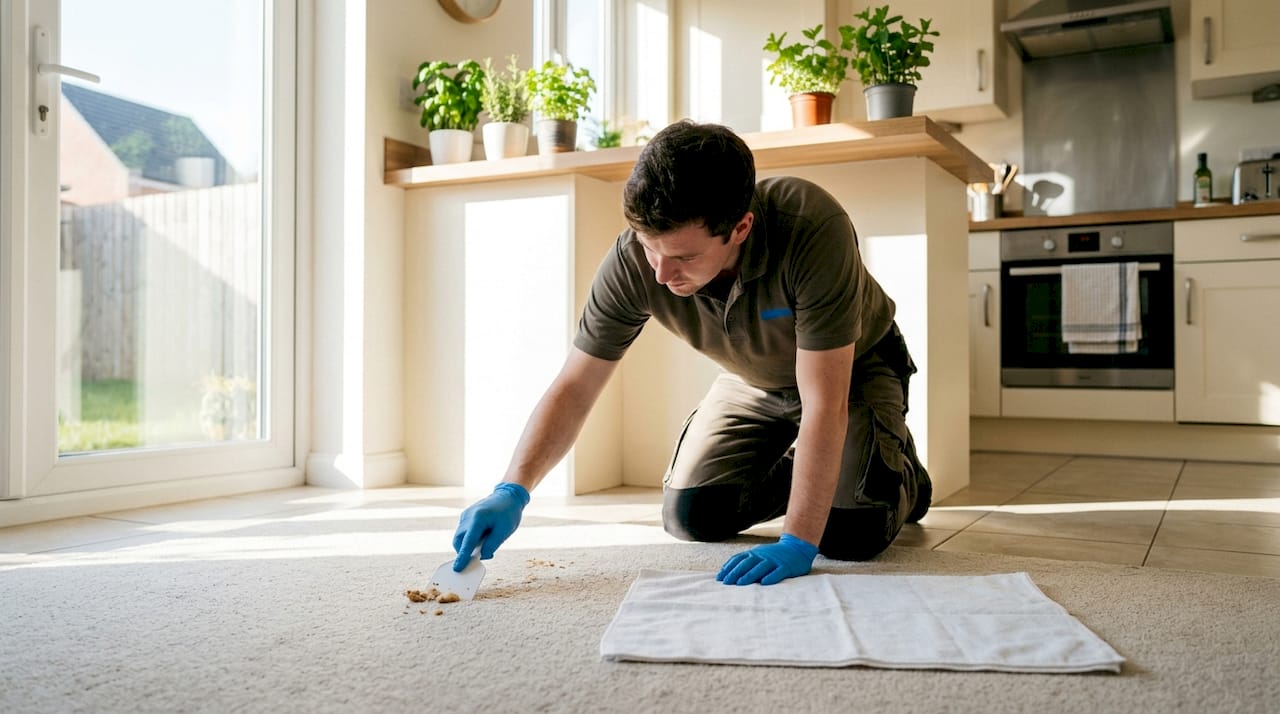
Use a plastic scraper to lift solid waste from the carpet. Work from the outer edge of the mess inward to avoid spreading it. Immediate solid removal achieves over 98% effectiveness when completed within the first hour. That figure drops sharply once waste dries into the fibres. Bag and seal all waste and used paper towels straight away to contain contamination.
Step 2: Blot, never rub
Once solids are removed, blot the area with a clean white cloth. Rubbing drives particulates deeper into the pile, causing permanent staining and locking in odour. Press firmly, lift, and repeat with a fresh section of cloth each time. Continue until no more residue transfers to the cloth.
Step 3: Apply the cleaning solution
Mix 2 cups of cool water, 1 tablespoon of non-bleach liquid dish soap, and 1 tablespoon of white vinegar. This standard cleaning mixture treats residue without damaging carpet colour or fibres. Spray or pour a small amount onto the stained area. Let it sit for 3–5 minutes, then blot from the outside in using a clean cloth.
Step 4: Rinse with cool water
Spray cool water over the treated area to rinse out the cleaning solution. Blot dry with a fresh cloth. Residual detergent attracts dirt and causes re-soiling, so thorough rinsing is not optional. Repeat the rinse and blot cycle until the cloth comes away clean and soap-free.
Pro Tip: Never use hot water on faecal stains. Heat sets protein-based stains permanently into carpet fibres, making them nearly impossible to remove.
Step 5: Apply an enzyme cleaner
Enzyme-based cleaners are the gold standard for organic stains because they break down the organic compounds that cause persistent odour, rather than simply masking them. Spray the enzyme cleaner generously over the affected area. Allow it to dwell for 10–60 minutes depending on how stubborn the odour is. Blot away the excess and allow the area to air dry.
Step 6: Neutralise odour with baking soda
Once the area is mostly dry, sprinkle a generous layer of baking soda over it. Leave the baking soda for approximately 1 hour to absorb any remaining odour. Vacuum thoroughly to remove all powder residue. This step is especially useful after treating dog faeces stains, where odour can linger even after the visible stain is gone.
Handling dried stains
Dried faeces stains need rehydration before you can treat them. Spray cool water over the dried area and let it sit for 5–10 minutes to soften the residue. Then follow the same process from Step 2. Dried stains take longer to lift, so you may need to repeat the enzyme cleaner step twice. For pet stain and odour removal from deeply set stains, a second application of enzyme cleaner with a longer dwell time is the most reliable approach.
What mistakes make excrement stains worse?
Most DIY cleaning failures come down to a handful of predictable errors. Knowing what not to do is just as useful as knowing the right technique.
- Rubbing or scrubbing the stain. This pushes waste deeper into the pile and distorts carpet fibres, leading to permanent visible damage.
- Using hot water. Heat sets protein-based stains irreversibly. Always use cool or cold water.
- Using bleach-based products. Bleach damages carpet colour and weakens fibres, particularly in wool or nylon blends.
- Skipping the rinse step. Detergent left in the carpet attracts dirt and causes the area to re-soil faster than the surrounding carpet.
- Not allowing enzyme cleaners enough dwell time. Wiping them up too early means the organic compounds are not fully broken down.
Faecal contamination does not just sit on the surface of carpet fibres. In cases of liquid or semi-liquid waste, it can penetrate through to the carpet backing and underlay. If odour returns after a thorough clean, the padding beneath the carpet may be contaminated. At that point, professional extraction equipment is the only reliable solution.
When odour persists despite repeated cleaning, the problem is almost always in the underlay. DIY methods cannot reach that depth. A professional carpet odour removal service uses truck-mounted extraction equipment that draws contamination out from the backing and underlay, not just the surface pile.
How do you maintain carpet hygiene after cleaning?
Cleaning the stain is only half the job. Proper aftercare prevents odour from returning and keeps your carpet in good condition.
Dry the area thoroughly. Open windows and use a fan to speed up drying after any wet cleaning. Damp carpet left in a closed room will develop mould and mildew within 24–48 hours. A wet/dry vacuum speeds up the process significantly.
Vacuum regularly. Weekly vacuuming removes organic debris before it has a chance to build up. For pet owners, vacuuming every two to three days in high-traffic areas reduces the load of organic material that can harbour bacteria and odour.
Pro Tip: For homes with dogs or young children, keep a pre-mixed spray bottle of enzyme cleaner ready at all times. Treating accidents within minutes, rather than hours, is the single biggest factor in successful stain removal.
Use a specialised odour neutraliser rather than a masking spray. Products that simply cover odour with fragrance do not address the underlying organic compounds. Enzyme-based odour neutralisers, available at pet supply retailers, are the only category that permanently eliminates faecal odour rather than concealing it. For ongoing pet odour management on rugs, a monthly enzyme treatment applied to high-risk areas keeps odour under control between professional cleans.
For pet owners dealing with repeat accidents in the same spot, consider placing a washable mat over that area. Dogs and cats often return to spots where they can still detect their own scent, even after cleaning. Blocking access or covering the area breaks the habit cycle.
Key takeaways
Removing excrement stains from carpet requires immediate action, cold water, enzyme cleaners, and thorough drying to prevent permanent damage and odour.
| Point | Details |
|---|---|
| Act within the first hour | Solid removal within 60 minutes achieves the highest success rate for stain elimination. |
| Blot, never rub | Rubbing embeds waste deeper and distorts fibres, causing permanent damage. |
| Use enzyme cleaners | Enzyme cleaners break down organic odour at the molecular level, not just the surface. |
| Rinse out all detergent | Detergent residue left in carpet attracts dirt and causes rapid re-soiling. |
| Dry completely | Damp carpet develops mould within 24–48 hours if not dried with airflow or a fan. |
What I have learned from years of carpet cleaning
The most common mistake I see is aggression. People panic when they see a mess and start scrubbing hard, convinced that more effort means better results. The opposite is true. Carpet fibres are delicate, and scrubbing tears them apart while pushing waste further in. Patience and a light touch get better results every time.
The second thing I have learned is that most people underestimate enzyme cleaners. They apply them, wait two minutes, and blot them up. That is not enough time. For stubborn dog faeces stains or any accident that has been sitting for more than an hour, the enzyme cleaner needs to stay on the carpet for a full 30–60 minutes. Cover the area with a damp cloth to stop it drying out during that time. That single change in technique makes a dramatic difference to the outcome.
The third thing worth saying plainly: if you have cleaned the same spot three times and the odour keeps coming back, the problem is in the underlay. No DIY method reaches that layer effectively. Calling a professional at that point is not admitting defeat. It is the practical choice that saves your carpet and your time. For professional pet stain treatment, the difference between a surface clean and a deep extraction clean is the difference between a stain that returns and one that does not.
— Roney
When professional carpet cleaning makes sense
DIY cleaning handles most fresh faecal stains well. But some situations call for professional intervention, and recognising that early saves your carpet.

Com provides professional carpet steam cleaning across Melbourne, including Caroline Springs and Gisborne, using truck-mounted equipment that reaches contamination in the carpet backing and underlay. Steam cleaning at the correct temperature sanitises fibres without setting protein stains, and the extraction process removes residue that blotting cannot reach. If you have a repeat accident area, a deeply set dried stain, or persistent odour after multiple DIY attempts, a professional clean from Com’s Melbourne team restores the carpet fully and removes the odour at its source.
FAQ
How quickly should I clean a faeces stain from carpet?
Act within the first hour. Immediate removal achieves over 98% effectiveness, and the success rate drops significantly once waste dries into the fibres.
Can I use bleach to remove poop stains from carpet?
No. Bleach damages carpet colour and weakens fibres. Use a mixture of dish soap, white vinegar, and cool water instead, followed by an enzyme cleaner.
Why does the smell keep coming back after I clean the carpet?
Persistent odour after cleaning usually means the contamination has reached the carpet underlay. DIY methods cannot extract waste from that depth. Professional steam cleaning with extraction equipment is the reliable fix.
How long should I leave enzyme cleaner on the carpet?
Enzyme cleaners need 10–60 minutes of dwell time to break down organic compounds fully. For stubborn odours, allow the full 60 minutes and keep the area damp so the cleaner does not dry out prematurely.
Is the process different for dog poop versus other faecal stains?
The core process is the same. Dog faeces often contain more bacteria and a stronger odour, so enzyme cleaners are especially important. Allow a longer dwell time and consider a second application for heavily soiled areas.
