How to remove rust stains from carpet safely
Rust stain removal from carpet is defined as the process of using acidic solutions to chemically dissolve iron oxide deposits bonded to carpet fibres. Standard cleaning products fail because rust is not surface dirt. It is a chemical compound that binds directly to fibres, and only an acid can break that bond. Knowing how to remove rust stains from carpet correctly means choosing the right treatment, applying it safely, and neutralising the area afterwards to protect your carpet long-term.
Why rust stains on carpets are so hard to remove
Rust forms when iron meets moisture and oxygen. The resulting iron oxide bonds chemically with carpet fibres rather than sitting on top of them. That is why water alone, or a general-purpose spray cleaner, will not shift it. Rust is often mistakenly perceived as surface dirt, which explains why so many homeowners try scrubbing with warm water and end up making the stain worse.
Common sources of rust stains in homes include:
- Metal furniture legs sitting on damp carpet
- Leaking pipes or water damage beneath flooring
- Metal plant pots, tool boxes, or gym weights left on carpet
- Wet umbrella stands or metal décor items
The longer rust sits, the deeper it penetrates the fibre structure. Acting quickly gives you the best chance of full removal. A fresh stain responds well to mild household acids. An older, set stain may need a commercial rust remover formulated with oxalic acid or chelating agents to break the bond effectively.
Different carpet fibres also respond differently to treatment. Nylon and polyester tolerate mild acids reasonably well. Wool and olefin are more sensitive and can be damaged by strong acid concentrations. Knowing your carpet type before you start is not optional. It directly affects which method is safe to use.
What tools and materials do you need?
Gathering the right materials before you start prevents mid-treatment mistakes. The table below lists everything you need for safe carpet rust stain removal at home.
| Item | Purpose |
|---|---|
| White vinegar or lemon juice | Mild acid to dissolve fresh rust deposits |
| Commercial rust remover (oxalic or chelating acid) | Stronger treatment for aged or deep stains |
| Table salt | Combined with lemon juice to form a paste |
| Baking soda | Neutralises acid residue after treatment |
| Soft white cloths or blotting towels | Absorb lifted rust without spreading it |
| Blunt knife or spoon | Gently scrape dry rust flakes before treatment |
| Spotting brush (soft bristles) | Light agitation without fibre damage |
| Rubber gloves | Protect hands from acid contact |
| pH testing strips | Confirm neutralisation after rinsing |
| Cold water in a spray bottle | Rinse without over-wetting the carpet |
Avoid using coloured cloths. Dye transfer onto a wet carpet is a real risk, and white cloths let you see exactly how much rust you are lifting with each blot.
Pro Tip: Always patch test your chosen acid solution on a hidden section of carpet, such as inside a wardrobe or under a piece of furniture, before applying it to the stain. Different carpet dyes react differently to acid, and a patch test takes two minutes but can save your carpet.
How to remove rust stains from carpet: step-by-step methods
Step 1: Remove dry rust flakes first
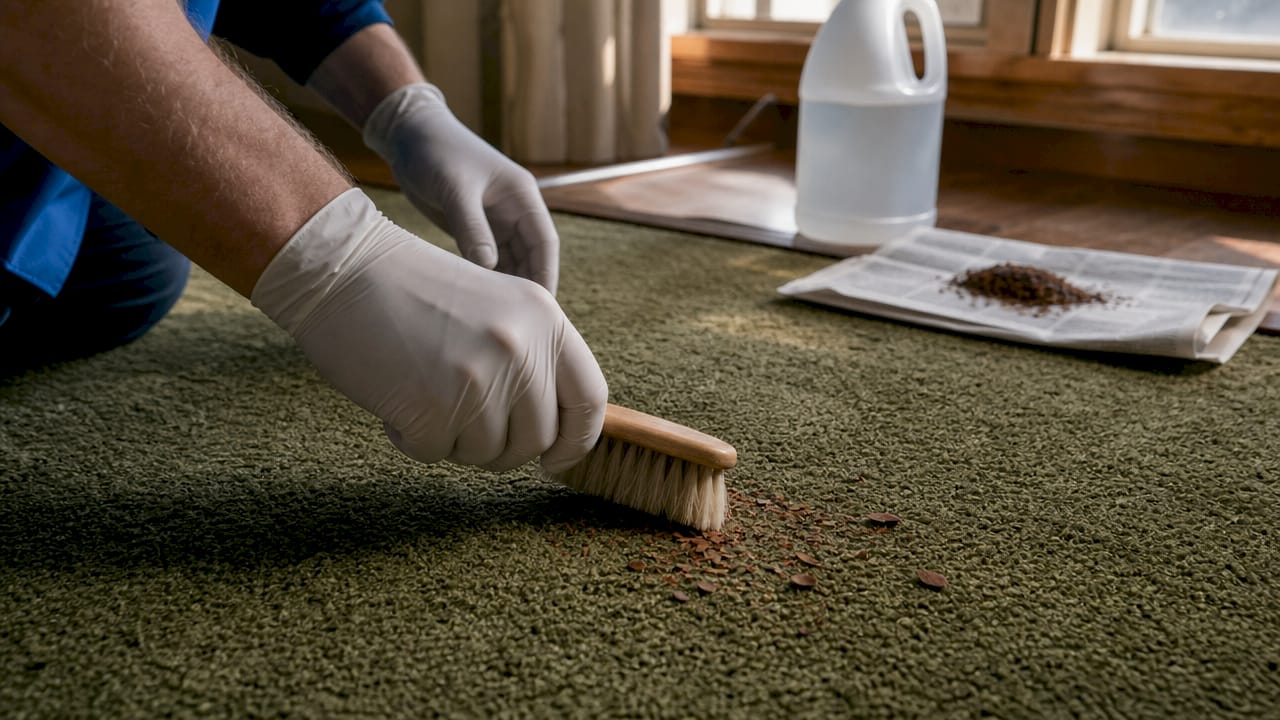
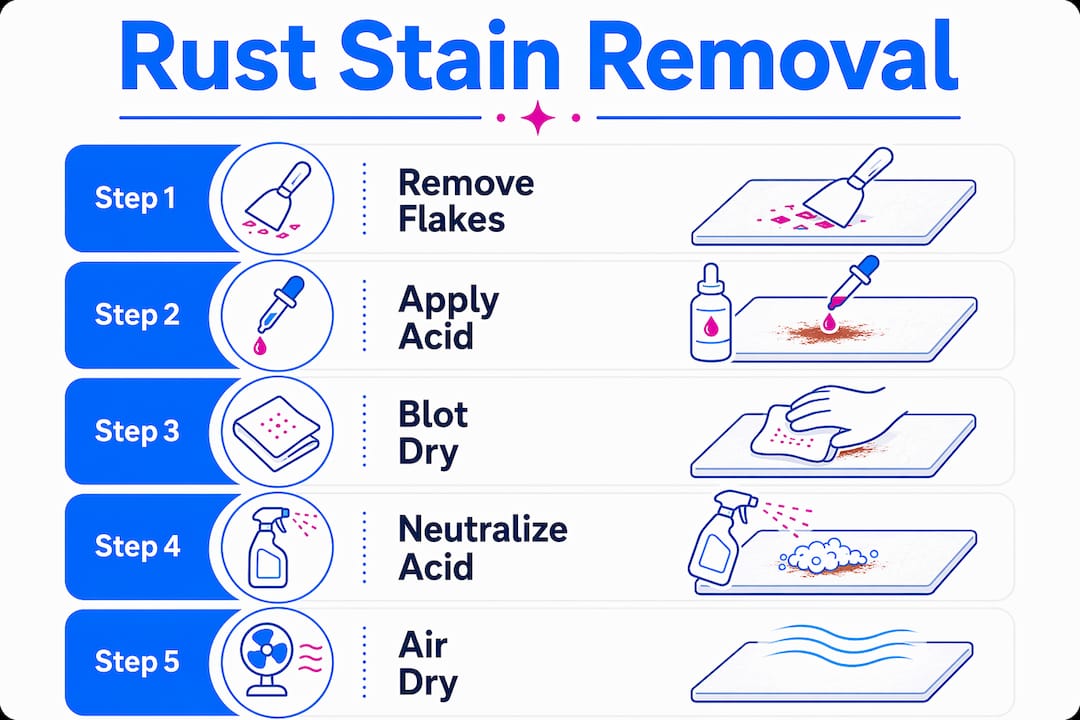
Use a blunt knife or spoon to gently lift any dry, crusty rust from the carpet surface. Work carefully and avoid pressing the particles deeper into the pile. Vacuum the loosened flakes before applying any liquid treatment. Skipping this step means you are pushing rust further into the fibre when you apply your cleaning solution.
Method 1: White vinegar
- Pour undiluted white vinegar directly onto the stain. Use enough to saturate the affected fibres without soaking the carpet backing.
- Allow it to dwell for five minutes. The acid needs time to react with the iron oxide.
- Blot firmly with a clean white cloth. Work from the outer edge of the stain toward the centre. Blotting from edges inward prevents spreading rust to clean fibres.
- Repeat the application and blotting until the stain lifts. Most fresh stains respond within two or three rounds.
- Rinse with cold water and blot dry.
Method 2: Lemon juice and salt paste
- Squeeze fresh lemon juice onto the stain and sprinkle a generous layer of table salt over the top.
- Work the paste gently into the fibres with your fingers or a soft brush.
- Leave the paste to sit for 10–15 minutes in direct sunlight if possible. UV light accelerates the bleaching action of lemon juice on iron oxide.
- Blot the paste away with a damp white cloth, again working inward from the edges.
- Rinse thoroughly with cold water.
This method works well on light to moderate stains and is particularly gentle on wool carpets.
Method 3: Commercial acid rust remover
Fibre-safe commercial rust removers contain oxalic acid or chelating acids and are pH-controlled for textile safety. They are the professional standard for deep or aged stains.
- Read the product label carefully. Wear gloves and ventilate the room.
- Apply the product as directed, typically by spraying or dabbing onto the stain.
- Allow the recommended dwell time, usually 3–10 minutes depending on the product.
- Blot firmly with a white cloth, working from the outside in.
- Rinse the area thoroughly with cold water.
Never use these products on wool without confirming they are wool-safe on the label.
Method 4: Baking soda follow-up
After any acid treatment, apply a light layer of baking soda to the treated area. This neutralises remaining acid residue and absorbs any lingering odour. Leave it for 15 minutes, then vacuum it up. Failing to neutralise leaves acidic residue in the fibres that attracts soil and degrades the carpet over time.
Pro Tip: Use pH testing strips after rinsing to confirm the treated area is neutral before drying. A reading between 6 and 8 means the acid has been fully neutralised. This one step protects your carpet from long-term fibre breakdown.
Common mistakes when removing rust from carpet
Most carpet damage during rust removal comes from the treatment itself, not the stain. These are the mistakes that cause the most harm.
- Scrubbing instead of blotting. Scrubbing spreads rust deeper into the pile and frays fibres permanently. Always blot with firm, steady pressure.
- Using hot or warm water. Heat sets stains deeper into the fibre structure. Use cold or lukewarm water only.
- Applying chlorine bleach. Bleach permanently sets rust stains and can dissolve nylon or wool fibres. Never use it on rust.
- Over-wetting the carpet. Saturating the carpet backing pushes moisture into the underlay, creating conditions for mould growth. Use a spray bottle for controlled application.
- Skipping the patch test. Acid can strip colour from certain carpet dyes. A two-minute patch test prevents permanent discolouration.
- Expecting instant results. Rust removal often requires multiple treatment rounds. Patience produces better outcomes than applying more product.
“Rust that has altered dye sites or been set by bleach may be permanent despite professional treatment. Knowing when to stop and call a professional is part of good stain management, not a failure.”
Photographing the stain before and after each treatment round is a practical habit. It helps you track real progress, which is often hard to see during the process, and protects you against any disputes if you are renting.
How to care for your carpet after rust stain removal
Post-treatment care determines whether your carpet stays clean or re-soils quickly. Follow these steps after every rust removal session.
- Rinse the treated area thoroughly with cold water to remove all cleaning agent residue.
- Blot the area as dry as possible with clean towels, then place a dry towel weighted down with a heavy book over the spot to draw out remaining moisture.
- Allow the carpet to dry completely before walking on it. Use a fan or open windows to speed drying and prevent mould.
- Once dry, vacuum the area to restore the pile direction.
For prevention, place plastic or felt pads under all metal furniture legs. Remove any metal objects that rest directly on carpet, especially in areas prone to moisture. Address leaking pipes or high humidity promptly, since moisture is the trigger for rust formation. Regular professional carpet cleaning maintains fibre health and removes the fine rust particles that DIY methods can miss. You can also find useful guidance on carpet stain care tips from professional cleaners who deal with these situations regularly.
Key takeaways
Rust stains require acid-based treatment, careful blotting, and thorough neutralisation. Skipping any of these steps risks permanent carpet damage.
| Point | Details |
|---|---|
| Acid breaks the bond | Use white vinegar, lemon juice, or a commercial oxalic acid remover to dissolve rust chemically. |
| Blot, never scrub | Always work from the stain’s outer edge inward to avoid spreading rust and damaging fibres. |
| Neutralise after treatment | Apply baking soda and rinse thoroughly to remove acidic residue that attracts soil. |
| Patch test first | Test your chosen solution on a hidden carpet area to prevent colour damage before treating the stain. |
| Know when to stop | Stains set by bleach or those that have altered carpet dye may be permanent and need professional assessment. |
My honest take on rust stain removal
I have seen homeowners spend hours on a rust stain only to make it worse, usually because they reached for bleach or started scrubbing hard out of frustration. The chemistry here is not complicated, but it does require patience. Acid dissolves rust. Blotting lifts it. Neutralising protects the fibre. That sequence works every time on a fresh stain.
Where I see people go wrong most often is skipping the patch test. Carpet dyes are not all created equal, and a strong acid can strip colour from certain fibres in under a minute. Two minutes of testing on a hidden spot is always worth it.
I also recommend photographing stains before and after each treatment round. Progress on rust stains is slow and easy to miss in the moment. Photos give you an honest record and help you decide when a stain has faded enough or when it is time to call in a professional.
Fibre type matters more than most guides admit. Wool carpets need gentler acid concentrations and shorter dwell times than nylon. If you are not sure what your carpet is made from, check the manufacturer’s label under the edge of the carpet near a doorway, or contact the installer. Getting that detail right protects your investment.
If a stain persists after three treatment rounds with the correct method, stop. Some rust stains are permanent once they have chemically altered the dye sites or been set by a prior bleach application. A professional assessment at that point is the right call, not another round of DIY.
— Roney
When professional carpet care makes sense
Stubborn rust stains, large affected areas, or carpets that have been treated with bleach all benefit from professional attention rather than further DIY attempts.

Com provides professional carpet steam cleaning across Melbourne, using trained technicians and eco-friendly methods that reach deep into carpet fibres. After a rust stain removal attempt, a professional steam clean removes residual particles, restores the pile, and refreshes the entire carpet rather than just the treated patch. Com’s carpet steam cleaning service is available with same-day bookings and a satisfaction guarantee. For homeowners in the western suburbs, carpet steam cleaning in Caroline Springs is available with the same standard of care. Book a professional assessment if your rust stain has not responded to two or more treatment rounds.
FAQ
Can rust stains be fully removed from carpet?
Fresh rust stains respond well to acid-based treatments like white vinegar or commercial oxalic acid removers. Older stains or those treated with bleach may be permanent, as the rust can alter carpet dye sites beyond recovery.
What is the best rust stain remover for carpet?
Commercial fibre-safe rust removers containing oxalic acid or chelating agents are the professional standard for deep or aged stains. For fresh or light stains, white vinegar or a lemon juice and salt paste works effectively.
Why should I never use bleach on a rust stain?
Chlorine bleach chemically sets iron oxide into carpet fibres and can dissolve nylon or wool, causing irreversible damage. Always use an acid-based solution instead.
How do I stop rust stains from coming back?
Place plastic or felt pads under all metal furniture legs and remove metal objects from carpeted areas. Address any moisture sources such as leaks or condensation promptly, as moisture triggers rust formation.
Does hot water help remove rust from carpet?
Hot water makes rust stains worse by setting them deeper into the fibre structure. Always use cold or lukewarm water when treating or rinsing a rust stain.
