How to remove carpet stains that keep coming back
Recurring carpet stains are almost always caused by a process called wicking, where residue or moisture trapped in the carpet backing travels back to the surface as the carpet dries. Knowing how to remove carpet stains that keep coming back means understanding why they return in the first place. The fix is not scrubbing harder. It is matching your cleaning agent to the stain chemistry, rinsing thoroughly, and drying the carpet completely. Stains fall into three main categories: water-soluble, protein-based, and oil-based. Each requires a different treatment. Get the chemistry wrong and you will be cleaning the same patch of carpet for months.
What causes carpet stains to come back repeatedly?
Wicking is the root cause of most recurring carpet stains. When you clean a stain, moisture and dissolved residue sink into the carpet backing and padding. As the carpet dries, capillary action pulls that residue back up through the fibres to the surface. The stain appears to vanish when wet, then reappears hours or days later.
The problem gets worse when you use too much liquid during cleaning. Over-saturation pushes contaminants deeper into the backing, giving them more material to wick back up. This is why a stain you treated last week looks darker than ever after a rainy day or after someone walks across the damp carpet.
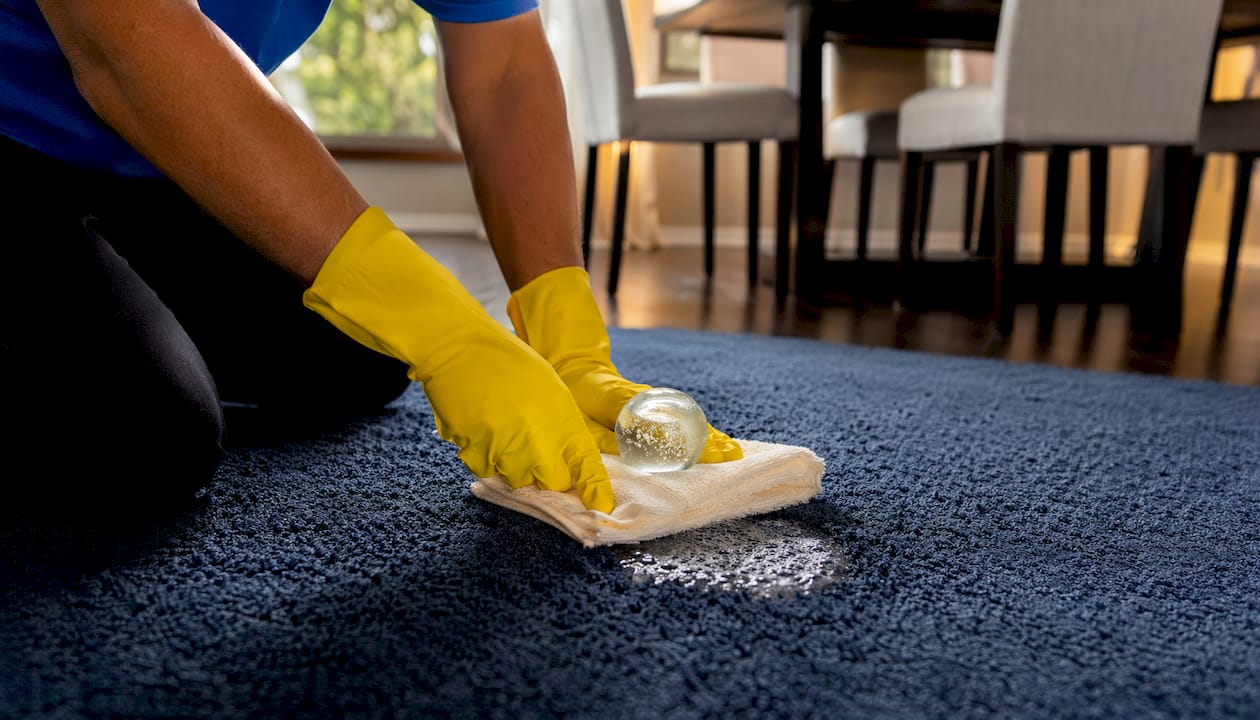
Sticky residue left from cleaning products also attracts dirt. If you do not rinse out your cleaning agent completely, the leftover soap or detergent acts like a magnet for dust and foot traffic. Proper rinsing with cold water and thorough drying breaks this cycle.
Key factors that drive wicking include:
- Using too much water or cleaning solution during treatment
- Skipping the rinse step after applying a cleaner
- Not drying the carpet fully after cleaning
- Pressing down hard and pushing residue deeper into the backing
- Leaving the carpet to air dry slowly without airflow
Pro Tip: Place a dry white towel over the treated area and weigh it down with a heavy book or pot for at least 30 minutes after cleaning. This weighted towel method draws residual moisture and stain matter up from deep within the fibres and into the towel, stopping wicking before it starts.
How do you identify carpet stain types before cleaning?
Identifying the stain type before you reach for a cleaning product is the single most important step in removing persistent carpet stains. The wrong cleaner can set a stain permanently or damage carpet fibres.
Water-soluble stains include tea, coffee, soft drink, and mud. These respond well to cold water and a small amount of dish soap or white vinegar diluted in water. Tannin-based stains like tea and wine fall into this category and lift cleanly with an acidic solution.
Protein-based stains include blood, urine, milk, egg, and vomit. These require cold water and an enzymatic cleaner. Heat sets proteins permanently into carpet fibres, so never use hot water or a clothes iron to speed up drying on these stains. Always start with cold or room temperature water.
Oil-based stains include grease, butter, makeup, and motor oil. Rubbing alcohol or a dry-cleaning solvent works best here. Baking soda applied first absorbs the oil before you treat with a solvent. Dish soap with a degreasing formula also works on fresh oil stains.
| Stain type | Common examples | Best cleaning agent | Water temperature |
|---|---|---|---|
| Water-soluble | Tea, coffee, mud, soft drink | White vinegar, dish soap | Cold |
| Protein-based | Blood, urine, milk, vomit | Enzymatic cleaner | Cold only |
| Oil-based | Grease, butter, makeup | Rubbing alcohol, baking soda | Room temperature |
Enzymatic cleaners need 15–60 minutes of dwell time to break down old organic stains. Rushing this step is one of the most common reasons a stain keeps coming back. Always test your chosen solution on a hidden section of carpet for five minutes before applying it to the stain.
For pet stains specifically, enzymatic cleaners are non-negotiable. Pet urine contains uric acid crystals that bond to fibres and reactivate with humidity, which is why the smell and stain return after wet weather.
Step-by-step process for removing persistent carpet stains
Follow this process in order. Skipping steps is the reason most DIY attempts fail and stains return.
-
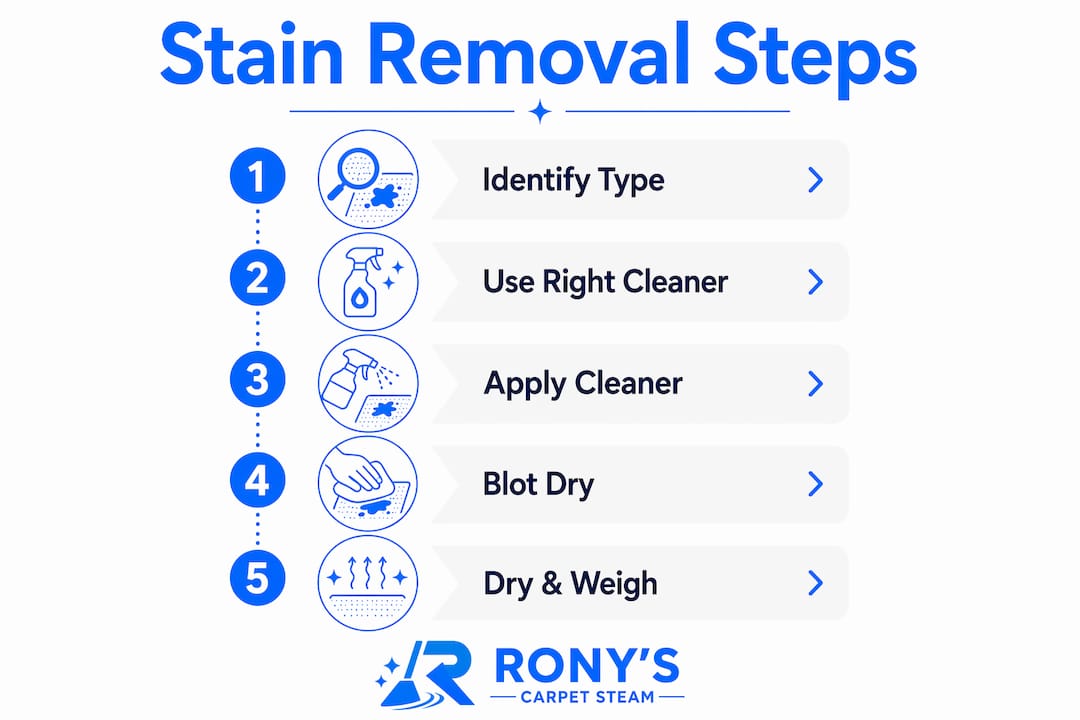
Vacuum the area first. Remove any dry debris, grit, or loose material before applying any liquid. Wetting dry particles grinds them deeper into the pile.
-
Blot, never scrub. Press a clean white cloth firmly onto the stain and lift straight up. Scrubbing distorts the carpet pile and pushes the stain sideways and downward. Work from the outer edge of the stain inward to stop it spreading.
-
Apply the correct cleaner for the stain type. Use the stain type table above to choose your agent. Apply a small amount directly to the stain, not to the cloth. Allow enzymatic cleaners to dwell for the full 15–60 minutes on old organic stains.
-
Blot again to lift the stain. Use a fresh white cloth and continue blotting until no more colour transfers. Replace the cloth as it picks up stain material.
-
Rinse with cold water. Apply a small amount of cold water to the treated area and blot again. This step removes cleaning agent residue. Skipping it leaves sticky residue that attracts dirt and causes the stain to reappear.
-
Apply the weighted towel method. Place a thick, dry white towel over the damp area. Weigh it down with something heavy and leave it for at least 30 minutes. This draws moisture and any remaining residue up from the backing.
-
Dry completely with airflow. Point a fan directly at the area or open windows to create airflow. Do not walk on the carpet until it is fully dry. Drying wet carpet fast is the step that prevents wicking and stops the stain from ghosting back.
Pro Tip: If the stain is on a water damaged carpet or the backing feels wet to the touch, increase drying time significantly. Moisture trapped in the underlay will wick stain material back to the surface for days if the backing is not fully dried.
Avoid over-saturating the carpet at any point in this process. Use the minimum amount of liquid needed. More liquid does not mean better cleaning. It means more residue to wick back.
Common mistakes that cause carpet stains to keep returning
Most recurring stains are the result of cleaning errors, not the stain itself. Recognising these mistakes stops you from repeating them.
- Scrubbing instead of blotting. Scrubbing spreads the stain and pushes it deeper into the fibres. It also damages the carpet pile, leaving a fuzzy patch that catches light differently and looks permanently marked.
- Using too much liquid. Over-saturation soaks the backing and padding. This creates a reservoir of stain material that wicks back to the surface repeatedly and can also cause mould growth under the carpet.
- Mixing cleaning chemicals without rinsing between applications. Some combinations create residues that are harder to remove than the original stain. Always rinse with cold water before switching products.
- Using heat on protein stains. Hot water, steam irons, or hair dryers set blood, urine, and similar stains permanently into the fibres. Cold water is the rule for any stain you cannot immediately identify.
- Stopping too soon. Many homeowners stop cleaning once the stain looks gone while the carpet is still wet. The stain is not gone. It has moved into the backing and will return as the carpet dries.
“Many people believe a stain is removed once it is invisible when wet. Drying is when residues reappear if the carpet has not been fully rinsed and dried. A stain that looks clean while wet and returns when dry is a wicking problem, not a cleaning failure.”
Some stains are physically permanent and no amount of correct technique will remove them. Bleach damage, deep rust, and stains caused by improper chemical reactions fall into this category. If a stain does not lift after two or three correct cleaning attempts, further DIY efforts risk damaging the fibres. That is the point to call a professional. Household products like vinegar and dish soap work on surface stains but lack the pressure extraction capability of professional machines, which prevent the buildup that causes recurring spots.
Key takeaways
Recurring carpet stains are a wicking problem, and solving them requires matching the right cleaner to the stain type, rinsing out all residue, and drying the carpet completely with airflow and the weighted towel method.
| Point | Details |
|---|---|
| Wicking drives recurrence | Residue in the backing travels back to the surface during drying, causing stains to reappear. |
| Match cleaner to stain type | Use enzymatic cleaners for protein stains, vinegar for water-soluble, and rubbing alcohol for oil-based. |
| Never use heat on protein stains | Hot water sets blood, urine, and milk permanently into carpet fibres. |
| Rinse and dry completely | Skipping the rinse leaves sticky residue that attracts dirt and causes the stain to return. |
| Know when to stop DIY | After two or three failed attempts, call a professional to avoid permanent fibre damage. |
What I have learned from years of watching carpet stains come back
The most common thing I see is homeowners who cleaned a stain correctly but stopped one step too early. They blotted, they applied the right product, and then they left the carpet to air dry on its own. Two days later the stain is back and they assume the product failed. The product did not fail. The drying step did.
The second thing I see constantly is people reaching for hot water because it feels more powerful. For protein stains, hot water is the worst thing you can do. I have seen blood stains that were permanently set by a well-meaning homeowner who used boiling water from the kettle. Cold water, always, until you know exactly what you are dealing with.
My practical advice: keep a small cleaning kit in a cupboard near your living area. A spray bottle of diluted white vinegar, a bottle of enzymatic cleaner, a pack of white cloths, and a box of baking soda covers the vast majority of household stains. Acting within the first five minutes of a spill makes every step easier and dramatically reduces the chance of a stain setting into the backing.
Realistic expectations matter too. Some stains will not come out fully with DIY methods, and that is not a failure. Rust, old red wine, and certain dyes may require professional extraction to lift completely. Knowing when to call in help is part of good carpet care, not an admission of defeat. Routine professional cleaning every 12–18 months also prevents the gradual buildup of embedded residue that makes individual stains harder to treat over time.
— Roney
When professional carpet cleaning makes the difference

Stubborn or recurring stains that survive two or three correct DIY attempts need professional extraction, not more household product. Professional steam cleaning uses pH-balanced detergents and high-pressure extraction to pull residue from deep within the backing, the step that household methods cannot replicate. Com provides professional carpet steam cleaning across Melbourne using eco-friendly, chemical-free methods and trained, insured staff. For homeowners in the western suburbs, Com also offers carpet steam cleaning in Melton with a satisfaction guarantee. If a stain keeps coming back no matter what you try, a professional clean removes the residue at the source and gives your carpet a genuine fresh start.
FAQ
Why does my carpet stain keep coming back after cleaning?
The stain is wicking. Residue or moisture trapped in the carpet backing travels back to the surface by capillary action as the carpet dries. Thorough rinsing and complete drying with airflow and a weighted towel stops this.
What is the best cleaner for old carpet stains?
Enzymatic cleaners are the best option for old organic stains such as urine, blood, and food. They require 15–60 minutes of dwell time to break down the stain at a molecular level before you blot and rinse.
Can I use hot water to remove carpet stains?
Never use hot water on protein-based stains such as blood, urine, or milk. Heat sets proteins permanently into carpet fibres. Use cold or room temperature water for any stain you cannot immediately identify.
How do I stop a carpet stain from coming back?
Rinse the treated area thoroughly with cold water after cleaning, then place a dry white towel over the spot and weigh it down for at least 30 minutes. Follow this with direct airflow from a fan until the carpet is completely dry.
When should I call a professional carpet cleaner?
Call a professional if the stain does not lift after two or three correct cleaning attempts. Further DIY efforts at that point risk permanent fibre damage, and professional extraction can reach residue that household tools cannot.
