Emergency Carpet Drying Service After Flood: Melbourne 2026 Restoration Guide
Did you know that even if your carpet feels dry to the touch, the subfloor beneath it could still be holding enough moisture to trigger a toxic mould outbreak within just 48 hours? We understand the immediate anxiety of property damage, especially with Melbourne’s recent “rain bombs” and the 20,000 additional homes now identified as flood risks in areas like Banyule and Moonee Valley. It’s natural to feel overwhelmed by the threat of permanent mould or complex insurance claims. You’re likely wondering if you can actually save your flooring or if it’s time to rip it all out. Our professional carpet drying service after flood is designed to answer that question with a resounding yes, provided you act quickly.
This guide provides a clear roadmap for restoring your Melbourne home and achieving a safe, bacteria-free environment. You’ll discover the specialized extraction techniques that go beyond the surface to eliminate hidden moisture and prevent that dreaded “wet dog” smell. We’ll explain the latest IICRC S500 standards for 2026 and how our rapid 24/7 response helps you meet the critical window for successful restoration. From Rockbank to the CBD, we’re here to help you navigate the recovery process with expert precision and local care.
Key Takeaways
- Learn the difference between surface drying and managed structural drying to ensure all moisture is removed from your subfloor.
- Follow the two-stage restoration process involving industrial-strength water extraction followed by high-velocity evaporation.
- Identify hidden moisture traps in your underlay and smooth-edge strips that can lead to permanent property damage.
- Hire a professional carpet drying service after flood to prevent carpet delamination and eliminate bacteria-driven odours.
- Take immediate safety steps by isolating electrical hazards and water mains before the Melbourne restoration team arrives.
The Critical 24-Hour Window: Why Professional Carpet Drying Service After a Flood is Essential
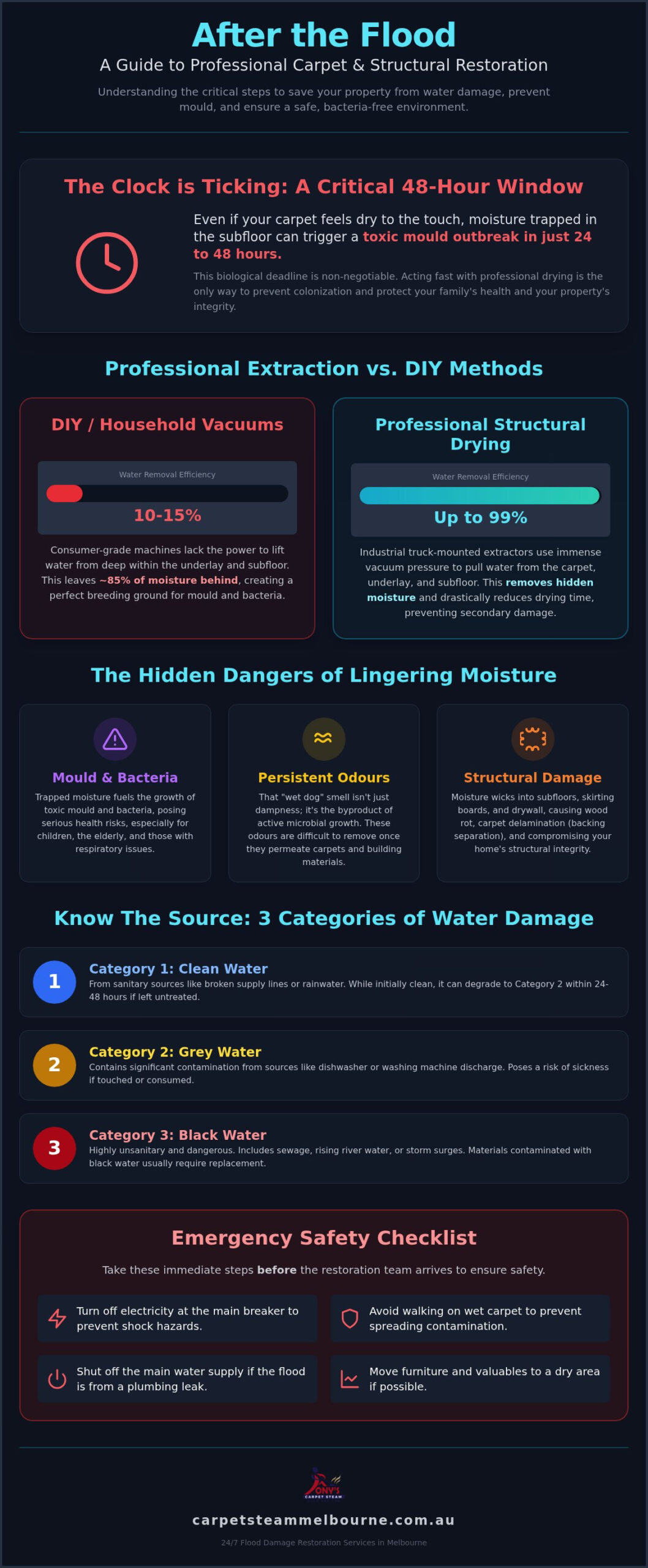
Time is your greatest enemy when water enters your home. Most homeowners assume that if the surface feels dry, the danger has passed. This is a dangerous misconception. Professional structural drying is the managed removal of moisture from all affected materials; including your carpet, underlay, subfloor, and even the internal wall cavities. When you book a carpet drying service after flood, the goal is to stop the clock before permanent damage sets in. You have a biological deadline of 24 to 48 hours before mould spores begin to colonise and spread throughout your property.
Water doesn’t just sit on your flooring. It travels through capillary action, wicking up into your skirting boards and drywall. If this moisture isn’t extracted immediately, it can lead to structural rot and the separation of your carpet’s backing, known as delamination. Our team uses commercial-grade equipment to ensure that moisture is pulled from the deepest layers of your home’s structure. This speed is essential for a successful flood damage restoration in Melbourne, especially given our local humidity levels.
Understanding the Categories of Water Damage
The Water damage restoration process depends heavily on the source of the flood. Industry standards, such as the ANSI/IICRC S500, define three main categories of water:
- Category 1 (Clean Water): This comes from sanitary sources like broken water supply lines or falling rain. While “clean,” this water can degrade into Category 2 within 24 hours if left untreated.
- Category 2 (Grey Water): This contains significant contamination, such as discharge from dishwashers or washing machines. It poses a risk of sickness if consumed or touched.
- Category 3 (Black Water): This is highly unsanitary. It includes sewage, rising river water, or storm surges. These carpets often cannot be saved due to the extreme bacterial and viral load.
The Health Risks of Damp Carpets
A damp environment is a breeding ground for bacteria and allergens. If you notice a lingering “wet dog” smell, it’s actually the scent of active microbial growth. This poses a serious risk to vulnerable family members, particularly children, the elderly, or those with existing respiratory conditions. A professional carpet drying service after flood ensures your home is sanitised and safe. We focus on creating a bacteria-free environment so you can breathe easily again. Don’t wait for the smell to start; proactive drying is the only way to protect your family’s health.
Advanced Water Extraction and Structural Drying: The Restoration Process Explained
Successful restoration is a precise, scientific process that goes far beyond simply vacuuming a wet floor. When you engage a professional carpet drying service after flood, we deploy a multi-stage protocol designed to stabilise the environment and protect your property’s structural integrity. This isn’t just about the carpet fibres; it’s about managing the moisture levels in the air, the underlay, and the subfloor. We follow four distinct stages to ensure a complete recovery: high-volume extraction, evaporation, dehumidification, and constant monitoring. Each step is critical to prevent secondary damage like wood rot or permanent staining.
Commercial-Grade Extraction vs. Household Vacuums
Many homeowners try to tackle the initial mess with a standard shop-vac or a household wet-dry vacuum. Unfortunately, these consumer-grade machines only remove about 10-15% of the water trapped deep within the underlay and subfloor. They simply lack the lift capacity required for deep-fibre water removal. Our truck-mounted extraction systems use massive vacuum pressure to pull water from the very bottom of the carpet pile. Extraction efficiency is defined as the mechanical ability of a vacuum system to create a seal and pull liquid from porous subfloor materials before it can be absorbed. Without this industrial power, the remaining 85% of the water continues to wick into your walls. If you’re facing a major spill, you can request professional flood restoration to ensure every drop is removed.
The Role of Industrial Air Movers and Dehumidifiers
Once the bulk water is gone, we focus on the moisture trapped in the materials. We use high-velocity air movers to break the “boundary layer” of saturated air that sits directly above the wet carpet. This creates a rapid exchange that forces moisture into the air. However, moving air alone isn’t enough. In Melbourne’s variable climate, the humidity inside a flooded room can skyrocket, making the air “full” and unable to hold more moisture. This is where Low Grain Refrigerant (LGR) dehumidifiers become essential. These machines pull the moisture out of the air, creating a “thirsty” environment that accelerates the drying of the subfloor. It’s a balance of moving air and dry air that dictates the speed of the restoration cycle.
The final stage of the process involves constant monitoring. We don’t guess when a room is dry. Our technicians use moisture meters and thermal imaging cameras to see behind skirting boards and under flooring. These tools identify “cold spots” that indicate lingering moisture. By tracking these data points daily, we ensure that your home returns to its pre-loss condition with zero hidden risks. This level of precision is why a professional carpet drying service after flood is the only way to guarantee a safe, bacteria-free home environment.
The Dangers of Incomplete Drying: Mould, Odours, and Structural Integrity
Surface-level dryness is often a mask for deeper, more destructive moisture issues. Many homeowners feel the top of their rug and assume the danger has passed; however, the real threat lurks in the hidden zones of your flooring. Smooth-edge strips, the timber or metal spiked bars that hold your carpet in place, can trap water against the wall, leading to wood rot and rusted nails. Choosing a professional carpet drying service after flood ensures that these hidden zones are thoroughly addressed before they compromise your home’s foundation. Without deep-level extraction, you risk delamination, which is the permanent separation of the carpet’s secondary backing from the face fibres. Once delamination occurs, the carpet loses its structural integrity and usually requires a full replacement.
Secondary damage is another consequence of a half-finished drying job. As moisture evaporates from the floor without proper dehumidification, the relative humidity in the room spikes. This saturated air doesn’t just sit there; it begins to affect everything else in the space. You might notice your wooden furniture beginning to warp, or electronics failing due to internal condensation. The long-term cost of “DIY drying” often far exceeds the upfront cost of professional restoration. While a home fan might make the surface feel better, it doesn’t solve the underlying moisture balance that protects your broader property assets.
Why Damp Underlay is a Ticking Time Bomb
Underlay acts exactly like a sponge. It’s designed to be porous and soft, which unfortunately makes it the perfect reservoir for floodwater. In many Melbourne homes, particularly those in older suburbs with traditional timber subfloors, trapped water in the underlay can lead to rapid subfloor rot. We often utilise “carpet-off” drying methods for heavily saturated areas. This involves lifting the carpet to dry the underlay and subfloor directly, rather than trying to pull moisture through the carpet pile. This “in-place” versus “carpet-off” decision is a technical choice that our technicians make based on the specific moisture readings of your subfloor.
Identifying and Neutralising Bacteria
Water damage isn’t just a moisture problem; it’s a hygiene crisis. Every carpet drying service after flood must include a professional sanitisation phase to be truly effective. We use industrial-strength anti-microbial treatments that are specifically formulated to kill bacteria and fungi without damaging your carpet’s delicate fibres. Household sprays and supermarket disinfectants are simply too weak to penetrate the underlay where bacteria thrive. Odour masking simply covers up a smell with perfume, whereas bacterial neutralisation physically destroys the living organisms causing the stench. Our process ensures your home doesn’t just look dry, but is clinically clean and safe for your family.
Emergency Steps: What to Do Before the Melbourne Restoration Team Arrives
The moments following a flood are often chaotic and stressful. While you wait for a professional carpet drying service after flood to arrive, your primary goal is to stabilise the environment and prevent further damage. Taking immediate action can be the difference between a simple restoration and a total floor replacement. Start by identifying the source of the water. If it’s a burst pipe, locate your water main and shut it off immediately. If the water is coming from a weather-related event, such as the flash flooding seen recently in Victoria’s Moonee Valley area, focus on containment where safe to do so. Your quick thinking helps our technicians hit the ground running when they reach your property.
Ventilation is a powerful tool, but it must be used correctly. If the air outside is dry and the sun is shining, open your windows to encourage natural evaporation. However, if it’s raining or the humidity is high, keep windows closed to prevent more moisture from entering your home. Your goal is to keep the indoor environment as “thirsty” as possible until our industrial dehumidifiers can take over. We understand the anxiety of property damage, and these small steps provide immediate peace of mind while we’re in transit.
Essential Safety Precautions for Homeowners
- Electrical Hazards: Never enter a flooded room until the power is turned off at the mains. Water and electricity are a lethal combination, especially if outlets or appliances are submerged.
- Slip and Fall Risks: Be extremely careful when walking from wet carpet onto tiled or timber surfaces. These transitions become incredibly slippery and are a common cause of injury during flood events.
- Structural Integrity: If the flood originated from an upper floor, check for sagging in the ceilings below. If you notice a “bubble” forming in the plaster, stay clear of that area as it could collapse.
- Equipment Safety: Don’t use a household vacuum or shop-vac to remove water. These machines aren’t designed for high-volume liquid and pose a risk of electric shock.
Immediate Mitigation to Save Your Flooring
Protecting your belongings is just as important as saving the carpet. Move small rugs, cushions, and non-colourfast items like magazines or newspapers away from the wet area. These can bleed dye into the carpet fibres, creating permanent stains that even steam cleaning can’t remove. For larger furniture, place pieces of aluminium foil or plastic tabs under the legs. This prevents wood stains and rust from transferring to your flooring. Pin up floor-length curtains to stop them from wicking up moisture and becoming a breeding ground for mould. For a more detailed walkthrough, see our Emergency Flood Damage Restoration Melbourne guide. Acting now ensures a faster, more effective carpet drying service after flood once our team arrives on-site.
24/7 Flood Damage Restoration: Restoring Your Home with Best Carpet Steam Cleaning Melbourne
When disaster strikes your home, you need more than just equipment; you need a partner who understands the urgency of the situation. At Best Carpet Steam Cleaning Melbourne, we’ve refined our rapid response protocol to ensure we’re on-site when every minute counts. Our 24/7 carpet drying service after flood events is built on a foundation of local expertise and industrial power. We don’t just extract water and leave. Our team manages the entire recovery lifecycle, from the initial emergency suction and structural drying to the final sanitisation and steam clean. This end-to-end approach ensures your home isn’t just dry, but restored to a level that is safe for your family to inhabit immediately.
Property damage often brings a wave of administrative stress. We help alleviate this by providing comprehensive documentation of the restoration process. Our technicians use moisture mapping and thermal imaging data to create reports that property managers and insurance adjusters require for claims. By choosing a professional carpet drying service after flood, you ensure that every technical step is recorded, proving that the structural integrity of your home has been preserved according to IICRC standards. We take the guesswork out of the recovery so you can focus on getting your life back to normal.
Our Melbourne Metropolitan Service Areas
We are proud to be a locally owned and operated business based in Rockbank. Our emergency crews serve the entire Melbourne metropolitan area, from the high-rise apartments of the CBD to the sprawling family homes in the outer suburbs. This local presence is vital because we understand Melbourne’s specific climate patterns. We know how the humidity in the Moonee Valley council area differs from the coastal winds of the Great Ocean Road region. This geographic knowledge allows us to calibrate our drying equipment for maximum efficiency. If you’ve moved past the emergency phase and simply need a deep refresh, explore our Professional Carpet Steam Cleaning Melbourne guide for long-term maintenance tips.
Final Sanitisation and Deodorising
The final stage of our restoration process is what truly brings the “fresh” feel back to your home. Once our moisture meters confirm that the subfloor and underlay are 100% dry, we perform a deep steam clean. We use eco-friendly, family-safe cleaning solutions that are tough on bacteria but gentle on your carpet fibres. This step is essential to remove any lingering residues or pathogens that may have been introduced by the floodwater. Our technicians conduct a final meticulous inspection to ensure no pocket of moisture remains. We don’t consider the job done until your home is clinically clean, odour-free, and perfectly safe for children and pets to play on the floor once again.
Secure Your Home’s Future with Professional Restoration
Acting quickly is the single most important decision you can make following a flood. You’ve learned that the 24-hour window is a biological deadline; missing it invites toxic mould and structural decay. Our professional carpet drying service after flood eliminates these risks by targeting the hidden moisture in your underlay and subfloor. We don’t just dry the surface; we restore the safety and hygiene of your entire living environment. This comprehensive process prevents lingering odours and protects your family from long-term respiratory hazards.
Our locally owned team in Rockbank is ready to deploy commercial-grade technology across the Melbourne metro area. We combine rapid response times with expert sanitisation to give you complete peace of mind. We understand the immense stress of property damage and prioritize your safety above all else. Don’t let a temporary disaster turn into permanent property damage when expert help is just a call away.
You don’t have to face this recovery alone. Take the first step toward a dry, healthy home and let our dedicated experts handle the rest.
Frequently Asked Questions
How long does it take for a flooded carpet to dry completely?
Complete structural drying typically takes between 48 and 96 hours. This timeframe depends on the volume of water, the thickness of your carpet, and the efficiency of the industrial dehumidification equipment used. While the surface might feel dry to the touch much sooner, we use moisture meters to confirm that the subfloor and underlay have reached safe levels before we remove our equipment.
Can I save a carpet that has been soaked by sewage water?
Carpets soaked by sewage water, classified as Category 3 or “Black Water,” generally cannot be saved and must be replaced. These sources contain dangerous pathogens and bacteria that penetrate deep into porous fibres and cannot be safely sanitised. Following the IICRC S500 standard, we recommend the immediate removal and disposal of both the carpet and underlay to protect your family’s health.
Will my insurance cover professional carpet drying services?
Most Australian home and contents insurance policies cover restoration costs for sudden and accidental events like burst pipes or storm damage. If the flood was caused by a gradual, undetected leak over several months, coverage might be denied. We suggest documenting the damage immediately with photos and contacting your provider to confirm your specific policy details before we begin the restoration process.
Is it safe to stay in the house while the industrial dryers are running?
It is safe to remain in your home, though you should expect a noisy and warm environment. The carpet drying service after flood involves running high-velocity air movers and dehumidifiers 24/7 to maintain the necessary evaporation rates. If the flooding is extensive, the high humidity and constant sound might make it more comfortable for you to stay elsewhere for the first 48 hours.
Why does my carpet smell worse after I tried to dry it myself?
A worsening smell is a clear sign that moisture is still trapped deep within the underlay or subfloor. When you only dry the surface with household fans, you create a warm, damp pocket underneath where bacteria thrive and multiply. This microbial activity produces the sour “wet dog” odour, which will only stop once the underlying materials are professionally extracted and sanitised.
How much does professional flood restoration cost in Melbourne?
The cost of restoration depends on the size of the affected area, the category of the water, and how long the moisture has been sitting. Because every situation is different, we must perform an on-site assessment using moisture sensors to provide an accurate quote. This evaluation ensures we only charge for the specific equipment and time needed to return your home to a dry standard.
Do I need to replace the underlay after a flood?
Underlay often needs to be replaced because its sponge-like structure makes it very difficult to dry and sanitise completely. In cases of Category 2 or 3 water, replacement is mandatory to ensure a hygienic environment. However, our carpet drying service after flood may be able to save Category 1 underlay if we can begin high-volume extraction within the first few hours of the event.
Can you dry wet carpets on top of hardwood floors without damage?
We can dry carpets over hardwood, but we must act immediately to prevent the timber from warping or “cupping.” If water remains trapped between the carpet and the wood, the floorboards will absorb moisture and begin to expand. Our technicians use specialized drying protocols to pull moisture out of the floorboards through the carpet, which helps preserve your expensive Melbourne timber flooring.
