Silk rug cleaning: protect your delicate rug the right way
Have a silk rug cleaned by a specialist. DIY attempts and generic steam cleaners cause permanent damage far more often than they fix anything. If you’re in Melbourne, Rony’s Carpet Steam offers trained, insured technicians who handle silk with the low-moisture, pH-controlled methods it demands. Get a quote before you try anything else. The team holds relevant industry training aligned with IICRC standards and works with products suited to protein fibres.
Table of Contents
- Why silk rugs need specialist cleaning
- What does a safe professional silk rug clean look like?
- How do you choose a safe silk rug cleaner in Australia?
- What does professional silk rug cleaning cost in Australia?
- What should you expect for pickup, delivery and handling?
- What can you safely do at home between professional cleans?
- How Rony’s Carpet Steam handles silk rug cleaning
- Trusted local silk rug cleaning providers in Melbourne
- Key takeaways
- The part most guides get wrong about silk rug care
- Rony’s Carpet Steam: Melbourne’s specialist for delicate rugs
Why silk rugs need specialist cleaning
Silk is a protein fibre. That single fact changes everything about how it must be cleaned. When wet, silk loses a meaningful portion of its tensile strength, making aggressive agitation or heavy moisture genuinely destructive rather than merely risky. Add fugitive dyes — common in hand-knotted Persian and Chinese silk rugs — and you have three core hazards every cleaner must manage: fibre weakening, dye bleed or migration, and browning caused by oxidation during slow drying.
Heat and high pH accelerate all three. Alkaline detergents strip the sericin coating that gives silk its sheen. Hot water swells the fibre and opens the dye sites. Scrubbing physically breaks the pile. Silk rug care protocols consistently call for pH-controlled solutions in the 5.5–7 range, cool water, minimal mechanical action, and an acid rinse to reduce browning and help set dyes after washing.
The most common DIY mistakes that cause irreversible harm:
- Steam cleaning — heat plus heavy moisture is the fastest route to dye bleed and pile distortion
Pro Tip: Before any wet work touches your rug, require a dye-fastness test and ask for photographic documentation of the result. Any cleaner who skips this step is taking a risk with your rug, not their own.
What does a safe professional silk rug clean look like?
The process starts before a drop of water is involved. A qualified technician begins with a field inspection: confirming whether the rug is genuine silk or art silk (viscose), which behaves completely differently when wet and can pulp or yellow under the same conditions that clean real silk safely. Foundation condition, fringe integrity, and existing stains all get photographed at this stage.
Dry soil removal comes next. Gentle vacuuming with no beater bar lifts loose particulate without stressing the pile. Only after that does dye-stability testing begin. The field method is straightforward: dampen a white towel with the working dilution of the cleaning solution, press it firmly on each colour for 10–15 seconds, and document any transfer. Colour on the towel means unstable dye, and wet-cleaning must be modified or declined entirely.
Controlled, low-moisture hand washing with a neutral to mildly acidic solution (pH ~5.5–7), cool water, and minimal mechanical action is the professional baseline for silk. Anything hotter, wetter, or more aggressive puts the rug at risk.
Rinsing uses a flush-and-extract approach, followed by an acid rinse to neutralise residual alkalinity and reduce the risk of browning. Water-claw tools or careful hand extraction remove moisture without mechanical stress. Drying is then the most critical phase: air movers and dehumidifiers in a controlled environment, flat or hanging, with no direct heat. A hairdryer or direct sunlight is as damaging at this stage as the wrong cleaning solution.
Trust signals worth confirming before you book: IICRC-trained technicians, WoolSafe-approved products suited to protein fibres, current insurance, and documented before-and-after photos of previous silk work. Practical red flags: a truckmount hot wand used directly on silk, rotary brushes, or a cleaner who quotes a flat “steam clean” price for any rug type without asking questions first.
How do you choose a safe silk rug cleaner in Australia?
Certifications and insurance are the floor, not the ceiling. An IICRC credential tells you the technician has completed formal training in textile cleaning standards. WoolSafe product approval tells you the formulations they use have been assessed for protein-fibre safety. Both matter, but neither replaces asking direct questions.
Evaluation checklist:
- Confirmed IICRC training or equivalent formal textile-cleaning certification
- Insurance covering dye migration and fibre damage
- Photo case studies of previous silk rug work (not just carpet or wool)
- A secure workshop or cleaning facility (not roadside or driveway cleaning)
- Documented dye-testing practice as a standard step, not an optional extra
Questions to ask before booking:
- Do you test dye stability on every colour before wet cleaning?
- What pH range do your cleaning solutions fall in?
- How do you dry silk rugs, and what equipment do you use?
- Are you insured specifically against dye migration or fibre damage?
For antique or historically significant silk rugs, ask whether the cleaner has experience with aged dyes and fragile foundations, or whether they refer those pieces to a textile conservator. A cleaner who confidently handles everything without that distinction is a red flag, not a reassurance. You can read more about antique rug handling standards to benchmark what good practice looks like.
What does professional silk rug cleaning cost in Australia?
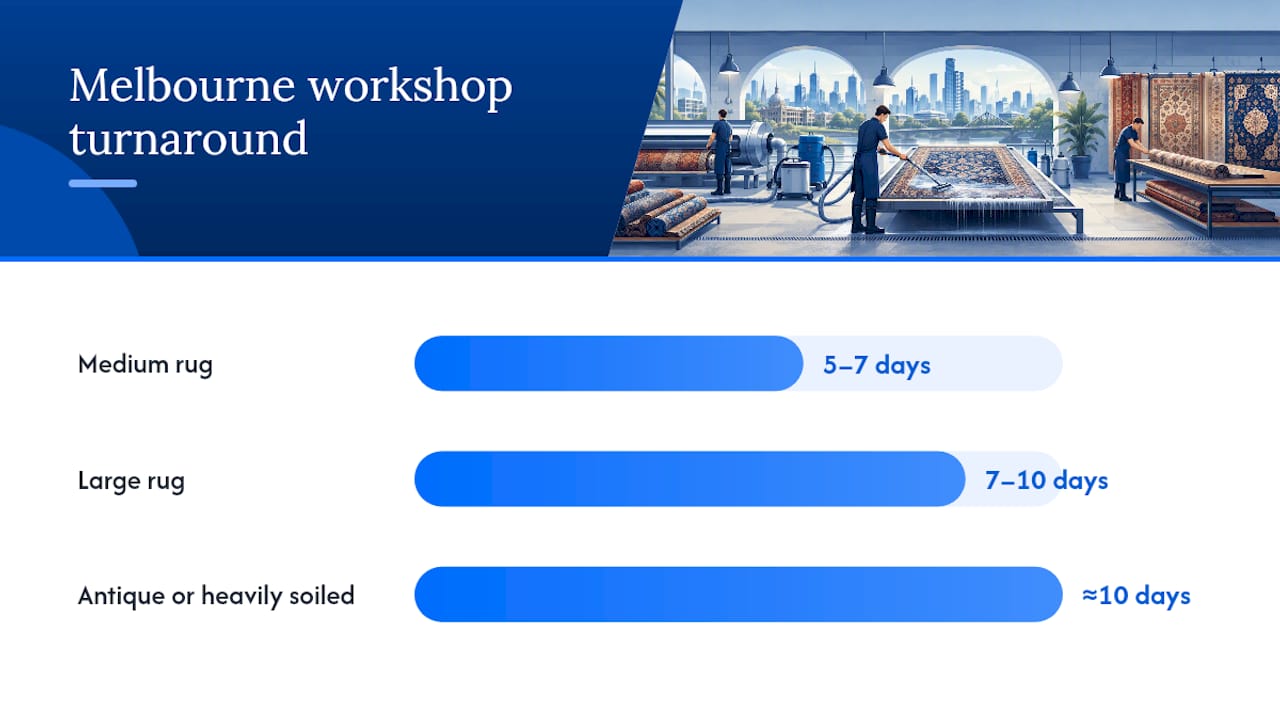
Pricing varies by size, condition, and complexity. Antique pieces, heavily soiled rugs, and those with unstable dyes cost more because they require additional testing, modified methods, and longer drying times. The table below gives realistic indicative ranges for workshop cleaning in Melbourne; on-site cleaning, if available for your rug type, may differ.
| Rug size | Indicative price range (AUD) | Typical turnaround |
|---|---|---|
| Small | — | several days |
| Medium | — | 5–7 days |
| Large | — | 7–10 days |
| Antique or heavily soiled | Price on inspection | around 10 days |
Figures are indicative only and subject to inspection. Antique and fragile pieces require individual assessment.
Key cost drivers beyond size: fibre-type confirmation testing, dye-stability testing on multiple colours, repair or fringe work, pickup and delivery, and urgent or rush drying. Experts recommend professional cleaning every 12–24 months for low-traffic silk rugs, with antique pieces requiring extra caution and potentially longer intervals between full washes.
Ways to reduce cost without risking damage:
- Vacuum gently and regularly to reduce soil load before it embeds
- Use a quality rug pad to minimise abrasion from foot traffic
- Rotate the rug every few months to even out wear and sun exposure
- Blot spills immediately rather than letting them set
What should you expect for pickup, delivery and handling?
A reputable specialist collects your rug with the same care they’ll apply in the workshop. That means an onsite assessment before it leaves your home: the technician notes fringe condition, existing stains, foundation damage, and odours, and photographs both sides. The rug is then rolled (never folded), wrapped in protective material, and transported in a secure vehicle with appropriate labelling.
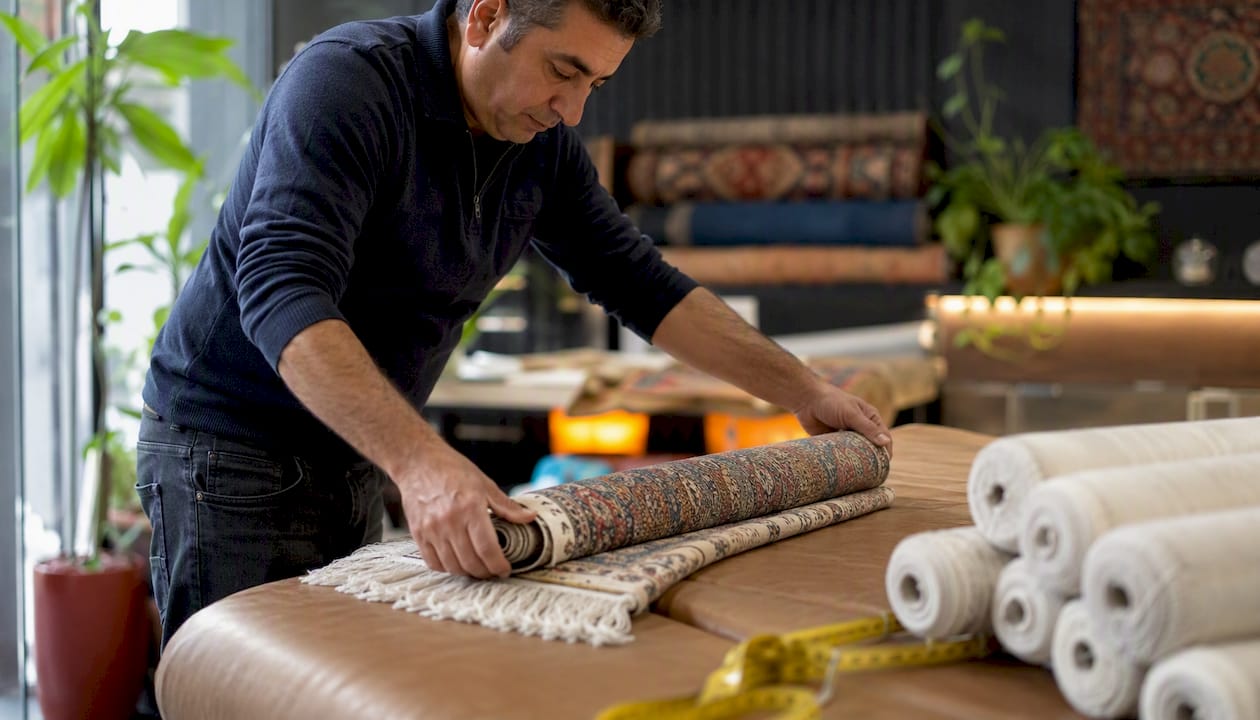
Cleaning happens in a controlled workshop environment for most silk pieces. On-site cleaning is available for some jobs, but the controlled drying conditions a workshop provides are genuinely superior for silk. Ask your provider whether they clean on-site or off-site, and what their insurance covers during transit. A written condition report at collection and again at return is standard practice for any reputable service.
Pro Tip: Before the technician arrives, photograph both sides of your rug yourself, note any existing stains or odours in writing, and clear a path for easy access. Your own record protects you if any dispute arises about pre-existing damage.
What can you safely do at home between professional cleans?
Not much, and that’s the honest answer. Routine home care for silk rugs is genuinely limited. The fibre is too sensitive for most of what homeowners reach for when something goes wrong.
Do not:
- Steam clean under any circumstances — heat and heavy moisture cause dye bleed and pile distortion in silk
- Use hot water for any cleaning or spot treatment
- Apply enzyme cleaners, oxygen boosters, or any product labelled for synthetic fibres
- Rub or scrub a stain in any direction
- Place a wet or damp rug in direct sunlight to dry
Safe home care:
- Vacuum on the lowest suction setting, moving in the pile direction only, with no beater bar
- Blot fresh spills immediately with a clean white cloth, pressing down rather than rubbing
- Rotate the rug every few months to distribute wear and light exposure evenly
- Keep it out of direct sunlight, which fades dyes and degrades the fibre over time
Call a professional immediately if you notice any dye transfer during a test, a large stain from red wine, acids, or oils, any water exposure beyond a small fresh spill, or if the rug is antique or historically significant. Browning, dye migration, and pile distortion caused by DIY attempts are often irreversible. The cost of a professional clean is a fraction of what restoration — or replacement — costs. For context on why rental machines are equally unsuitable, see rental vs professional cleaning.
How Rony’s Carpet Steam handles silk rug cleaning
Rony’s Carpet Steam is a Melbourne-based specialist with trained, insured technicians who follow a documented silk-safe process: inspection and fibre identification, dye-stability testing on every colour, controlled low-moisture hand washing with pH-appropriate solutions, acid rinse, and fast forced-air drying in a workshop environment. Eco-friendly, low-chemical methods are standard, not an upgrade.
Every silk rug that comes through our workshop is photographed before and after cleaning. Dye testing is not optional — it is the first step, every time, without exception.
The service includes pickup and delivery across Melbourne, a satisfaction guarantee, and written condition documentation at collection and return. For delicate or antique pieces, the team assesses whether workshop hand-washing or a specialist conservator referral is the right call. Contact Rony’s Carpet Steam via carpetsteammelbourne.com.au for a quote or inspection booking.
Trusted local silk rug cleaning providers in Melbourne
For Melbourne homeowners, Rony’s Carpet Steam is the recommended starting point for professional rug cleaning that meets the silk-safe standards described in this guide. The service covers Melbourne and surrounding suburbs, with pickup, workshop cleaning, and delivery included. Contact details and booking are available at carpetsteammelbourne.com.au.
When evaluating any provider, apply the checklist from the earlier section: confirmed IICRC training, WoolSafe-compatible products, insurance, documented dye testing, and photo evidence of previous silk work. A provider who ticks all five is rare. One who ticks none should be avoided regardless of price.
Key takeaways
Silk rugs require specialist cleaning because the fibre weakens when wet, dyes are often unstable, and heat or high pH causes permanent browning and pile damage that no amount of restoration can fully reverse.
| Point | Details |
|---|---|
| Always use a specialist | DIY and generic steam cleaning cause irreversible fibre and dye damage to silk rugs. |
| Dye testing is non-negotiable | A documented dye-fastness test on every colour must happen before any moisture touches the rug. |
| Professional clean frequency | Experts recommend cleaning every 12–24 months for low-traffic silk rugs; antique pieces need individual assessment. |
| Red flags to avoid | Hot truckmount wands, rotary brushes, and any cleaner who skips dye testing are clear warning signs. |
| Rony’s Carpet Steam | Melbourne-based specialist offering inspection, dye testing, hand washing, and pickup/delivery for silk rugs. |
The part most guides get wrong about silk rug care
The standard advice online is “take it to a professional.” That’s correct, but it stops too soon. What homeowners actually need to know is how to tell whether the professional they’re considering is genuinely qualified for silk, or just a carpet cleaner who’ll attempt it anyway.
The gap between those two is enormous. A carpet cleaner with a truckmount and a bottle of alkaline pre-spray can destroy a silk rug in under an hour. The same rug, handled by someone who tests dyes, uses pH-controlled solutions, and dries it under controlled airflow, comes back looking better than it has in years.
The dye-fastness test is the single most reliable filter. Ask any prospective cleaner to describe their dye-testing method before you book. If they can’t explain it in specific terms — what solution, what contact time, what they do if colour transfers — that tells you everything. IICRC training and WoolSafe products matter, but a cleaner who tests dyes properly and adjusts their method based on results is more valuable than one who has the certificates but skips the test.
Antique silk rugs deserve a separate conversation entirely. The dyes in a 60-year-old Persian silk are not the same as those in a modern Chinese piece, and the foundation may be fragile in ways that aren’t visible until wet. For anything with genuine age or monetary value, ask whether the cleaner has specific experience with antique pieces or whether they refer those jobs to a textile conservator. The honest answer to that question is more reassuring than a confident “yes, we handle everything.”
Rony’s Carpet Steam: Melbourne’s specialist for delicate rugs
Silk rug owners in Melbourne get a genuinely different service with Rony’s Carpet Steam compared to a standard carpet cleaner who takes on any job. The difference is the process: documented dye testing before any moisture is applied, low-chemical hand washing at the right pH, and forced-air drying in a controlled workshop rather than a quick truckmount pass and a hope for the best.

Pickup and delivery across Melbourne is included, and the team works with eco-friendly formulations suited to protein fibres. Whether your rug is a modern Chinese silk or a hand-knotted Persian, the process starts with an inspection, not an assumption. Book a quote or arrange a pickup via carpetsteammelbourne.com.au/carpet-steam-cleaning-melton or the main site at carpetsteammelbourne.com.au.
