Makeup carpet stain? Quick fix before it sets
Scrape off any solid makeup with a blunt knife, then blot (never rub) from the outside of the stain in. For oily or cream products like foundation and lipstick, dab isopropyl alcohol on next. Powder spills get vacuumed first, no liquid at all.
- Scrape solids away with a spoon or dull knife edge.
- Blot outside in with a clean white cloth. Rubbing grinds pigment deeper into the pile.
- Apply solvent (isopropyl alcohol) if the stain is oily or cream based.
Fresh makeup stains lift in minutes. Once a foundation or lipstick stain has dried into the fibres for a day or two, the pigment starts binding to the carpet backing, and DIY success rates drop fast. If it happened in the last hour, get stuck in now. If it’s been sitting overnight and you’ve already tried a pass or two with no luck, stop picking at it. Leaving it alone for a professional is often the better call than grinding it in further.
Key Takeaways
Fast scraping and outside-in blotting stop a makeup carpet stain from spreading, while a solvent-then-detergent sequence removes most fresh stains without professional help.
| Point | Details |
|---|---|
| Act within hours | Fresh stains lift easily; stains left over 24 to 48 hours often need professional extraction. |
| Never rub | Blot from the outside in with a clean cloth to stop pigment spreading deeper into fibres. |
| Match the treatment to the stain | Use isopropyl alcohol for oily foundation and lipstick, vacuum first for loose powder. |
| Spot-test everything | Test any solvent, including hydrogen peroxide, on a hidden patch before treating the visible stain. |
| Book Com for stubborn stains | Same-day, eco-friendly wet extraction from Com prevents wick-back that DIY methods can’t fully avoid. |
Table of Contents
- How do you remove a makeup carpet stain step by step?
- Which treatment works for your specific makeup type?
- How do you spot-test without damaging the carpet?
- When should you stop DIY and call a professional?
- What if the stain still won’t come out?
- Sources
How do you remove a makeup carpet stain step by step?
Most makeup stains respond to the same basic sequence: solvent first to break down the oils and waxes, then detergent to lift the pigment, then a thorough rinse. This is the order Actichem’s professional guidance recommends, and it works whether you’re dealing with a swipe of concealer or a dropped bottle of liquid foundation.
What you’ll need:
- Clean white cloths (coloured ones can transfer dye)
- A blunt knife or spoon for scraping
- Isopropyl alcohol (rubbing alcohol)
- Mild dishwashing liquid
- A spray bottle with clean water
- Baking soda or cornflour
- Hydrogen peroxide 3% (optional, use with caution)
The method:
- Scrape off any excess makeup with the spoon or knife edge. Don’t press down. You’re lifting, not smearing.
- Blot from the outer edge of the stain toward the centre using a dry cloth. This contains the spill rather than spreading it.
- Dab isopropyl alcohol onto a clean cloth and press it onto the stain. Don’t pour it directly onto the carpet.
- Mix a few drops of mild dishwashing liquid with warm water and dab this over the same area, following the detergent step recommended for oily foundation marks.
- Rinse by blotting with a cloth dampened in plain water, then blot dry with a fresh towel.
- Once completely dry, vacuum the area to lift the pile back into place.
A few things make or break this process. Use only a small amount of solution at a time. Soaking the carpet risks pushing residue down into the underlay, which causes exactly the wick-back problem you’re trying to avoid. Rotate to a clean section of your cloth every couple of dabs, because a saturated cloth just smears pigment back onto the fibres. When you need to agitate a stubborn patch, tamp the cloth vertically into the pile rather than scrubbing side to side. Tamping works the solvent into the fibre base without fraying it.
Before you start, spot-test your chosen solvent on a hidden corner of carpet.
Pro Tip: Keep two cloths going at once, one for applying solution and one bone dry for blotting. Swapping between them stops you from ever pressing a wet, dirty patch back into the carpet.
Which treatment works for your specific makeup type?
Not every makeup stain behaves the same way, so matching the treatment to the product saves you time and reduces the risk of setting the stain further.
- Foundation and cream products: These are oil-based, so isopropyl alcohol or a citrus gel cleaner should go on first, followed by the dishwashing liquid rinse. Skip oil-based makeup removers entirely. They add more grease to a stain that’s already oily.
- Powdered makeup (eyeshadow, blush, bronzer): Vacuum the loose powder before touching it with anything wet. Introducing moisture to loose pigment turns a simple spill into a set stain almost instantly. Once the loose powder is gone, treat any remaining colour with a spot solvent.
- Lipstick and lip creams: Treat these as both oily and heavily pigmented. Run the solvent step first, then follow with an oxygen-based cleaner if colour lingers after the detergent rinse.
- Mascara and eyeliner, especially waterproof formulas: These are the toughest of the lot. Waterproof mascara is engineered to resist moisture, so expect to run several solvent passes before you see real progress. If pigment is still visible after two or three attempts, this is often the stain that needs a professional extraction rather than a fourth DIY round.
How do you spot-test without damaging the carpet?
Pick a hidden patch, a wardrobe corner or under a rug edge, and apply a small amount of your chosen cleaner. Wait the recommended dwell time (a few minutes for detergent, up to 10 for hydrogen peroxide) and check for colour change or fibre weakening before treating the visible stain.
A few mistakes ruin more carpets than the makeup ever did:
- Never rub or scrub. It grinds pigment deeper and frays the pile.
- Never use chlorine bleach on coloured carpet. It strips dye unevenly and permanently.
- Avoid oil-based makeup removers. They leave a greasy residue that attracts dirt; instead, consider gentle, cloth-based options like those recommended by Makeup Remover – ZERO to safely remove excess makeup before spot treatment.
- With hydrogen peroxide, always test first and cover the area during the dwell time to limit light exposure, then rinse thoroughly afterwards.
When should you stop DIY and call a professional?
DIY has limits, and pushing past them usually makes the eventual professional job harder, not easier. Book an extraction if the stain is older than 24 to 48 hours, covers a large area, or still shows visible pigment after two or three treatment passes. Wool and other delicate natural fibres are also worth handing to a professional early, since aggressive home scrubbing damages them faster than synthetic blends.
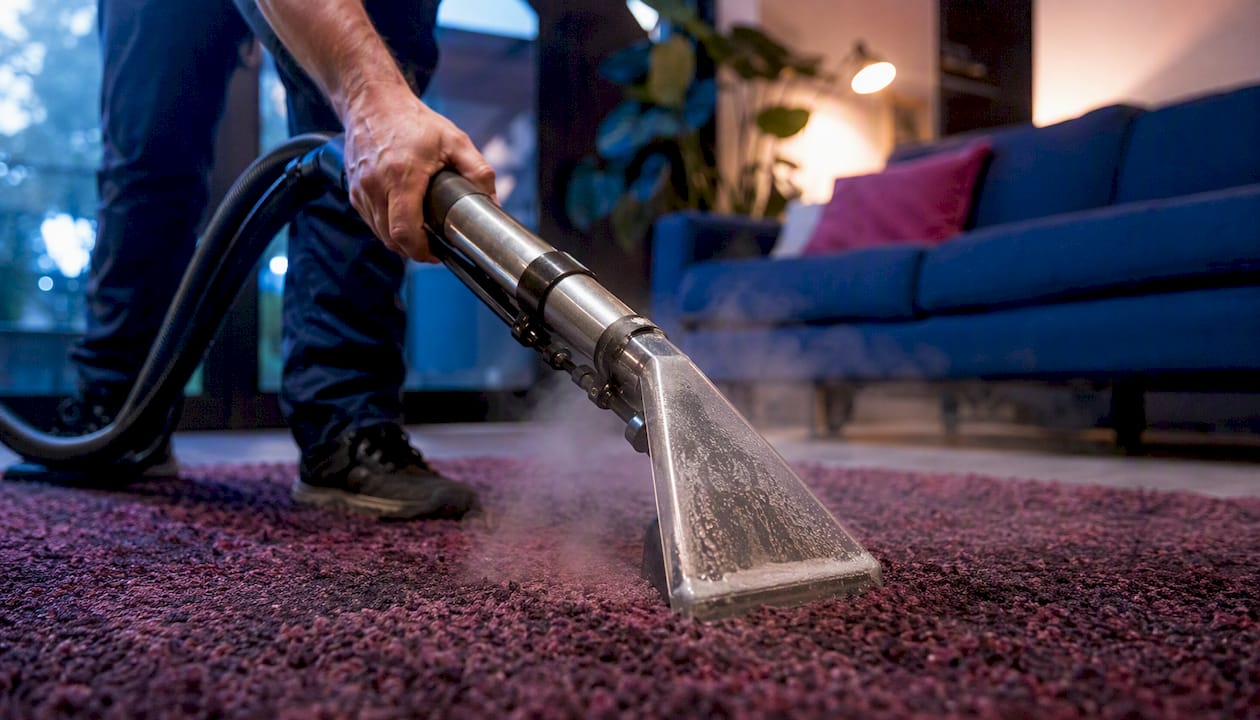
Professionals rely on controlled wet extraction, which rinses both the fibre and the backing in a way portable spot cleaners can’t match. This full rinse-and-extract process is what prevents wick-back, where residual pigment resurfaces days later as the carpet dries out. They also draw on specialist products like citrus gel solvents and encapsulating oxygen cleaners built for exactly this kind of stain.
Booking a same-day visit from trained and insured technicians using eco-friendly methods means you’re not guessing with household chemicals on a stain that’s already had two failed attempts.
What if the stain still won’t come out?
Before giving up, run the solvent and detergent cycle a second time. A controlled hydrogen peroxide spot treatment can help lift residual pigment, and an oxygen-based product (the kind sold in most supermarkets) is worth a try if colour is still faint after that.
Know when to stop, though:
- Never reach for chlorine bleach on coloured fibres, no matter how stubborn the stain looks.
- Don’t keep adding water. Over-wetting increases wick-back risk and can soak into the underlay.
- If you notice fraying, colour loss, or the pile losing its texture, stop immediately.
At that point, preserving the stain (not scrubbing it further) and calling in professional wet extraction gives you a far better outcome than another DIY attempt.
A cleaner’s honest take on makeup stains
Fast action genuinely helps, but some pigments, waterproof mascara especially, need proper extraction. Home blotting rarely removes everything hiding in the backing. That’s not a failure on your part. It’s just physics.
Book a same-day fix before the stain sets deeper
Com runs same-day professional carpet steam cleaning across Melbourne, and for makeup stains that specifically means controlled wet extraction rather than a spray bottle and hope. 
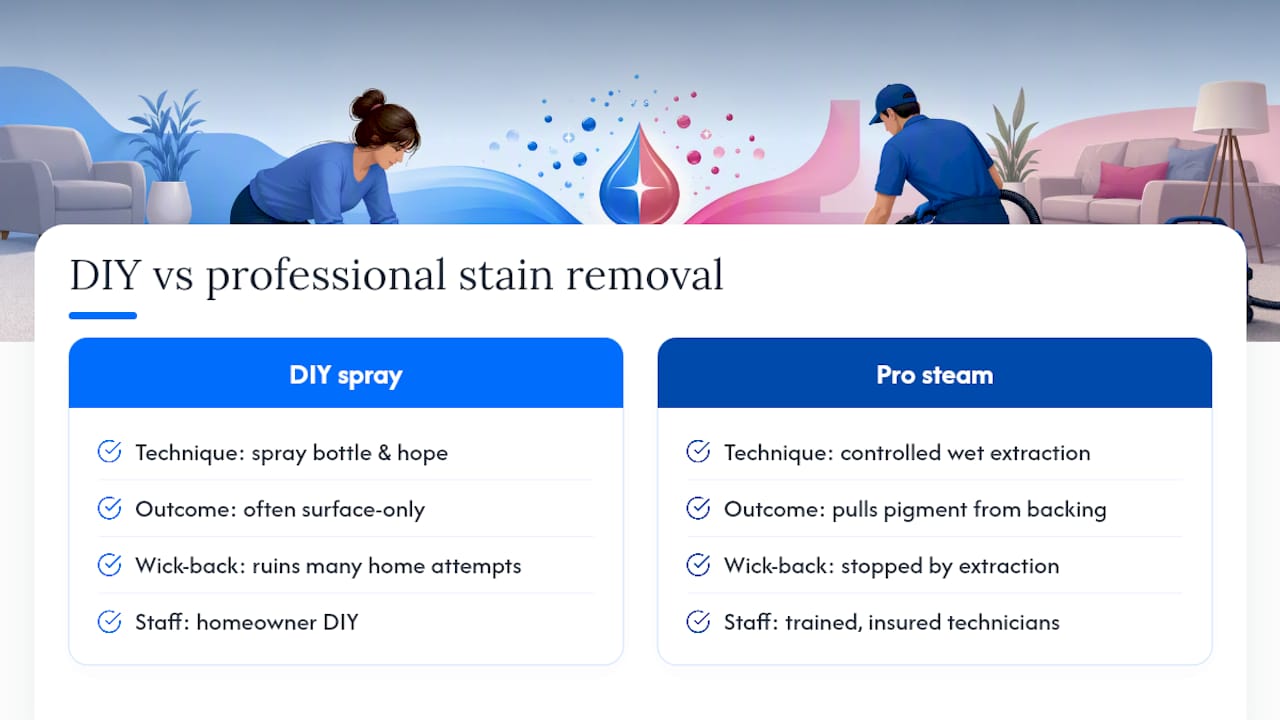
The advantage over continuing to DIY a stubborn stain is straightforward: our technicians use eco-friendly, chemical-free methods and extraction equipment strong enough to pull pigment out of the backing, not just the surface, which stops the wick-back that ruins so many home attempts. Trained, insured staff handle everything from a single lipstick mark to a full room affected by flood or spill damage. If you’ve got makeup on upholstery as well as carpet, the same visit can cover both. Book a carpet steam clean and get a technician out before the stain has a chance to set for good.
Sources
- How to remove makeup from carpet – Actichem
- How to Get Makeup Out of Carpet and Upholstery – BISSELL
- How to Remove Makeup Stains From Carpet and Upholstery – The Spruce
