Porcelain tile cleaning: the safe routine that protects the finish
The safest way to clean porcelain tile every day is simple: dry sweep first, mop with a pH-neutral cleaner, rinse with clean water, and then dry the surface completely. Skip that order and you risk grinding grit into the glaze or leaving behind a film that dulls the finish.
Before you grab whatever’s under the sink, run through this checklist for porcelain paving slabs:
- Soft broom or vacuum with a floor brush attachment to lift grit before it scratches anything
- A microfibre mop, well wrung, rather than a sopping string mop
- A pH-neutral tile cleaner, never a generic multi-purpose spray
- A thorough rinse with clean water, followed by a proper dry
Avoid acidic cleaners, scouring pads and wax-based “shine” products. They either etch the glaze or leave a residue that makes floors slipperier, not cleaner.
Key Takeaways
Porcelain tile stays cleanest when you dry sweep first, use a pH-neutral cleaner, rinse thoroughly, and dry the surface, avoiding anything acidic or abrasive along the way.
| Point | Details |
|---|---|
| Follow the daily rhythm | Dry sweep or dust mop daily, mop with pH-neutral cleaner weekly, and deep-check traffic lanes monthly. |
| Rinse every time | Always follow cleaning with a clean-water rinse to stop residue building up and reducing slip resistance. |
| Match technique to finish | Matte, polished and textured porcelain each need different products and mechanical action to avoid damage. |
| Treat stains by type | Use pH-neutral cleaner for spills, mild alkaline for grease, and oxygen bleach for grout, never chlorine on coloured grout. |
| Call a professional for buildup | Tacky surfaces, grease in traffic lanes or lost slip resistance signal it’s time for an autoscrub deep clean like the ones Com provides across Melbourne. |
Where this guidance comes from
- a care and maintenance guide from the tile manufacturer covers manufacturer-recommended cleaning equipment and finish-specific cautions.
- Tile Doctor’s deep-cleaning guide explains why porcelain looks dull and how to fix it without streaking.
- a porcelain care guide sets out the daily, weekly and monthly routine referenced throughout.
Always check your own tile manufacturer’s care instructions first, and test any new product on a small, hidden area before cleaning the whole floor.
Table of Contents
- Tools and materials for porcelain tile cleaning
- How often should you clean porcelain tile floors?
- Does porcelain tile finish change how you clean it?
- How do you remove stains from porcelain tile and grout?
- What should you never use on porcelain tile?
- When should you call a professional for porcelain tile cleaning?
- Book a professional porcelain tile and grout clean
- Frequently asked questions
- Sources
Tools and materials for porcelain tile cleaning
Good porcelain tile cleaning comes down to what touches the surface, not how hard you scrub. Keep a soft-bristle broom, a vacuum fitted with a soft floor head, a microfibre dust mop for daily use, and a separate microfibre mop or spray mop for wet cleaning. Use clean buckets, not the same bucket you used for outdoor work.
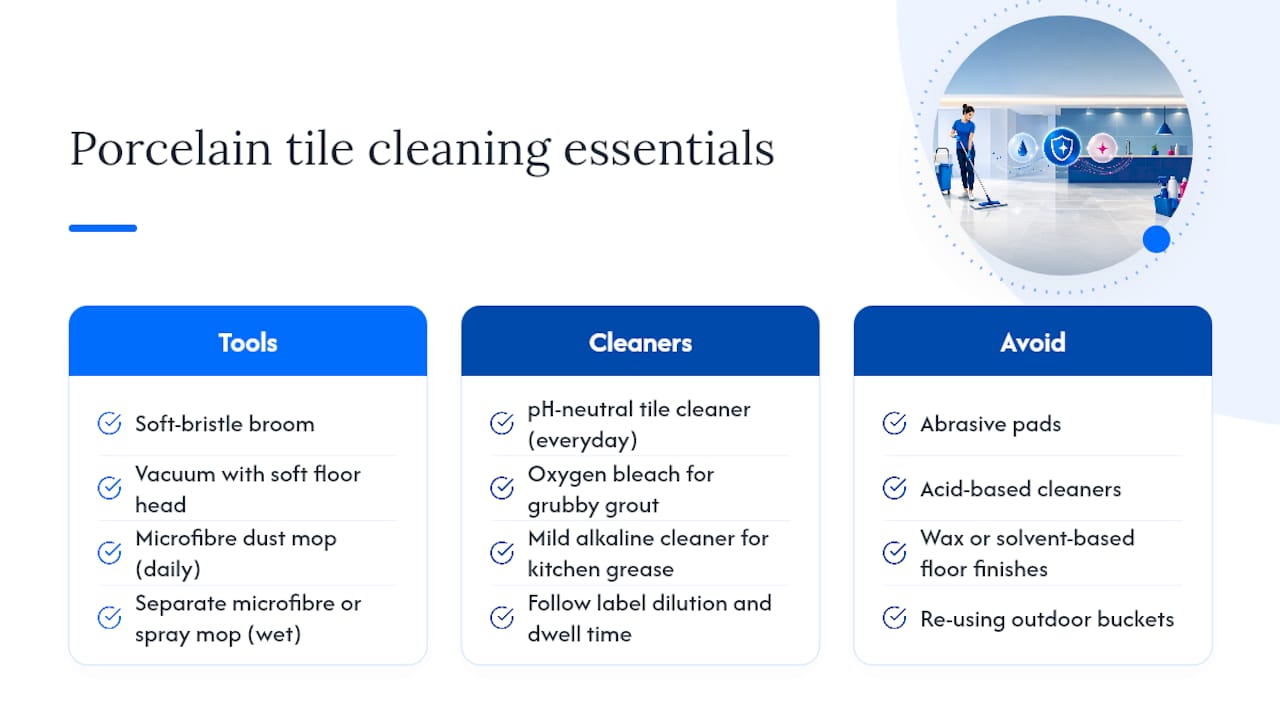
For cleaners, stick to a pH-neutral tile cleaner as your everyday product. Oxygen bleach handles grubby grout without the risks that chlorine bleach carries, and a mild alkaline cleaner will cut through kitchen grease. Whatever you choose, follow the dilution ratio and dwell time on the label. Technique matters more than the product itself, according to cleaning guidance from a tile cleaning expert, which points to matching the cleaner to the finish and rinsing fully as the two biggest factors in a streak-free result.
Steer clear of abrasive pads, acid-based cleaners, and any wax or solvent-based floor finish. These leave the kind of film that turns a satin floor tacky underfoot.
Pro Tip: Choose a microfibre mop head with a tight weave and wring it until it’s barely damp. A dripping mop pushes water into grout lines and textured low points, where it evaporates slowly and leaves mineral spots behind.
How often should you clean porcelain tile floors?
Porcelain doesn’t need aggressive cleaning, just consistent cleaning. A daily/weekly/monthly rhythm keeps grit and grease from building into the kind of grime that needs a deep clean to shift, a pattern echoed in a care guide for porcelain floors.
Daily
- Dry sweep or run a microfibre dust mop over the floor to lift grit before it gets ground in underfoot.
- Spot clean any spills immediately, especially in kitchens and bathrooms where liquids sit on the non-porous surface rather than soaking in.
Weekly
3. Mop with a pH-neutral solution using a well-wrung microfibre mop or a spray mop.
4. Rinse with clean water in a second pass, then dry the floor with a clean towel or mop to stop water spots forming.
Monthly
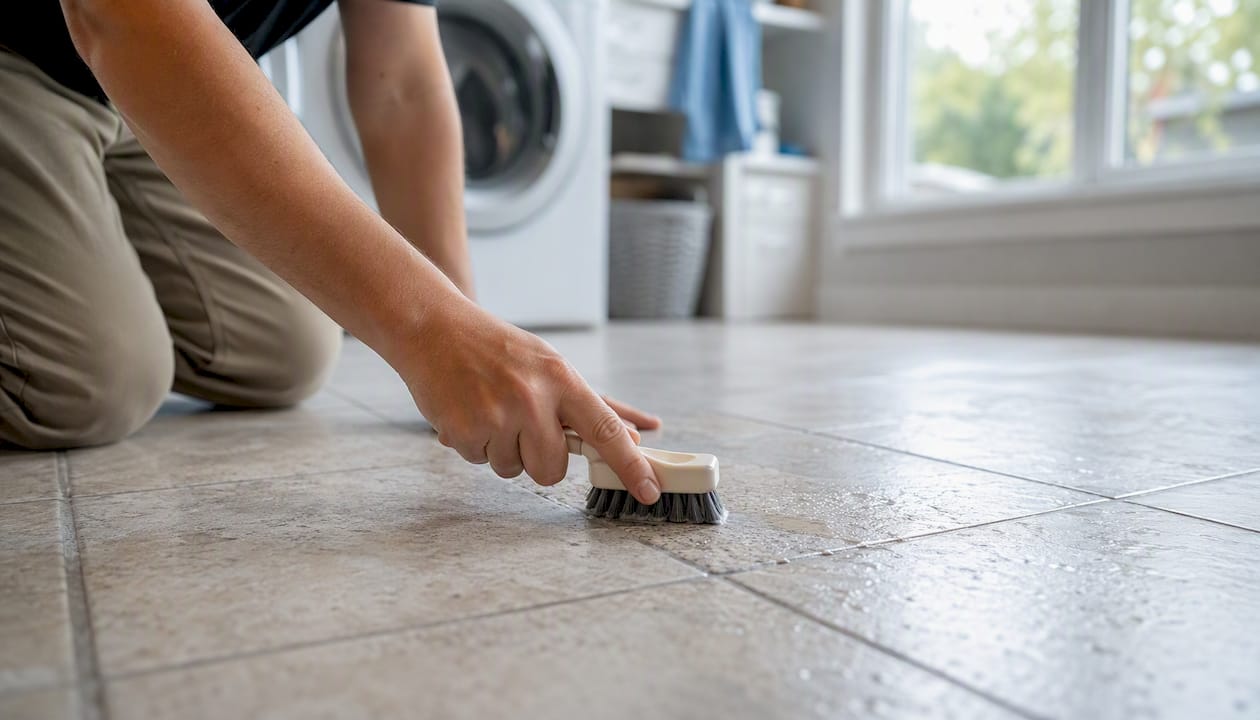
5. Give traffic lanes, entryways and kitchen zones a deeper clean, since these areas collect more residue than the rest of the floor.
6. Check grout lines for early discolouration or grime buildup, and treat small trouble spots before they spread.
Post-installation
7. New porcelain almost always carries grout haze from the install. Follow your installer’s or manufacturer’s cleaning guidance for the first clean, and for polished tiles, consider booking a professional post-install clean to remove haze without scratching the surface.
Work in small sections, roughly a metre or two at a time, and change your rinse water as soon as it looks cloudy. Mopping with dirty water just redistributes the soil you were trying to remove, according to a two-step method for porcelain floors, which recommends dry sweeping first and scrubbing second so loose debris never turns into scratch-causing paste under the mop.
Pro Tip: If you’re cleaning a large area, tackle it in overlapping sections rather than mopping the whole floor in one pass. It stops the cleaning solution from drying on the tile before you’ve had a chance to rinse it off.
Does porcelain tile finish change how you clean it?
Matte, polished, and textured porcelain all handle dirt differently, so the same routine needs small adjustments depending on what’s underfoot.
- Matte porcelain shows a hazy film more obviously than gloss finishes do. Avoid gloss-enhancing polishes on matte tile. They create patchy shine instead of an even finish.
- Polished porcelain scratches more easily than it looks. Abrasive pads and gritty cleaners can leave fine scratches or etching that catches the light at certain angles.
- Textured or anti-slip porcelain traps dirt in its low points. It needs more mechanical action and a proper rinse, since dirt left in the texture reduces the very grip the finish was designed for, a point a tile cleaning expert makes about brush work on textured surfaces.
Polished tiles sometimes need pre-sealing or a grout release treatment during installation, and a care and maintenance guide from the tile manufacturer warns against acids and solvent-based products on these surfaces specifically.
Pro Tip: Test any new cleaner on a small, hidden section first, like a corner behind furniture. Wait for it to dry fully and check for dulling, spotting or a change in texture before you use it across the whole floor.
How do you remove stains from porcelain tile and grout?
Most porcelain “stains” are surface residue sitting on a non-porous glaze rather than something soaked into the tile itself, which is why a guide to deep cleaning porcelain tiles points to grease, hard-water film and grout haze as the usual culprits behind a floor that looks dull even after mopping. Before treating anything as a stain, wipe it with a damp microfibre cloth. If it lifts easily, it was residue, not a stain.
Match your treatment to what caused the mark:
- Organic spills (food, wine, juice): pH-neutral cleaner and a soft cloth, applied promptly
- Grease and cooking oil: mild alkaline cleaner with a short dwell time before wiping
- Dye or ink: oxygen bleach solution left to sit briefly, then rinsed thoroughly
- Mineral deposits from hard water: a manufacturer-approved descaling product, used sparingly and rinsed well
For grout, follow this sequence:
- Dry-clean the area first to remove loose grit.
- Pre-treat grout lines with an oxygen bleach solution rather than chlorine bleach, which can weaken grout over time.
- Scrub gently with a nylon brush, never a metal one.
- Rinse thoroughly and let it dry before walking on it.
Sealing helps porous cement-based grout resist staining and makes routine cleaning easier, though it isn’t necessary for all grout types. If your grout absorbs water quickly (test by dripping a small amount on it), sealing is worth doing, with reapplication roughly every 12 to 24 months depending on foot traffic.
What should you never use on porcelain tile?
A handful of common household products cause most of the damage homeowners see over time. Avoid:
- Acidic cleaners (vinegar, some bathroom sprays), which can etch glazed surfaces and dull the shine
- Chlorine bleach on coloured grout, which fades colour and weakens the grout over repeated use
- Abrasive pads or scouring powders, which leave fine scratches that trap dirt permanently
- Oil-based “shine” products, which build up into a slippery film rather than a genuine polish
- Over-wetting, which pushes moisture into grout lines and can affect the substrate underneath
One detail trips up more people than any single wrong product: using the same mop water for an entire floor. As it clouds with soil, you’re no longer cleaning, you’re redistributing grime and leaving the residue that Daltile’s maintenance guidance specifically flags as a cause of reduced slip resistance. Over-diluting a cleaner wastes your time; over-concentrating it leaves a film that needs a second rinse to remove.
When should you call a professional for porcelain tile cleaning?
Regular mopping has limits. If your floor feels tacky underfoot even after cleaning, if grease has built up in a kitchen traffic lane, if grout looks permanently grey no matter how hard you scrub, or if a textured floor has lost its grip, it’s time for a deeper intervention than a mop and bucket can deliver.
Professional cleaners typically use cylindrical autoscrubbers fitted with soft-to-medium bristle brushes, which apply cleaning solution, agitate it mechanically, and extract the dirty water in a single pass. The tile manufacturer recommends this approach for periodic heavy cleaning, since manual mopping simply can’t match the consistent water application and extraction that prevents soil from being redeposited into grout lines.
What separates a professional result from a DIY attempt usually comes down to a few things:
- Correct dwell time for heavy-duty cleaners, typically a few minutes of contact before agitation
- Full extraction rather than a mop-and-hope rinse
- Grout restoration where standard cleaning hasn’t shifted years of grime
- A slip-resistance check after the clean, especially important on textured or commercial floors
A floor that looks clean but feels slightly tacky almost always means residue sitting on the glaze, not dirt underneath it. That’s the single biggest sign a mop and bucket won’t fix, and the clearest reason to bring in equipment built for extraction rather than just wiping.
If you’re vetting a contractor, ask what products they use and at what dilution, how long they let cleaner dwell before agitating, whether their equipment extracts or just applies solution, and whether they test slip resistance afterwards. Also confirm they’re insured. A professional tile and grout cleaning service should be able to answer all of this without hesitation.
A professional cleaner’s take on porcelain care
Eco-friendly products and trained staff matter more than fancy equipment when it comes to protecting a finish you’ve paid good money for. We run modern autoscrubbing gear across Melbourne homes and commercial sites, backed by a satisfaction guarantee and same-day booking where it’s needed.
Book a professional porcelain tile and grout clean
If your floor has reached the point where mopping isn’t cutting it anymore, that’s exactly the gap professional tile cleaning fills. Com offers eco-friendly, chemical-free tile and grout cleaning across Melbourne, using autoscrub and steam extraction methods that lift the buildup, grease and grout haze a household mop can’t touch, without leaving the residue that ordinary cleaners often do.

A typical visit starts with an inspection of your tile finish and grout condition, followed by a recommended treatment plan and transparent pricing before any work begins. We also handle grout restoration where colour has faded or grime has settled in permanently, something a weekend of scrubbing rarely resolves. Property managers dealing with multiple units, and homeowners with heavy foot traffic through kitchens and entryways, tend to see the most value from a scheduled deep clean rather than waiting until the floor looks visibly dull.
If you’d like a quote or a site inspection, our tile clean services page has the details on what’s included and how to book.
Frequently asked questions
What is the best way to clean porcelain tiles without damaging them?
Dry sweep to remove grit, mop with a pH-neutral cleaner, rinse with clean water, and dry the surface. Avoid acidic cleaners and abrasive pads, which cause most of the long-term damage homeowners see.
Can you steam clean painted walls the same way you clean porcelain floors?
Not quite. Painted walls need a much gentler approach than tile. If you want to clean walls without damaging paint, use a soft microfibre cloth with a mild diluted cleaner rather than a steam cleaner, since heat and moisture can soften or bubble paint. Wash painted walls safely by testing a small patch first and always working top to bottom to avoid streaking.
What’s the best porcelain tile cleaner for everyday use?
A pH-neutral tile cleaner is the safest everyday option. It won’t etch the glaze or strip grout the way acidic or highly alkaline products can, and it doesn’t need heavy dilution guesswork.
How often should porcelain floors be professionally deep cleaned?
It depends on foot traffic, but most homes benefit from a professional clean every 12 to 18 months, while high-traffic commercial spaces often need it more frequently, particularly in kitchens and entryways.
Why does my porcelain floor look hazy even after mopping?
Hazy porcelain is almost always residue sitting on the non-porous surface, from cleaning products, grease or hard water, not dirt embedded in the tile. A deep clean with proper dwell time and full rinsing usually clears it.
Sources
- Ceramic & Porcelain Tile Care & Maintenance Step-by-Step Guide | Daltile
- How to Deep Clean Porcelain Tile (Without Leaving Residue or Streaks) – Tile Doctor
- How To Clean Porcelain Tile Safely and Effectively
- How To Clean Porcelain Floors Like a Pro – Tiles Mate
- How to Clean Porcelain Floors: Best Way to Clean Porcelain Floors in Commercial Settings
