Black water carpet: can it be saved, or does it go?
A carpet soaked by black water is, in almost every case, headed for the skip, not the drying rack. Category 3 water, the official term under IICRC’s S500 standard, covers sewage backups, floodwater, and storm surge, and it treats carpet and underlay as materials to remove rather than dry. The health risk comes from what’s living in that water, not just how wet things look.
Your priority in the first hour isn’t cleaning. It’s containment. Keep everyone out of the affected room, stop touching or moving anything, and call a restoration provider trained to IICRC S500/S520 protocols before you do anything else. The Australian Institute of Health and Welfare notes that infectious pathogens from contaminated water don’t need much time to become a genuine health hazard once they’re airborne.
Key Takeaways
Category 3 black water contamination almost always requires removing carpet and underlay entirely, and calling certified professionals beats any DIY attempt at drying or cleaning.
| Point | Details |
|---|---|
| Verdict on salvage | Carpet and underlay touched by black water are generally unsalvageable under IICRC S500 and need removal, not drying. |
| Act within 24 to 48 hours | Mould colonisation begins in this window, so calling a professional immediately limits cost and damage scope. |
| Never DIY the cleanup | Household vacuums and fans can aerosolise pathogens and endotoxins, putting vulnerable people at extra risk. |
| Insist on documentation | A qualified provider gives you a written job brief, clearance testing, and disposal records for your insurer. |
| Com’s emergency response | Com offers 24/7 emergency extraction, drying, and disinfection for black water incidents, following S500-aligned protocols. |
Table of Contents
- What to do (and avoid) in the first 24 hours
- Why black water carpet contamination is different
- What a professional black water cleanup actually involves
- Salvage or replace: how the decision actually gets made
- What drives cost, and how insurers usually see it
- How to pick a restoration provider without getting burned
- A note from the field
- Get emergency help before contamination spreads
- Sources
What to do (and avoid) in the first 24 hours
The first day after a black water incident decides how much of your home or property you keep. Act fast, but act carefully.
Do this:
- Isolate the room. Close doors, and if you can, seal the gap underneath with towels or plastic sheeting.
- Keep kids, pets, and anyone with a compromised immune system well away from the area.
- Photograph the damage: water lines on walls, saturation extent, and any visible debris.
- Switch off the HVAC system if it services the contaminated room, to stop spreading spores through the ducts.
- Call an emergency restoration provider straight away, not in the morning.
Don’t do this:
- Don’t walk through the affected area more than necessary. Every footstep spreads contamination further.
- Don’t run a household vacuum or fan over black water residue. Household vacuums aerosolise pathogens instead of removing them, and a domestic vacuum simply isn’t built for this job.
- Don’t try to dry and reuse the carpet or underlay. Saturated padding holds onto contamination even after it looks dry.
Pro Tip: Photograph the floor transitions and the exact water line before anyone starts cleanup. Insurers and restoration teams both use this to define the scope of the job, and it’s much easier to capture before the area gets disturbed. If you need to bag saturated carpet yourself while waiting for help, don’t. That’s a job for someone in proper PPE.
Why black water carpet contamination is different
“Black water” isn’t a scary marketing term. It’s a defined category. IICRC S500 splits water damage into three tiers, and Category 3 is the one that includes sewage backups, rising floodwater, and storm surge, water that’s picked up biological waste, chemicals, or ground contaminants on its way into your home.
That distinction matters because of what’s actually in the water. Pathogens like E. coli, Salmonella, and norovirus are common in sewage-affected water, alongside endotoxins released by bacteria that can trigger inflammation and respiratory symptoms even after the visible mess is gone. The AIHW’s research on environmental health points to a specific danger most people miss: disturbing contaminated carpet, whether by walking on it, vacuuming it, or trying to dry it in place, can aerosolise those pathogens and endotoxins into the air you breathe.
Residual sewage, silt, and mould keep posing a risk long after the water itself has receded. The danger doesn’t end when the room looks dry.
Timing compounds the problem. Mould starts colonising wet material within 24 to 48 hours, according to flood repair guidelines used across the restoration industry. That’s not a rough guess. It’s the window professional crews plan around, which is why a same-day call to a qualified provider changes the outcome far more than a same-day mop-up attempt ever could.
This is also where IICRC S500 and its companion mould standard, S520, earn their place in any conversation about carpet water damage. They’re the industry benchmark, and asking a contractor whether they follow them is a fair, simple question.
What a professional black water cleanup actually involves
A properly run job follows a sequence, not a single spray-and-wipe visit. Here’s the general order restoration technicians work through on a Category 3 loss:
- Containment and safety setup. Crews seal off the area, often with negative air pressure and HEPA filtration, so removing saturated materials doesn’t spread spores and bacteria into clean parts of the property.
- PPE and site assessment. Technicians in respirators, gloves, and protective suits map moisture levels with meters and thermal imaging before touching anything.
- Removal of porous materials. Carpet, underlay, and sometimes affected skirting or drywall get pulled out and bagged for disposal, since they can’t be safely dried in place.
- Industrial extraction and disinfection. Hard surfaces underneath get extracted and disinfected using commercial-grade equipment.
- Structural drying. Industrial dehumidifiers and air movers bring the subfloor and surrounding structure back to a safe moisture level.
- Clearance testing. A final check confirms the space is safe to reoccupy or rebuild.
A step-by-step professional water restoration process follows this same rough shape on real jobs, and it’s worth asking any provider to walk you through their version of it before you sign anything.
What you should expect on paper afterwards matters just as much as the physical work:
- A written job brief outlining the scope of the incident.
- Notes suitable for an insurance claim, describing what was removed and why.
- Clearance test results confirming the area is safe.
- Waste disposal records showing contaminated materials were handled correctly.
Training standards for restoration technicians, including competency frameworks used in industry certification, specifically require this kind of documentation before a job is considered complete.
Salvage or replace: how the decision actually gets made
Under IICRC S500, porous materials that have touched Category 3 water are generally treated as unsalvageable. Carpet fibres and underlay absorb contaminants in a way that surface cleaning can’t reach, which is why “sanitise and reinstall” isn’t really an option for most black water jobs.
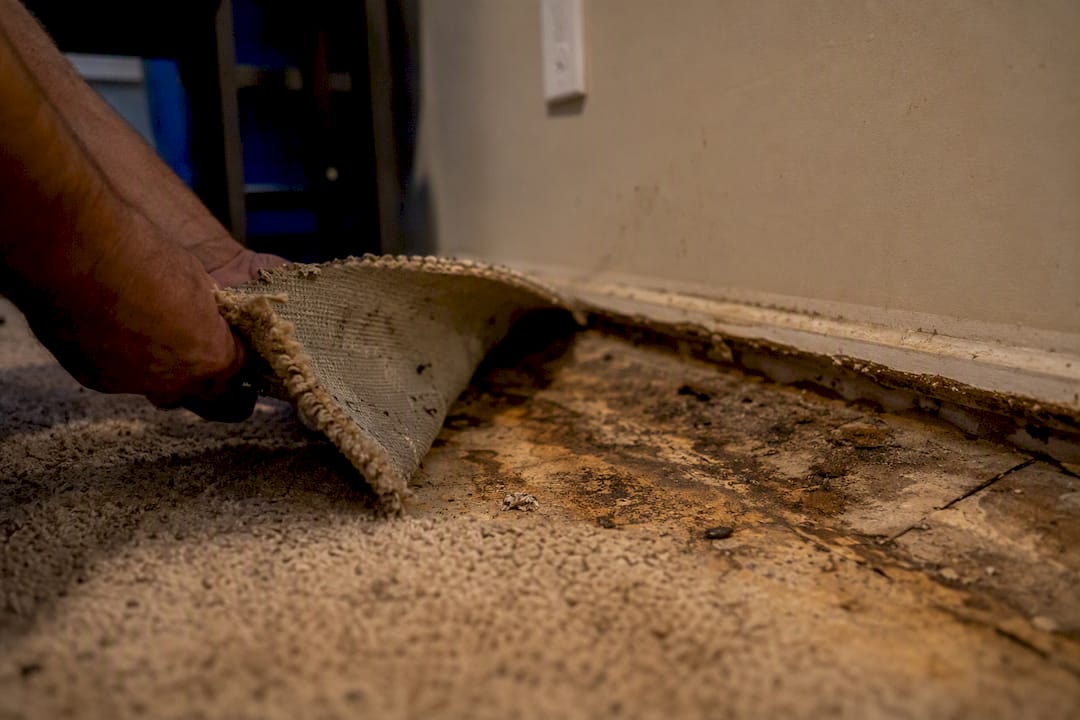
A few signs make the call for you. If the padding or subfloor is saturated, if there’s a musty smell (and if you can smell it, something is already growing), or if you can see solids or debris in the water, replacement is the only responsible path. The same applies if water has tracked into wall cavities or HVAC ductwork.
There’s a narrow exception. A high-value area rug, or a small, isolated patch of edge exposure with no padding contamination, might be worth assessing individually. Even then, it needs proper lab testing and documented chain-of-custody before anyone reuses it, not a guess based on how it looks once it’s dry.
Pro Tip: If a contractor offers to “just disinfect and put it back” without removing anything, treat that as a warning sign, not a bargain. It usually means they’re skipping the part of S500 that actually matters.
Small, isolated exposure is the exception, not the rule, and even then it needs a specialist assessment, not a guess.
What drives cost, and how insurers usually see it
Cost tracks scope, not sentiment. The bigger the affected floor area, the more saturated the underlay or subfloor, and the harder the room is to access, the higher the bill climbs. Jobs that need controlled demolition of skirting or drywall, biohazard-compliant disposal, or heavy-duty drying equipment cost more than a straightforward carpet-and-underlay pull.
Insurers, for their part, tend to treat Category 3 losses as a replacement job rather than a repair. That’s largely because S500 itself frames contaminated porous materials that way.
- Photograph everything before cleanup starts.
- Keep every receipt, job brief, and disposal record from your contractor.
- Report the incident to your insurer early. Most policies respond better to prompt claims than delayed ones.
- Act within that 24 to 48 hour window. Waiting longer typically expands the demolition and replacement scope, and the cost that comes with it.
How to pick a restoration provider without getting burned
Ask direct questions before you commit to anyone. Are your technicians IICRC certified? Do you follow S500 and S520 protocols? Can you show me your PPE and containment setup? What’s your process for disposing of contaminated waste, and can you document it?
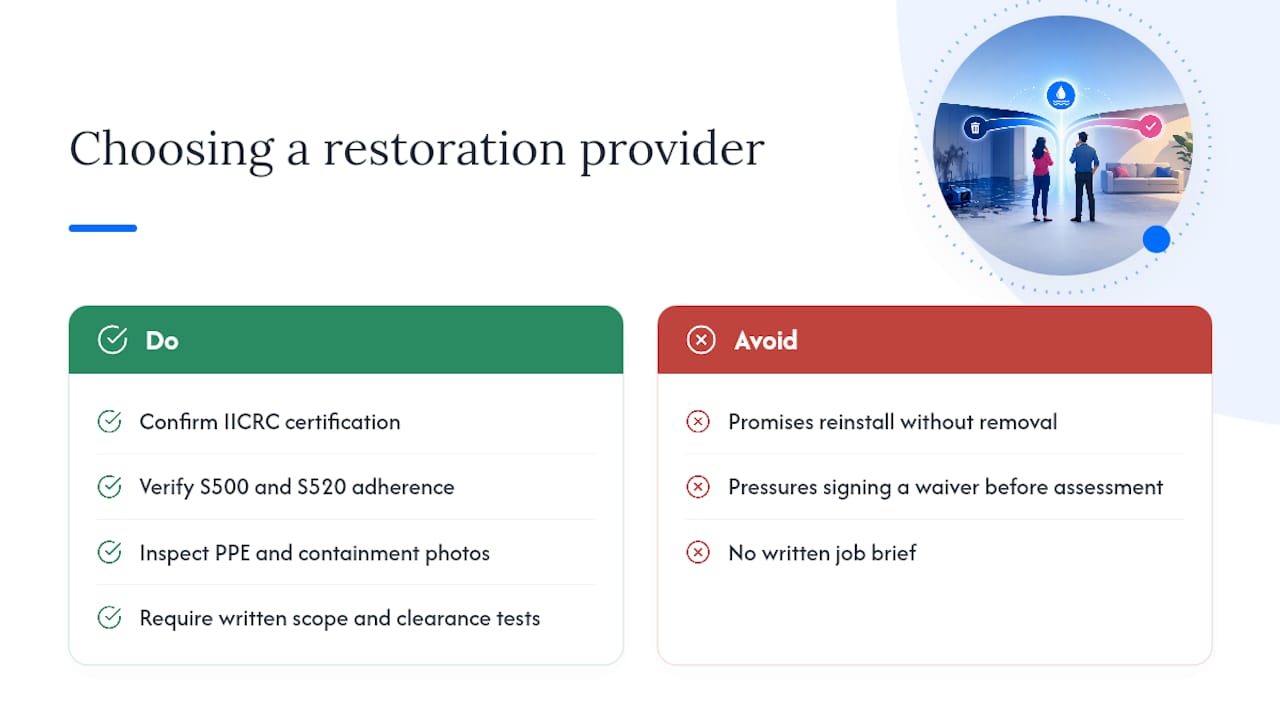
Walk away from anyone who promises to sanitise and reinstall carpet without removing it, pressures you to sign a waiver before any assessment happens, or can’t produce a written job brief. A provider with nothing to hide will happily show you containment photos, an equipment list, and past clearance test reports.
Pro Tip: Ask for references tied specifically to Category 3 jobs, not general carpet cleaning. Sewage and floodwater response is a different skill set from a routine steam clean, and the paperwork trail should reflect that.
A written scope, a documented job brief, and clearance testing aren’t paperwork for its own sake. They’re what your insurer will ask for, and what protects you if a dispute comes up later.
A note from the field
We deal with black water incidents often enough to know the difference between a fast, safe response and a slow, costly one. Our technicians are trained, insured, and equipped with commercial-grade drying and extraction gear, and we follow the same industry protocols this guide describes. Same-day response is available for genuine emergencies, and our cleaning methods stay chemical-free wherever the job allows it.
Get emergency help before contamination spreads
Every hour a black water carpet sits untouched adds risk and cost. Com runs 24/7 emergency response across the flood and sewage restoration jobs this guide describes, with containment, controlled removal, industrial drying, and disinfection handled by trained, insured technicians rather than a general handyman crew.
Where a DIY dry-out or a bargain cleaner might leave contamination behind the skirting boards, our teams follow the same S500-aligned process outlined above, right through to documentation you can hand straight to your insurer. We also stock genuine plastic-free cleaning cloths and compostable wipes for the parts of a job where eco-friendly materials can safely do the work.
If you’re dealing with sewage backup, storm surge, or a burst pipe that’s turned nasty, call our 24/7 emergency flood damage restoration team now, or check our emergency carpet drying service if extraction and drying are your immediate concern. Every job comes backed by a satisfaction guarantee and fully insured staff.
Sources
Ask any contractor to show their S500 and S520 compliance directly, not just claim it.
For further reading, the IICRC S500 standard and AIHW’s infectious disease reporting cover the health and procedural detail behind everything above. Request equivalent evidence from any provider you hire.
This article is general information, not a substitute for advice from a qualified doctor. Consult a qualified healthcare professional about your own circumstances before acting on anything here.
- Australia’s health: infectious and communicable diseases | AIHW
- Standard for Professional Water Damage Restoration (S500) | IICRC
- Restore water-damaged carpets unit standard | NZQA (example training/competency reference)
