Can you steam clean a microfibre couch safely?
Yes, you can steam clean most microfibre couches, but only after you check one thing first: the manufacturer’s cleaning code. Look for a W or WS tag under the cushions or on the frame, and steam is fair game. See an S or X, and steam is off the table entirely.
Verdict: if your couch is W or WS coded, a handheld steamer or low-moisture upholstery machine will do the job safely at home. If it’s S coded, skip steam altogether and use a solvent-based method or call in a pro.
An S-coded microfibre couch exposed to steam or water risks permanent staining and matted fibres that no amount of brushing will fix.
Three things to sort before you start:
- Find and read the cleaning code tag.
- Match your equipment to the fabric (steamer vs solvent).
- Spot-test in a hidden spot, always.
Key Takeaways
Steam cleaning works safely on microfibre only when the fabric carries a W or WS code, and technique, not equipment alone, determines whether the finish looks restored or damaged.
| Point | Details |
|---|---|
| Check the code first | Find the W, WS, S, or X tag under cushions before touching a steamer. |
| Match method to code | Only W/WS fabrics take steam; S-coded microfibre needs solvent cleaning instead. |
| Keep the steamer moving | Hold it a few centimetres away and pass side to side, never lingering on one spot. |
| Blot and dry fast | Use microfibre cloths immediately, then run a fan for 2 to 4 hours until fully dry. |
| Call Com for risky jobs | Book a professional steam clean for S-coded fabrics or set-in stains via Com. |
Table of Contents
- Pre-clean checklist before you steam clean a microfibre couch
- What do the W, WS, S and X cleaning codes mean?
- How do you prepare the couch and workspace properly?
- How to steam clean microfiber couch fabric step by step
- How long does a steamed couch take to dry?
- Which stains need steam, solvent, or extraction instead?
- When should you call a professional cleaner instead?
- Prefer to book a professional steam clean instead?
- Sources
Pre-clean checklist before you steam clean a microfibre couch
Skipping prep is how DIY jobs go wrong. Vacuum the entire couch first, working the upholstery attachment into seams, crevices, and piping where crumbs and dust settle. Pull the cushions and check the underside for a care tag; no tag means you spot-test a hidden patch, like the back of an armrest, before committing to the whole couch. Gather your gear: a handheld steamer or upholstery extractor, several clean microfibre cloths, a soft-bristle brush, and a fan for drying.
Pro Tip: A handheld garment steamer gives you more control for small stains and cushions, while an upholstery extractor suits full-couch jobs where you need suction to pull moisture back out. If you’re nervous about over-wetting, start with the steamer.
What do the W, WS, S and X cleaning codes mean?
Every microfibre couch carries a manufacturer code that tells you exactly what it can tolerate, and ignoring it is the single most common cause of ruined upholstery.
- W means water-based cleaners are safe, including steam.
- WS means both water and solvent-based cleaning work.
- S means solvent only. Steam and water will cause watermarks or shrinkage.
- X means vacuum only. No liquid of any kind, professional cleaning required for stains.
Only W and WS fabrics tolerate steam. Fresh Furnish Cleaners recommends isopropyl rubbing alcohol or a dry-cleaning solvent for S-coded microfibre instead of water or steam. Check under the cushions or on the frame tag before you plug anything in.
Microfibre traps particles well, but water on an S-coded fabric causes watermarks that professionals struggle to fully reverse.
If there’s no tag at all, treat the couch as S-coded until a hidden spot test proves otherwise.
How do you prepare the couch and workspace properly?
Getting the room ready matters almost as much as the technique itself.
- Remove all cushions and vacuum every surface, including the frame and underside of cushions.
- Pre-treat any obvious stains with a solvent matched to the fabric’s code.
- Move nearby furniture and lay a towel or drop sheet on the floor to catch drips.
- Open a window or position a fan nearby so drying starts the moment you finish.
- Attach the fabric brush or upholstery bonnet to your steamer or extractor and set out dry microfibre cloths for blotting.
Pro Tip: If a pre-spray is needed for a set-in stain, mix a low-residue solution rather than a heavy commercial cleaner; for professional assistance, see Floor Cleaning – ACT Cleaning by Demand. Heavy sprays leave a soapy film that attracts dirt faster once the couch is clean. Skip pre-spraying altogether on lightly soiled couches, plain steam and blotting is often enough.
How to steam clean microfiber couch fabric step by step
Work methodically and you’ll avoid the two classic mistakes: soaking one spot and leaving streaks everywhere else.
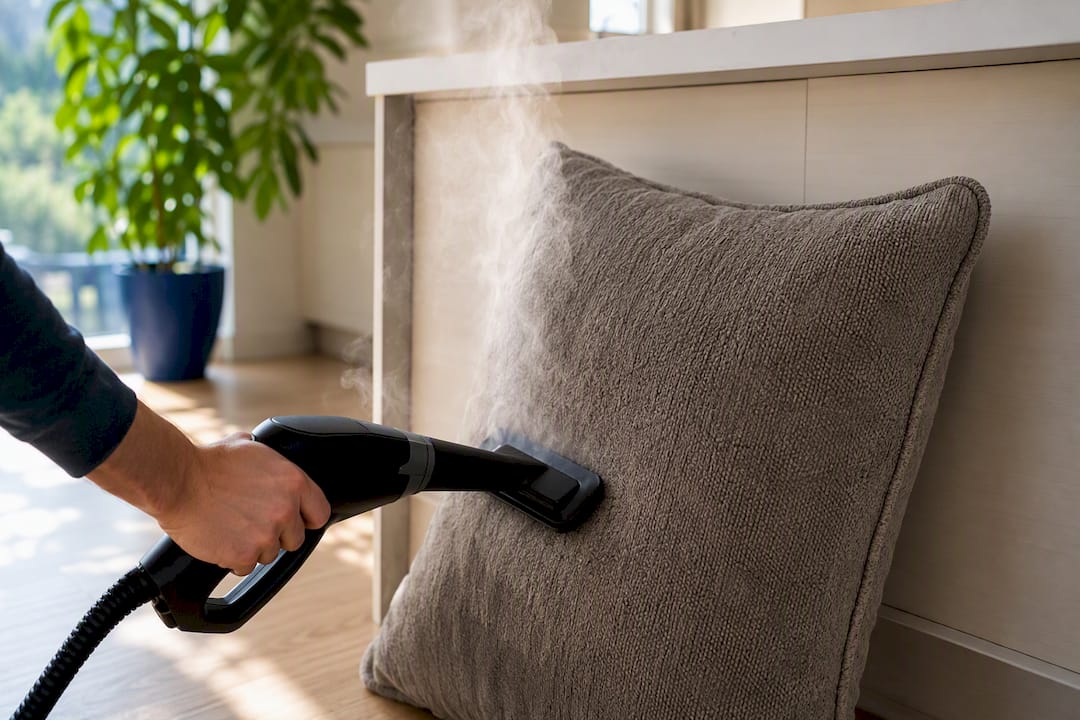
- Hold the steamer nozzle a few centimetres from the fabric, never pressed directly against it.
- Move the head in slow, side-to-side passes, don’t linger over any single patch, especially seams and stitching.
- Work top to bottom in small sections, roughly a cushion’s width at a time.
- Use the upholstery attachment or bonnet, then blot immediately with a dry microfibre cloth as you go.
- Move to the next section only once the previous one is blotted dry to the touch.
A handheld garment steamer gives you fine control for cushions and armrests but relies entirely on you to blot moisture out. An upholstery extractor, the kind used in professional couch cleaning, injects and pulls moisture back out in the same pass, which cuts drying time significantly. BobVila’s testing found cleaning power varies a lot between consumer machines, so a low or medium steam setting is the safer default on delicate microfibre.
Oily or set-in stains rarely lift with steam alone. Professional cleaners treat steam and extraction as separate tools: steam sanitises and lifts light soils, while hot water extraction actually rinses out deep oil and set stains. If a stain has been there more than a day or two, reach for a targeted solvent or plan on extraction instead.
Pro Tip: Never steam near buttons, glued trims, or decorative embellishments. Heat can loosen adhesive and warp plastic fittings, and the steam itself can burn skin at close range, so keep your free hand clear of the nozzle.
Practitioners keep the wand moving several centimetres from the surface at all times, letting vapour lift soils rather than soaking the padding underneath.
How long does a steamed couch take to dry?
Airflow does more work than time alone. Point a fan directly at the couch and, if the room allows it, open a window to keep air moving across the fabric rather than trapping humidity against it. Avoid direct heat sources like a hairdryer or heater vent, which can warp foam or leave the fabric stiff.
- Light steam cleaning: typically 2 to 4 hours to dry fully.
- Extraction cleaning: often longer, sometimes overnight, because more water goes in.
- Blot excess moisture immediately after each section rather than waiting until the end.
- Rotate cushions periodically so both sides get even airflow.
Once the couch is completely dry, not just dry to the touch, brush the nap gently with a soft-bristle brush in circular motions. Finishing the nap this way is what separates a couch that looks professionally restored from one that looks flat and matted.
Pro Tip: A fabric guard applied after cleaning buys you time to blot spills before they soak into the foam, which is especially useful if kids or pets share the couch.
Restoring the nap with gentle circular brushing once the fabric is bone dry is often the missing step in DIY jobs, and it’s the difference between “cleaned” and “damaged-looking.”
Which stains need steam, solvent, or extraction instead?
Not every stain responds to steam, and knowing which method suits which mess saves you from making things worse.
- Fresh food or drink spills: steam works well, it’s water-soluble and lifts easily while fresh.
- Wine or coffee: steam handles light marks; older set-in stains need a solvent pass first.
- Pet urine: steam sanitises the surface, but odour trapped in foam usually needs extraction.
- Oil or grease: steam alone rarely shifts it fully, use a degreasing solvent matched to the code first.
- Ink: avoid steam entirely, use isopropyl alcohol on S-coded fabric or call a pro for W/WS fabric with set ink.
Steam is genuinely good at sanitising and lifting fresh, water-soluble marks. Hot steam can even kill surface dust mites when used carefully, which matters if allergies are a factor in your household. Where it falls short is oily residue and anything that’s had days to set into the foam underneath.
Can you use steam on microfibre generally? Yes, provided the code is W or WS. Does steam remove old stains? Rarely on its own, extraction or solvent treatment usually finishes the job. Is steam enough to sanitise a couch? For surface bacteria and dust mites, yes, largely.
When should you call a professional cleaner instead?
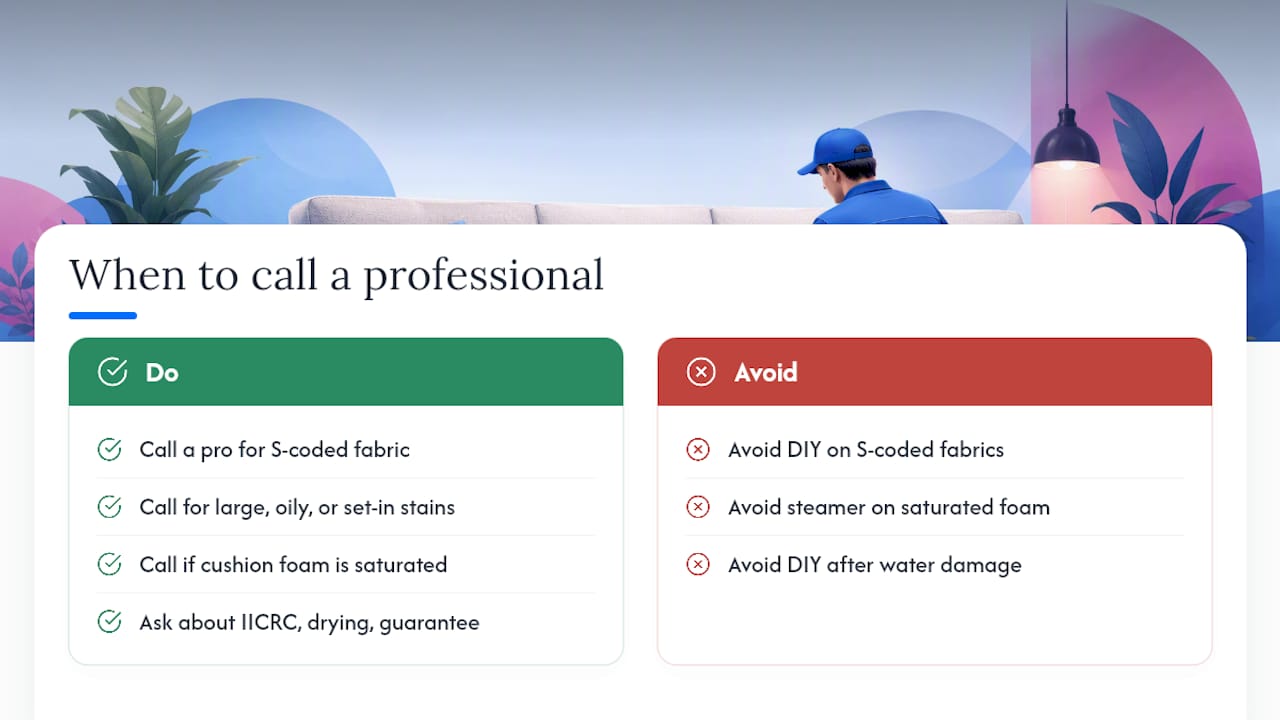
Some jobs simply aren’t worth the DIY risk. Call a professional if the couch is S-coded, if a stain is large, oily, or has set in for days, if you spot signs of water damage from a previous attempt, or if the cushion foam feels saturated rather than just the surface fabric.
Professionals bring calibrated hot-water extraction units that manage moisture far more precisely than a consumer steamer, which shortens drying time and avoids the soaking that causes watermarks. Ask any professional fabric sofa cleaning service about IICRC certification, their drying strategy, and whether the job comes with a satisfaction guarantee before booking.
Experts recommend considering IICRC-certified professionals for risky fabrics or set stains where a wrong move can permanently damage the upholstery.
A cleaner’s note on getting it right
Moisture control is everything. The couches that come out looking restored, not flat or stained, are the ones where the tech moved fast, blotted constantly, and finished with a soft brush once bone dry. That last step gets skipped more than any other, and it’s the one that matters most.
Prefer to book a professional steam clean instead?
If your couch is S-coded, badly stained, or you’d rather not risk a $2,000 sofa on a first attempt, that’s exactly the job Com handles every week across Melbourne. We bring calibrated extraction equipment that manages moisture properly, insured and trained technicians, and same-day booking options for households that can’t wait around for a couch to dry.
Our carpet upholstery cleaning service covers everything from routine microfibre refreshes to set-in stains and water-damaged cushions, all backed by a satisfaction guarantee. For households with older family members or anyone managing allergy concerns, our aged-care carpet steam clean option applies the same controlled, chemical-free approach. Get in touch for a quote and we’ll tell you straight away whether your couch is a safe DIY job or one better left to us.
Sources
- Best upholstery steam cleaners | BobVila
- How to clean a microfiber couch | Good Housekeeping
- Ovenandcarpetcleaning
