Stop Musty Carpet Smell in 6 Hours: Pro Drying Plan for Melbourne
A musty smell after a carpet clean almost always comes down to trapped moisture or leftover detergent, not new dirt or a bad job. The fix is speed, not more product: get air moving across the carpet, bring in a dehumidifier if you have one, and resist the urge to spray on more cleaner. Extra liquid is the one thing guaranteed to make it worse.
TL;DR:
- Proper drying within 24 hours is critical to prevent mildew and persistent odours caused by trapped moisture under the carpet and padding.
- Overwetting and weak extraction are common causes of musty smells, often from underpowered equipment that leaves behind residual moisture.
- Using excessive detergent or not rinsing thoroughly leaves sticky residue that traps odours and accelerates sour smells as it breaks down.
- Home remedies like baking soda and vinegar can help with surface smells but are ineffective against organic contamination and deep moisture issues.
- Professional cleaning with strong extraction, targeted treatments, and rapid drying equipment significantly reduces the risk of ongoing odour and mould growth.
Table of Contents
- What to do in the first six hours after carpet smells after cleaning
- Why carpets smell worse after cleaning
- How to dry a cleaned carpet fast and check the underlay
- Baking soda, vinegar, enzymes: what actually works
- Signs your carpet smell is a deeper problem
- Prevention: choosing the right cleaning method next time
- Does hard or soft water make carpet smell worse?
- Household cleaners vs professional-grade agents
- A professional’s read on why drying beats deodorising
- When persistent carpet odour needs a professional visit
- Sources
What to do in the first six hours after carpet smells after cleaning
The first six hours decide whether your carpet dries clean or turns musty. Act fast and skip the extra product.
- Clear the room. Move people, pets, and furniture off the wet carpet so airflow reaches every section evenly.
- Open windows for cross ventilation, or run your HVAC fan setting if the weather outside is humid.
- Position axial fans to blow across the carpet surface, not just into the room, and place a dehumidifier nearby if you have one.
- If you own a wet vac or extractor, run a dry pass over the carpet with no detergent added, then press a folded towel into the pile to check for damp underlay.
- Stay off the area as much as possible and do not add more cleaning solution, even if the smell seems strong.
Pro Tip: A damp towel that picks up moisture after 30 seconds pressed into the carpet means the underlay is still wet. Keep drying equipment running rather than reaching for another spray bottle.
Why carpets smell worse after cleaning
Four mechanisms explain almost every case of a carpet that smells worse after cleaning than before it.
- Over wetting and weak extraction. Underpowered machines push water into the carpet but can’t pull enough back out, and moisture sitting in the backing or underlay allows mildew to establish within 24 to 48 hours.
- Detergent residue. Too much cleaning solution, or not enough rinsing, leaves a sticky film in the fibres that traps dust and breaks down into a sour, stale odour over the following days.
- Reactivated pet urine. Old uric acid crystals dissolve when re-wetted during cleaning, and these dried residues release ammonia and other strong odour compounds once moisture hits them again.
- Contaminated equipment. A rental machine or a recovery tank that hasn’t been properly cleaned between jobs can reintroduce bacteria straight back into your carpet.
Padding is the part people forget. It stays wet long after the surface feels dry, and a carpet can look and feel fine on top while the underlay sits saturated for 12 to 48 hours underneath. That gap between “looks dry” and “is dry” is where most odour complaints come from.
How to dry a cleaned carpet fast and check the underlay
Drying speed matters more than any product you can buy. Here’s the order that actually works.
- Set up air movers first. Point axial fans directly across the carpet surface rather than into open air, and run them continuously for at least 6 to 12 hours depending on room size and humidity.
- Add a dehumidifier in the same room. Fans move air, but a dehumidifier pulls the moisture out of that air instead of just circulating damp air around the space.
- Run a dry extraction pass if you have access to a wet vac. No detergent, no water added. Just pulling out what’s still sitting in the pile and backing.
- Do the towel test. Press a dry, folded towel firmly into the carpet for 30 seconds. If it comes away damp, the underlay hasn’t dried yet, no matter how the surface feels.
- Target same-day drying, or within 24 hours at the outside. Carpets that stay damp longer than that are at real risk of mildew growth in the backing.
Pro Tip: In Melbourne’s humid stretches, open windows alone often aren’t enough. If the towel test still shows damp after 24 hours of fans and open air, that’s your signal to bring in commercial-grade drying equipment rather than waiting it out.
Hot water extraction done properly, combined with strong vacuum extraction, pulls far more water back out than a typical rental machine manages, which is exactly why professional jobs dry faster in the first place.
Baking soda, vinegar, enzymes: what actually works
Not every home remedy earns its reputation. Here’s what’s worth using and what to skip.
- Baking soda works on light residue smells, but only once the carpet is completely dry. Sprinkle it liberally, leave it for a few hours, then vacuum thoroughly. Applying it to a damp carpet just creates a paste.
- Diluted white vinegar in a spray bottle can lift mild detergent residue or early mildew smell. Spot-test an inconspicuous patch first, and expect the vinegar scent itself to fade within a day or two.
- Enzyme cleaners are the right tool for pet urine and other organic contamination. Enzymes break down uric acid salts at the source, while standard detergents just move the residue around or mask it temporarily without solving anything.
- Commercial deodorisers that neutralise odour molecules are worth using; masking sprays that just layer fragrance on top are not. They hide the smell for an hour and let it come straight back.
- Persistent microbial growth needs targeted antimicrobial treatment and re-extraction. If home fixes have failed twice, that’s the point to stop retrying them.
A step-by-step odour removal approach covers the sequencing of these treatments in more depth, particularly for readers dealing with a mix of pet odour and general staleness.
Signs your carpet smell is a deeper problem
Most odours resolve with proper drying and the right spot treatment. Some don’t, and pushing on with more DIY attempts at that point wastes time.
- The smell is still there after the carpet has fully dried and passed the towel test.
- Odour comes and goes with humidity, showing up again every time the weather turns damp.
- You can see staining, discolouration, or actual mould spots on the carpet or where it meets the wall.
- Anyone in the house with allergies or asthma notices symptoms flaring specifically in that room.
When any of those show up, a professional visit typically involves inspection of the pad and subfloor, targeted re-extraction of the affected area, enzyme and antimicrobial treatment where organic contamination is confirmed, and pad removal if the padding itself is beyond saving. Persistent damp that allows mould to establish is a genuine health issue, not just a nuisance smell, and it’s worth treating the timeline with urgency once mould is visible rather than confirmed only by smell.
Prevention: choosing the right cleaning method next time
The best fix for carpet odour is avoiding the conditions that cause it in the first place. A few habits make the biggest difference.
- Use less detergent, not more. High-foam products are harder to rinse out fully and are the leading cause of sour residue smells.
- Ask your cleaner about their extraction equipment and drying plan before you book. A provider running proper hot water extraction with strong vacuum recovery will leave far less residual moisture than a budget rental unit.
- Pick a dry day for cleaning where possible, and keep furniture off the carpet until it’s fully dry underneath, not just on the surface.
- Vacuum regularly between deep cleans to reduce the organic material and dust that residue and moisture feed on.
A reliable home drying guide is a useful supplementary reference if you’re weighing DIY equipment against booking a professional pass.
Does hard or soft water make carpet smell worse?
Water hardness plays a smaller role than drying time, but it isn’t nothing. Hard water, common across parts of Melbourne depending on your supply, carries higher mineral content, mainly calcium and magnesium.
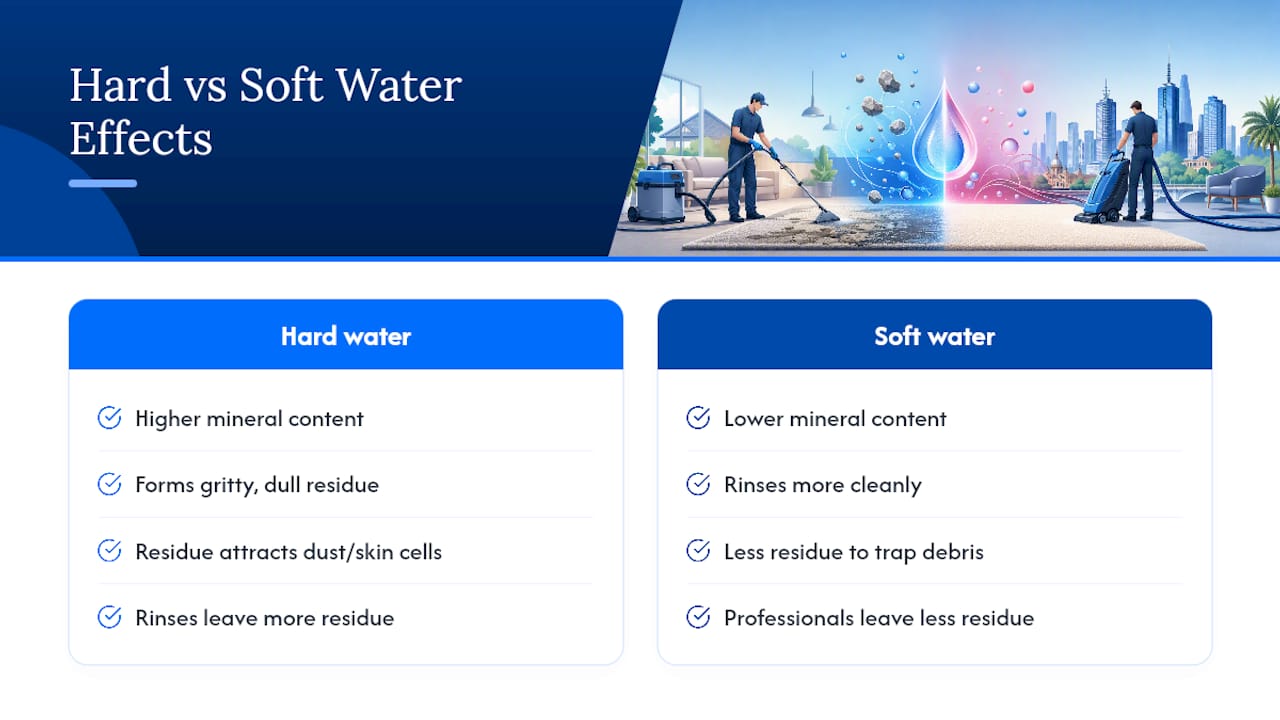
Those minerals interact with detergent during cleaning and can leave a slightly gritty, dull residue behind in carpet fibres once the water evaporates. That mineral film isn’t the source of a musty smell on its own, but it does give dust, skin cells, and airborne particles more surface area to stick to, which speeds up the sour, stale smell that builds from detergent residue generally.
Soft water rinses more cleanly because there’s less mineral content to leave behind, which is part of why professional operators who control their water supply and detergent dosing tend to leave less residue than a DIY job using tap water and an off-the-shelf carpet shampoo. If your home runs on notably hard water, it’s worth using slightly less detergent than the bottle recommends and prioritising a thorough rinse pass, whether that’s a second dry extraction run or simply confirming your cleaner does one.
This is a secondary factor next to drying speed. A carpet cleaned with soft water but left damp for two days will still go musty. One cleaned with hard water but dried properly within a day usually won’t.
Household cleaners vs professional-grade agents
The gap between a supermarket carpet shampoo and a professional-grade cleaning agent isn’t really about fragrance or foam. It’s about how completely the product rinses out and how well it’s matched to the contaminant.
Household shampoos are formulated to foam heavily because foam looks like cleaning power on a shelf. That same foam is exactly what makes residue harder to rinse out at home, since most consumer machines don’t have the extraction strength to pull it all back. Professional-grade agents used with commercial extraction equipment are typically low-foam by design, built to be rinsed thoroughly rather than to look impressive in the bucket.
For organic contamination like pet urine, the difference matters even more. General-purpose detergents can lift surface staining but don’t break down uric acid salts, so the smell can return once the area gets damp again even after a visible clean. Enzyme-based professional treatments are formulated specifically to digest that organic material at the source, which is why a targeted pet odour treatment uses a different product entirely from a general spot cleaner.
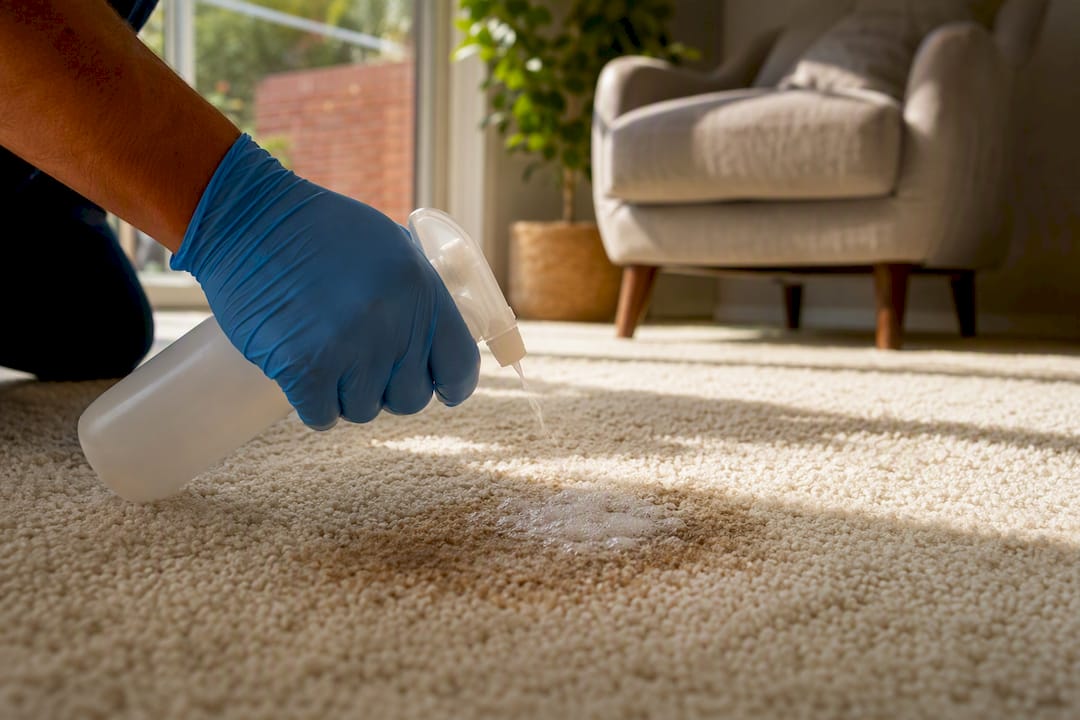
None of this means household products are useless. Baking soda and diluted vinegar genuinely help with light, surface-level issues. But for anything involving urine, deep-set residue, or a carpet that’s already gone musty once, the chemistry gap between a $12 shampoo and a professional-grade agent applied with proper extraction is real, and it shows up in whether the smell actually leaves or just goes quiet for a week.
A professional’s read on why drying beats deodorising
The habit that separates a lasting fix from a repeat problem is measuring the result, not just eyeballing it. A carpet that looks clean can still be sitting on a wet underlay, and no amount of deodoriser fixes that.
We reach for enzyme or antimicrobial treatment specifically when contamination is organic, not as a default add-on for every job, and we bring in rapid-drying air movers whenever ambient humidity makes open windows unreliable. An upfront inspection catches the difference between a simple drying issue and a padding problem before it costs someone three failed DIY attempts.
— Roney
When persistent carpet odour needs a professional visit
If you’ve dried the carpet properly, tried the enzyme treatment, and the smell is still hanging around, that’s not a sign you did it wrong. It’s a sign the moisture or contamination reached somewhere a spray bottle can’t.
Com runs steam extraction with commercial-grade drying gear on every job, which is the real difference over a rental unit or a DIY shampoo pass: our air movers and dehumidifiers clear moisture in hours rather than days, cutting the mildew risk that comes from a carpet sitting damp overnight. A typical visit starts with an inspection to work out whether you’re dealing with residue, reactivated urine, or deeper pad contamination, then moves into targeted extraction, enzyme or antimicrobial treatment where it’s actually needed, and a drying plan before we leave. If your carpet has already gone musty once, treating the underlay properly the first time saves you from doing this twice. Book a carpet steam cleaning appointment and get the drying and extraction handled properly from the start.
Sources
For deeper technical detail, see WHO’s fact sheet on mycotoxins for mould health risks, and industry write-ups on hot water extraction for how professional drying differs from DIY methods.
- Carpet smells after cleaning – eufy AU blog
- Why does carpet smell musty after cleaning? – Robotin
- Why does my carpet smell worse after cleaning? – Restore-It Cleaning
- Mycotoxins – WHO
