Homeowners: Restore Traction on Slippery Tiles in Minutes
If your tiles feel slippery right after cleaning, it’s almost always residue, not the tile itself, and rinsing with clean hot water then drying thoroughly restores traction within minutes. If that doesn’t work, you’re likely dealing with an old wax layer or a genuinely low-grip tile surface that needs a professional strip or anti-slip treatment. Block off the area or lay a mat while you sort out which one you’ve got.
TL;DR:
- Residue from detergents, wax, grease, mineral deposits, or surface gloss is the main cause of slippery floors after cleaning, not the tiles themselves.
- Using a water-bead and towel test helps identify whether slipperiness comes from residual film or the tile surface, guiding proper treatment.
- The quickest solution involves thorough rinsing with hot water, a vinegar wipe if suitable, and avoiding additional cleaners or polish products.
- Building routines with pH-neutral cleaners, two-bucket mopping, and regular friction tests prevents recurring slipperiness more reliably.
- Persistent slip issues despite proper rinsing may require professional treatments like micro-etching or deep cleaning by experts.
Table of Contents
- Why floors feel slippery after cleaning
- How do you know if it’s residue or the tile itself?
- What’s the fastest way to remove slipperiness right now?
- How to stop tiles going slippery every time you clean
- When do you need an anti-slip treatment or a professional clean?
- DIY limits vs a pro visit: when booking makes sense
- Restore safe traction with a professional tile and grout clean
- Sources
Why floors feel slippery after cleaning
The tile isn’t betraying you. The mop is.
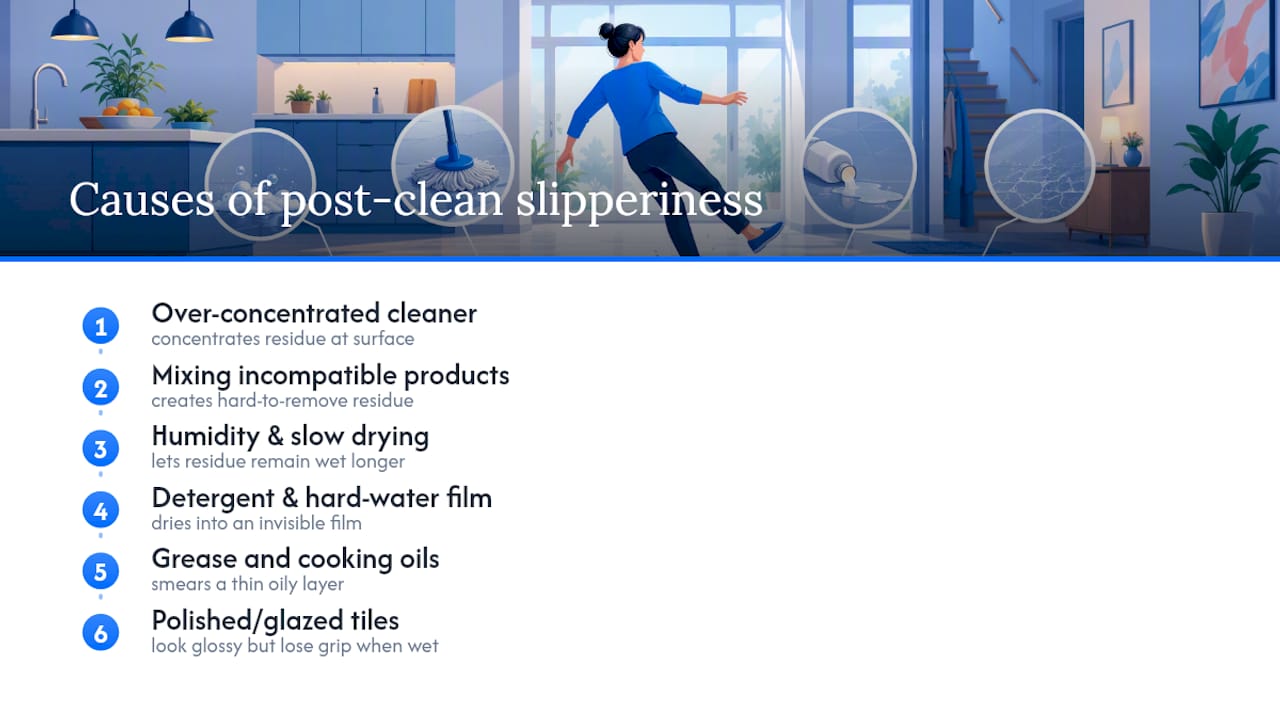
Every detergent, floor cleaner, and disinfectant contains surfactants, chemicals designed to lift dirt and grease off a hard surface. The problem is what happens after that dirt lifts. If you don’t rinse it away with clean water, the surfactant dries into a thin, invisible film across the tile. That film sits there like a layer of microscopic marbles, and it’s the single biggest reason floors feel more dangerous after cleaning than before. Skipping the clean water rinse pass is, according to WorkSafe Queensland, the most common operational cause of post-clean slip hazards.
Wax and polish products cause a related but different problem. They’re marketed to make tiles look glossy and “well cared for,” and they do exactly that while quietly killing friction. A tile can look immaculate and still be one of the slickest surfaces in the house, because gloss and grip are usually opposites.
Grease is the third culprit, mostly in kitchens and commercial kitchens. If a mop pass doesn’t fully emulsify and lift cooking oils, you end up smearing a thin oily layer across a wider area than you started with. That’s arguably worse than not cleaning at all.
Hard water adds a fourth layer of complexity. Calcium and magnesium minerals in tap water react with soap to form a scummy residue that behaves differently to plain detergent film. Slip Guard’s tile cleaning guide points out that this mineral and cleaner interaction can require different chemistry, or some mechanical scrubbing, to fully remove.
Then there’s the tile itself. Polished porcelain and glazed ceramic have a naturally smooth, low-texture surface. Even with zero residue, these tiles can feel slick when wet simply because they were manufactured for looks rather than grip. Matte, textured, and unglazed tiles behave very differently under the same cleaning routine.
Finally, watch your own technique. Over-concentrating a cleaner, mixing products that weren’t designed to work together, or not accounting for humidity and slow drying times all concentrate residue at the surface rather than removing it. Structured habits beat swapping products every time you hit a problem.
How do you know if it’s residue or the tile itself?
Three quick checks tell you what you’re dealing with before you reach for another bottle.
- Water-bead test: Drop a small amount of water on the dry tile. Tight, round beads usually mean a wax or sealant coating; water that spreads flat and even suggests the surface is clean or only lightly filmed.
- White towel wipe test: Rub a clean white or microfibre towel firmly across a dry section of tile. Any grey, waxy, or soapy residue transferring onto the cloth confirms a film problem, not a tile problem.
- Visual haze check: Look across the floor at a low angle under bright light. A dull, streaky haze usually points to detergent film; a glassy, even sheen points to wax or polish buildup.
- Fingertip and squeak test: Run a dry finger across the tile. A slightly sticky or tacky feel means residue; a squeaky-clean feel with no stickiness but the tile is still slick underfoot points to the tile’s own surface texture.
- Heel test (carefully): With shoes on and holding a rail or bench for balance, place light pressure on the ball of your foot and rotate slightly. Real grip resists; a slide with no resistance confirms the slip risk.
Note down which product and dilution ratio you used each time. If the same tile keeps failing the towel test after the same product, the fix is in your routine, not the tile.
What’s the fastest way to remove slipperiness right now?
Work through this sequence before you try anything else:
- Do a second rinse pass with hot, clean water. Use a fresh mop head or microfibre pad, not the one that just spread the detergent.
- Change your rinse water often. Once it looks cloudy, it’s redepositing exactly what you’re trying to remove.
- Wipe dry with a clean microfibre towel or dry mop. Air drying alone lets residue concentrate at the surface as the water evaporates, especially in humid rooms.
- If film persists, use a diluted vinegar solution on tile-safe surfaces. A mild vinegar and water mix cuts soap scum and detergent residue effectively on most glazed tile, though it should be avoided on natural stone such as marble or travertine, where acid can etch the surface.
- Do not add more detergent or any gloss or polish product. That’s the instinct that caused the problem in the first place.
While you’re working through these steps, put up a temporary barrier or a couple of bath mats over the affected area, and wear closed, slip-resistant shoes rather than socks or thongs. A wet tile floor mid-treatment is exactly when most household slips happen.
Pro Tip: Keep a small notebook or phone note of exactly which cleaner and dilution ratio you used and how the towel test turned out afterwards. Recurring slipperiness almost always traces back to one habit, usually skipping the rinse pass when you’re in a hurry, and you’ll spot the pattern faster than you’d think.
How to stop tiles going slippery every time you clean
Getting this right once means you stop fighting the same problem every week. Build these habits into your routine rather than treating each slippery floor as a one-off emergency.
- Use a pH-neutral, residue-free cleaner like those explained in how to clean moss off brick naturally. Products designed specifically for tile rinse clean rather than leaving a film, unlike general-purpose detergents pushed into double duty.
- Write your dilution ratio somewhere visible. Over-concentrating even a mild cleaner increases residue and slipperiness, so a laminated card near the cleaning cupboard removes the guesswork for anyone doing the job.
- Mop with the two-bucket method. One bucket holds cleaning solution, the other holds rinse water, and you wring the mop in the rinse bucket before it ever touches the floor again. This single change prevents redepositing detergent film more reliably than any product swap.
- Always finish with a dedicated rinse pass and full dry. Ventilate the room, open a window or run a fan, since slow drying in humid conditions lets residue concentrate right at the surface.
- Address hard water at the source if it’s a recurring issue. A water softener or a vinegar rinse for mineral-heavy taps stops soap scum forming before it becomes a slip hazard.
- Run a monthly friction check in high-traffic zones. The water-bead and towel tests take two minutes and catch a building problem before someone falls.
None of this needs to be complicated. A structured routine, documented dilution, the two-bucket method, and a scheduled quick test, consistently beats chasing a new “miracle” cleaner every time the floor feels off.
When do you need an anti-slip treatment or a professional clean?
If your tile passes the towel test clean, and the water beads evenly rather than sitting in tight domes, but it’s still slick underfoot, the problem isn’t residue anymore. It’s the tile’s own surface, and no amount of rinsing fixes that.
Polished porcelain, glazed ceramic, and some natural stone finishes are manufactured smooth. For these, anti-slip treatments and micro-etching can restore usable grip without replacing a single tile, though natural stone needs a compatibility check first since aggressive etching products can dull or discolour marble and limestone.
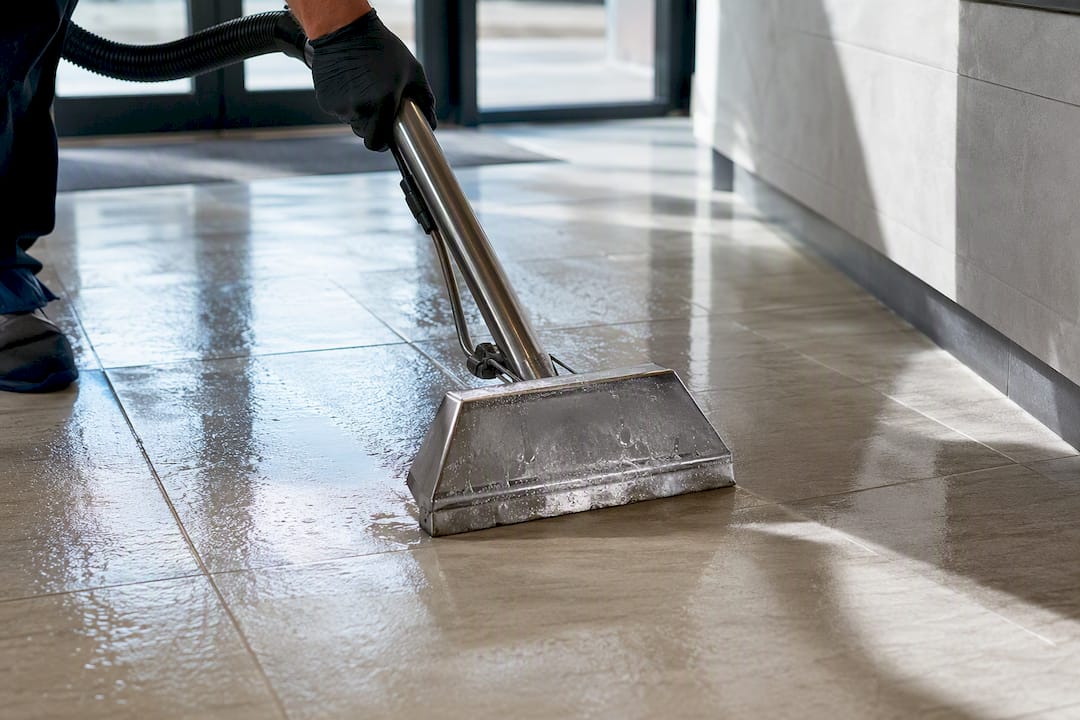
A professional tile and grout clean goes further than a DIY mop. Technicians use hot-water extraction and controlled chemistry to strip embedded residue and old wax layers that a household mop simply can’t shift, then run an on-site traction check to confirm the fix actually worked rather than just looking clean.
Call a professional when slipperiness is persistent despite proper rinsing, when the affected area is large or high-risk (entryways, bathrooms, aged care corridors), or when you suspect a natural stone surface that’s sensitive to the wrong chemical treatment.
DIY limits vs a pro visit: when booking makes sense
Rinsing, drying, and a vinegar wipe handle most residue problems in a single afternoon, and there’s no reason to call anyone for that. Where DIY runs out of road is once you’ve confirmed, through the towel and water-bead tests, that the tile itself lacks grip. That’s a materials problem, not a mopping problem.
A proper on-site visit includes a traction test across the whole floor, not just the patch that feels bad underfoot, because slip risk in one corner often signals a wider issue. Technicians also check grout condition and drainage, since pooling water in low grout lines feeds the exact residue buildup you’re trying to eliminate. Before booking, clear loose furniture and rugs from the area and note any spots that have felt persistently slick, so the technician can start the traction check exactly where it matters.
— Roney
Restore safe traction with a professional tile and grout clean
Rinsing and drying fixes most residue problems, but wax buildup, old sealant, and naturally low-grip tile surfaces usually need more than a mop and a vinegar rinse to sort out properly. That’s where Com’s tile and grout cleaning service comes in, using hot-water extraction to strip embedded film and old coatings that household cleaning can’t reach, then checking traction on-site so you’re not left guessing whether the problem’s actually gone.

The team works with eco-friendly, chemical-free methods, so you’re not swapping one residue problem for another, and every job comes backed by a satisfaction guarantee. Same-day booking is available for households and property managers who need the problem sorted before someone gets hurt. If your tiles keep turning slick after every clean, book a tile and grout clean in Melbourne and get a technician out to run the traction test properly.
Sources
- WorkSafe Queensland — Floor and ground surfaces (slips, trips and falls)
- How to clean slippery tile floors without leaving residue – ScienceInsights
- Why floor slippery after mopping? Tile guide | Slip Guard
- Why tile floors become slippery over time (and how professional treatments fix it) — Pro Floor Savers
