Carpet dry cleaning explained: what homeowners need to know
Carpet dry cleaning is defined as a low-moisture or moisture-free cleaning process that uses specialised compounds or powders to absorb dirt and oils from carpet fibres. Unlike traditional steam cleaning, the method requires little to no water, which means drying times between 20 minutes and 2 hours compared to one to two days for hot water extraction. That speed makes dry cleaning the go-to choice for busy households, rental properties, and anyone with delicate carpet fibres that cannot tolerate prolonged moisture exposure. If you have ever wondered what is carpet dry cleaning and whether it suits your home, this guide covers the full process, the benefits, the limitations, and exactly what to expect on the day.
How does carpet dry cleaning work?
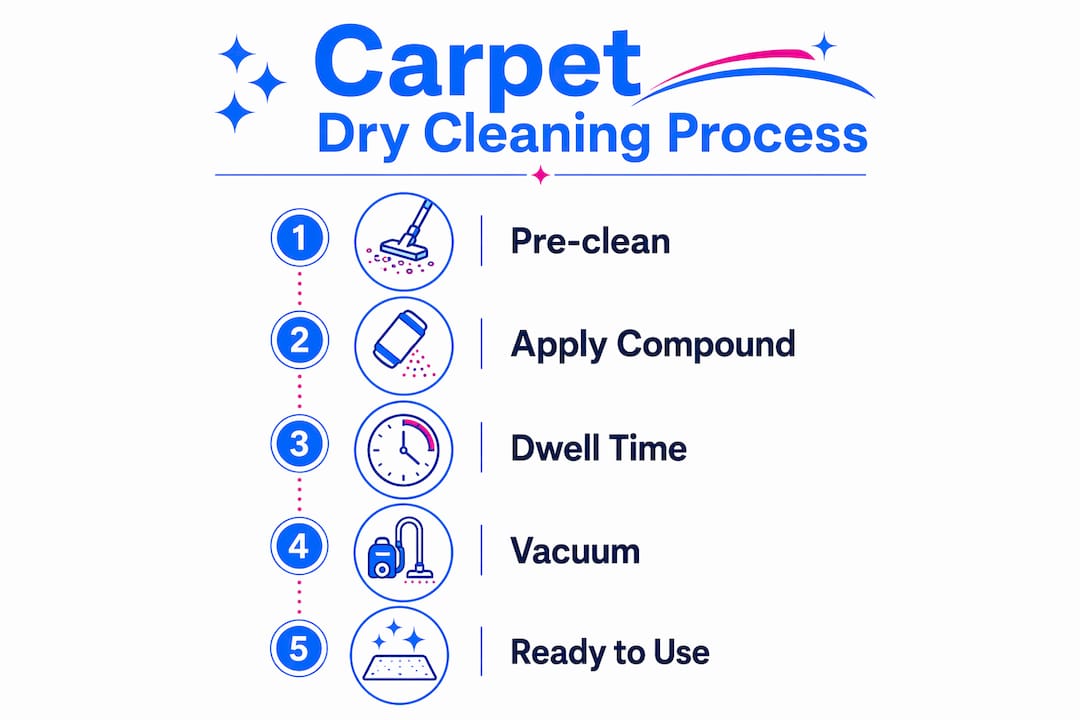
The standardised dry cleaning process follows five clear steps, and each one matters for the final result.
-
Pre-vacuuming. The technician vacuums the carpet thoroughly before any compound touches the fibres. This removes loose grit, dust, and debris. Skipping this step risks grinding particles deeper into the pile during agitation, which causes premature wear.
-
Compound application. A dry cleaning compound or powder is spread evenly across the carpet surface. The compound particles act like micro-sponges, absorbing oils, dust, and embedded soils from the fibres rather than flushing them out with water.
-
Mechanical agitation. A rotary brush machine or oscillating pad works the compound into the carpet pile. This mechanical action pushes the compound into contact with soiling at the base of the fibres, not just the surface.
-
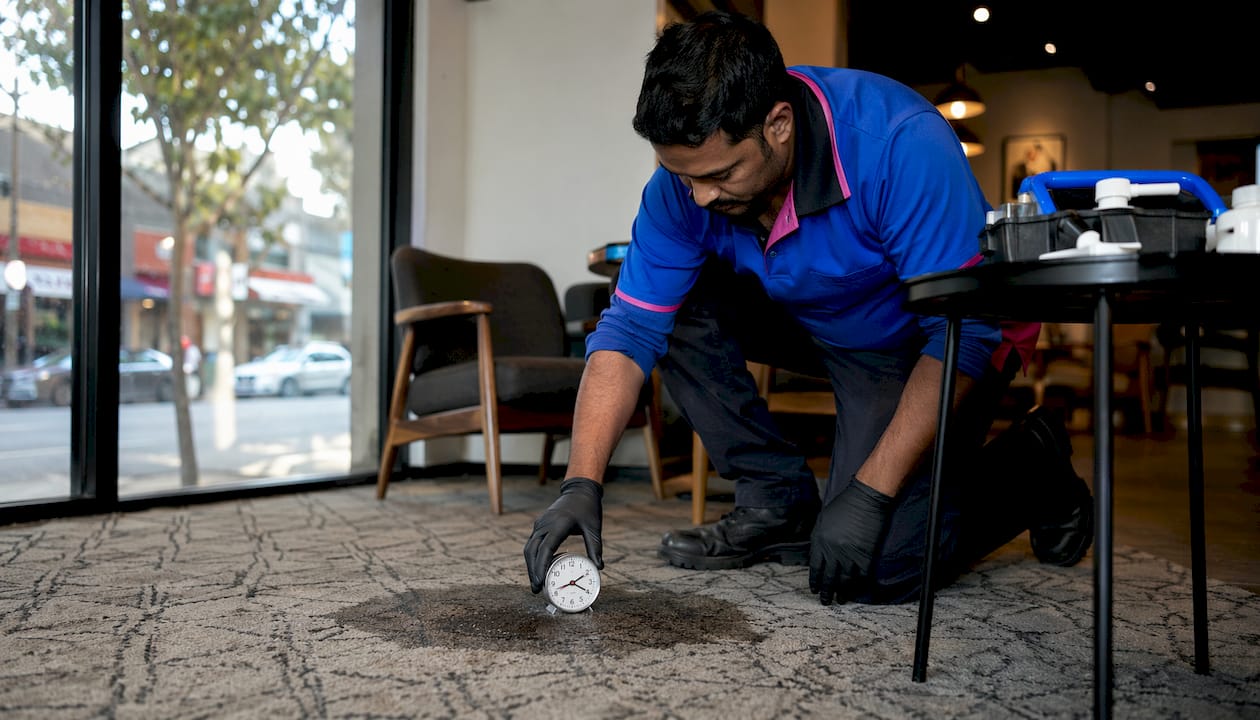
Dwell time. The compound sits on the carpet for a set period. Proper dwell time is critical because the absorption process needs time to work. Vacuuming too early pulls out the compound before it has captured the soil, which reduces cleaning efficacy significantly.
-
Final vacuuming. A commercial-grade vacuum extracts the compound along with the dirt it has absorbed. The carpet is left clean, dry, and ready to use within the hour.
Pro Tip: Ask your technician how long they allow for dwell time. A quality operator will not rush this step, as it is where most of the cleaning actually happens.
What are the benefits of carpet dry cleaning?
Dry cleaning outperforms traditional steam cleaning in several specific situations, and the advantages go beyond just speed.
- Rapid drying. Carpets are walkable within 20 minutes to 2 hours. That compares to one to two days with hot water extraction, which means no barricaded rooms and no disruption to your daily routine.
- Reduced mould and mildew risk. Excess moisture in carpet padding promotes mould and mildew growth. Dry cleaning eliminates that risk entirely, which is particularly important for households with asthma sufferers or allergy-prone family members.
- Gentler on delicate fibres. Wool, silk, and sisal carpets are vulnerable to shrinkage, dye migration, and latex backing breakdown when wet. Dry cleaning prevents moisture-based damage to these natural fibres, preserving both texture and colour.
- Lower slip hazard. Wet carpets create a genuine safety risk, especially in homes with children or elderly residents. Dry cleaning removes that hazard because the carpet never becomes saturated.
- Reduced water usage. The process uses a fraction of the water required by steam cleaning. That matters for environmentally conscious households and for properties in water-restricted areas.
- Convenience for commercial spaces. Dry cleaning reduces downtime and the need to barricade sections of a building, making it practical for offices, aged care facilities, and retail environments.
Dry cleaning is the preferred method for any carpet that cannot afford to be wet for long. The combination of fast drying, fibre protection, and reduced mould risk makes it the most practical choice for delicate or high-traffic carpets in Australian homes.
The health benefits of carpet cleaning extend beyond visible dirt removal. Dry cleaning supports healthier indoor air quality by removing allergens without introducing the humidity that encourages mould spores to multiply.
What carpet types are best suited for dry cleaning?
Not every carpet benefits equally from dry cleaning, and knowing your carpet type saves you from choosing the wrong method.
Natural fibre carpets are the strongest candidates. Wool, silk, and sisal are all moisture-sensitive. Wet cleaning methods can cause wool to shrink, silk to lose its sheen, and sisal to warp or discolour. Dry cleaning protects these fibres while still removing surface soiling effectively. If you own a wool rug, the expert guide to wool rug cleaning explains why moisture control is the single most important factor in preserving your investment.
Moisture-sensitive backings also respond well to dry cleaning. Some carpet backings use latex or jute, both of which degrade when repeatedly saturated. Dry cleaning extends the life of these backings by keeping moisture out of the construction entirely.
Lightly to moderately soiled carpets are the ideal candidates for this method. Dry cleaning excels at routine maintenance and surface-level soil removal.
| Carpet condition | Recommended method |
|---|---|
| Light to moderate soiling | Dry cleaning compound method |
| Delicate natural fibres (wool, silk, sisal) | Dry cleaning compound method |
| Heavy soiling or deep-set stains | Hot water extraction (steam cleaning) |
| Flood damage or saturation | Hot water extraction with drying equipment |
| Regular maintenance between deep cleans | Dry cleaning compound method |
Dry cleaning is ineffective for severe set-in stains or flood damage. Those situations require hot water extraction to flush contaminants from deep within the pile and padding. Understanding when steam cleaning is necessary helps you choose the right method for each situation rather than defaulting to one approach for everything.
Pro Tip: Dry cleaning works best as part of a regular maintenance routine. Plan a professional hot water extraction clean once or twice a year to address deep soiling that dry methods cannot reach.
What to expect from a carpet dry cleaning service
Knowing what happens during a professional appointment removes the guesswork and helps you prepare properly.
- Arrival and assessment. The technician inspects the carpet for stain type, fibre composition, and soiling level. This takes five to ten minutes and determines which compound formulation is appropriate.
- Pre-cleaning preparation. Move small furniture and fragile items before the technician arrives. Most operators will move larger pieces, but clearing the room speeds up the job and protects your belongings.
- Pre-vacuuming. The technician vacuums the entire area with a commercial machine. This step typically takes ten to twenty minutes depending on room size. Do not skip asking whether this step is included. Thorough pre-vacuuming is the difference between a quality result and fibre damage from ground-in grit.
- Compound application and agitation. The compound is spread and worked in with a rotary or oscillating machine. This phase takes fifteen to thirty minutes per room.
- Dwell time. The compound sits for the required contact period. A professional will not rush this stage.
- Final vacuum extraction. The technician extracts the compound and loosened soil with a high-powered vacuum. The carpet is left clean and nearly dry immediately after.
- Walkable within the hour. Fast drying times improve household convenience and reduce slip hazards, which is a clear advantage for families with children or pets.
Signs of a quality job include an even, fresh appearance across the entire carpet, no powdery residue left behind, and no damp smell. If you notice residue or uneven cleaning, request a spot treatment before the technician leaves.
Key takeaways
Carpet dry cleaning is the most practical method for delicate natural fibres and busy households because it delivers effective soil removal with minimal moisture and maximum convenience.
| Point | Details |
|---|---|
| Drying time advantage | Carpets dry in 20 minutes to 2 hours, versus one to two days for steam cleaning. |
| Best carpet types | Wool, silk, and sisal benefit most due to their sensitivity to moisture damage. |
| Process sequence | Pre-vacuum, compound application, agitation, dwell time, and final vacuum are all required steps. |
| Limitations | Dry cleaning does not replace deep extraction for heavy soiling, stains, or flood damage. |
| Maintenance role | Dry cleaning works best as regular upkeep combined with periodic hot water extraction cleans. |
Dry cleaning: what I have learned from watching it done properly
Roney here. After years of observing carpet cleaning appointments across Melbourne homes, the single biggest mistake I see is homeowners treating dry cleaning as a complete substitute for deep cleaning. It is not. Dry cleaning is a maintenance method, and a very good one, but it has a ceiling.
The technicians who get the best results are the ones who treat the pre-vacuum step as seriously as the compound application itself. Skipping or rushing the pre-vacuum grinds grit into the fibres during agitation. You end up with a carpet that looks cleaner on the surface but has accelerated wear underneath. That is a bad trade.
My honest recommendation is to combine dry cleaning every three to four months with a professional hot water extraction clean once or twice a year. The dry cleans keep the carpet looking fresh between appointments. The deep cleans remove what dry methods cannot reach. Together, they extend carpet life significantly more than either method used alone.
One more thing: if a technician skips the dwell time or rushes through agitation, the compound does not absorb the soil properly. The carpet looks clean for a week, then the soiling resurfaces. Ask how long the dwell time is before you book. A good operator will give you a straight answer.
— Roney
Professional carpet dry cleaning in Melbourne
Com provides professional carpet cleaning services across Melbourne, with methods suited to delicate natural fibres, busy family homes, and commercial spaces that cannot afford long drying times.

The team at Com follows a thorough pre-vacuum protocol before any compound touches your carpet, and dwell times are never cut short. Whether your carpet needs a routine dry clean or a professional steam clean in Melton, Com’s trained and insured technicians assess your carpet type and soiling level before recommending the right method. Same-day appointments are available across Melbourne. Contact Com to book a service that suits your carpet, your schedule, and your home.
FAQ
What is carpet dry cleaning in simple terms?
Carpet dry cleaning is a cleaning method that uses a dry compound or powder instead of water to absorb and remove dirt from carpet fibres. The compound is worked into the pile, left to absorb soiling, then vacuumed away.
How long does carpet dry cleaning take to dry?
Carpets cleaned with the dry compound method are ready to walk on within 20 minutes to 2 hours. That compares to one to two days for traditional hot water extraction.
Is carpet dry cleaning effective for all stains?
Dry cleaning handles light to moderate soiling and surface stains well, but it is not effective for deep-set stains or flood damage. Those situations require hot water extraction for thorough removal.
Is dry cleaning safe for wool and silk carpets?
Dry cleaning is the recommended method for wool, silk, and sisal carpets because it avoids the shrinkage, dye migration, and backing degradation that moisture can cause in natural fibres.
How often should you dry clean your carpet?
Dry cleaning every three to four months works well as routine maintenance. Combine it with a professional hot water extraction clean once or twice a year to address deep soiling that dry methods cannot reach.
