24–48 Hour Window to Stop Carpet Mould After a Flood for Homeowners
Carpet mould after flood damage is preventable if you act inside 24 to 48 hours and the water is clean. Beyond that window, or with grey or black water, mould colonisation becomes likely and replacement is often the safer call. Your first moves: cut power to wet areas, pump or vacuum out standing water, and photograph everything before you touch a thing.
TL;DR:
- Cleaning and drying must be completed within 24 to 48 hours for clean water to prevent mold growth and avoid full replacement.
- Water category determines if DIY drying is feasible: only clean water within 48 hours can often be managed safely at home.
- Beyond 72 hours or with black or grey water, mold likely entrenched, making professional removal and replacement the safer option.
- Visible mold under the carpet backing or persistent odors suggest the presence of mold requiring professional remediation.
- Restoring flooded carpet effectively depends on prompt action, proper water category identification, and avoiding contaminated water contact.
Table of Contents
- Immediate steps for carpet mould after a flood
- How to tell if the water is safe to dry yourself
- DIY drying and cleaning: what works and where it stops
- When to replace carpet and when to call a professional
- Preventing carpet mould after future flooding
- What emergency drying specialists actually see on the job
- Get professional flood damage restoration in Melbourne
- Sources
Immediate steps for carpet mould after a flood
The first hours dictate whether your carpet survives. Rush this stage and you either miss mould growing under the surface or waste money drying carpet that was always going to need replacing.
- Check electrical safety first. Switch off power to affected rooms at the switchboard if water is anywhere near outlets, and wear rubber boots and gloves before you step onto wet carpet.
- Remove standing water fast. A wet/dry shop vacuum clears pooled water quicker than towels or mops, and every hour it sits is an hour closer to mould.
- Move furniture and prop up carpet edges. Lift corners where it’s safe to do so, to let air reach the underside and padding.
- Photograph and timestamp the damage. Insurers generally expect prompt evidence of both the damage and your mitigation efforts, so shoot wide shots and close-ups before cleanup starts.
- Start drying with the right gear. Dehumidifiers pull moisture from the air; standard fans move air across a surface but do little for water trapped in padding, and can spread contamination if the carpet is already fouled.
SA Health’s guidance on flood mould puts the drying deadline at 24 to 48 hours before health risks and mould growth escalate.
Pro Tip: Don’t point a household fan straight at wet carpet if there’s any chance the water is contaminated. It can aerosolise mould spores into the room and your air conditioning ducts before you’ve even cleaned the surface.
How to tell if the water is safe to dry yourself
Not all flood water carries the same risk, and the category determines whether drying is worth attempting at all.
- Clean water comes from a burst pipe or rain intrusion with no sewage or ground contamination. If dried within 48 hours, DIY cleaning is usually a fair option.
- Grey water carries some contamination, such as washing machine overflow or dishwasher backup, and needs more caution and often deeper cleaning.
- Black water includes sewage, river water, or floodwater that has touched the ground outside, and it almost always means the carpet and padding get thrown out.
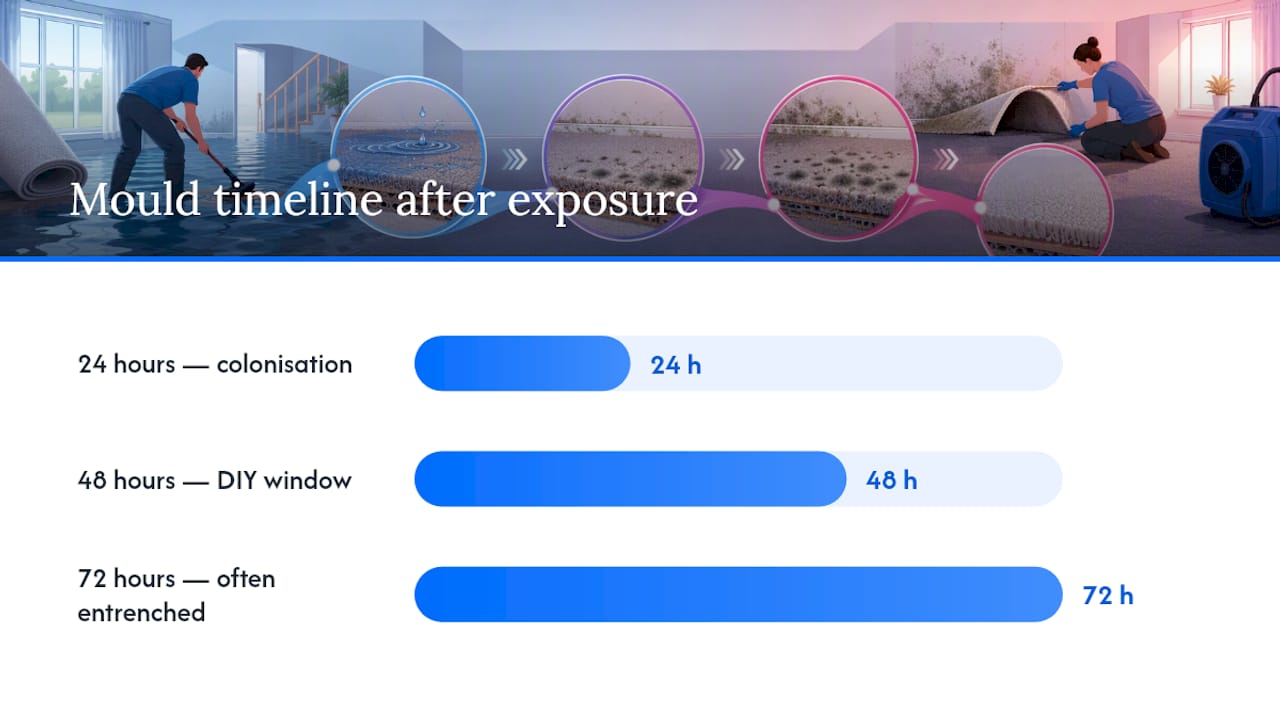
Past the 24 to 48 hour mark, the CDC advises assuming mould growth has already started, even if nothing is visible yet. Push past 72 hours and most restoration professionals will tell you it’s entrenched, not just starting.
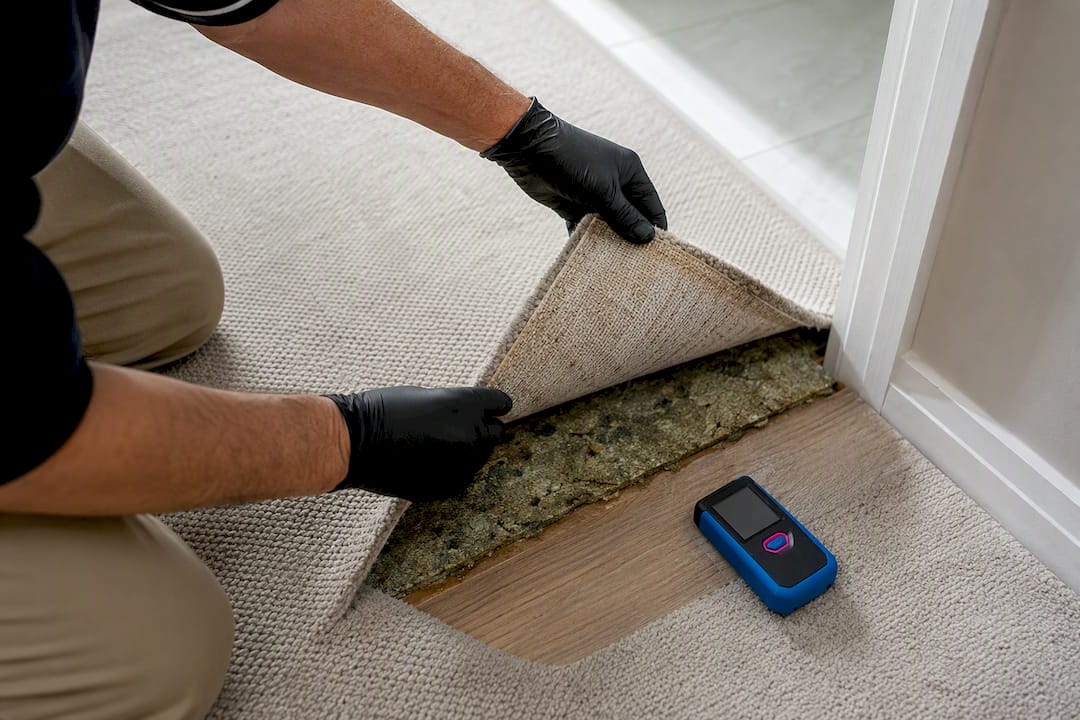
To check for hidden trouble, lift a seam or corner of the carpet and look at the padding underneath. A musty smell, dark staining, or a padding that feels spongy rather than springy all point to mould already working beneath the surface. A moisture meter, if you have access to one, gives a more reliable read than touch alone, since carpet fibres dry faster than the padding or subfloor beneath them.
DIY drying and cleaning: what works and where it stops
DIY carpet mould treatment after a flood only makes sense under specific conditions: the water was clean, the affected area is small, there’s no visible mould yet, and nobody in the household has asthma, allergies, or a compromised immune system.
If those boxes are ticked, here’s the sequence:
- Extract remaining moisture with a wet/dry vacuum, going over the same area two or three times.
- Clean with a mild detergent solution, working it into the fibres rather than just the surface.
- Rinse thoroughly. Leftover detergent residue attracts dirt and can feed mould later.
- Extract again to pull out the rinse water and as much moisture as possible.
- Run dehumidifiers continuously until a moisture meter or your own judgement says the carpet and padding are properly dry, not just dry to touch.
- HEPA vacuum once fully dry to lift any spores that may have settled during the process.
Skip bleach on wool carpets, and never combine bleach with ammonia-based cleaners. Test any cleaning product on a hidden corner first to check for colour bleeding. If you can find one, step-by-step drying guidance is worth reading before you start, since sequencing matters more than most people expect.
Mould can begin colonising within 24 hours of water exposure and is frequently entrenched by the 72-hour mark, which is the practical deadline restoration professionals use to judge whether DIY is still viable. If you’re past that, or you’re smelling something musty that wasn’t there before, DIY has failed. Visible growth beneath the carpet or padding that’s still saturated after your drying attempts both mean it’s time to call someone.
When to replace carpet and when to call a professional
Some situations don’t leave room for a DIY attempt, no matter how fast you move.
- Sewage or floodwater contact almost always means the carpet and padding are unsalvageable, regardless of how quickly you dried them.
- Visible mould growth under the backing signals the problem has moved past the surface layer you can clean.
- Water sitting for more than 72 hours usually pushes the decision toward replacement rather than restoration.
- A persistent musty odour after cleaning and drying often means mould is present somewhere you can’t see.
Because padding is porous and rarely fully decontaminated once saturated, most restoration technicians will recommend replacing it even when the carpet itself is salvageable. It’s a comparatively cheap material next to the cost of a recurring mould problem.
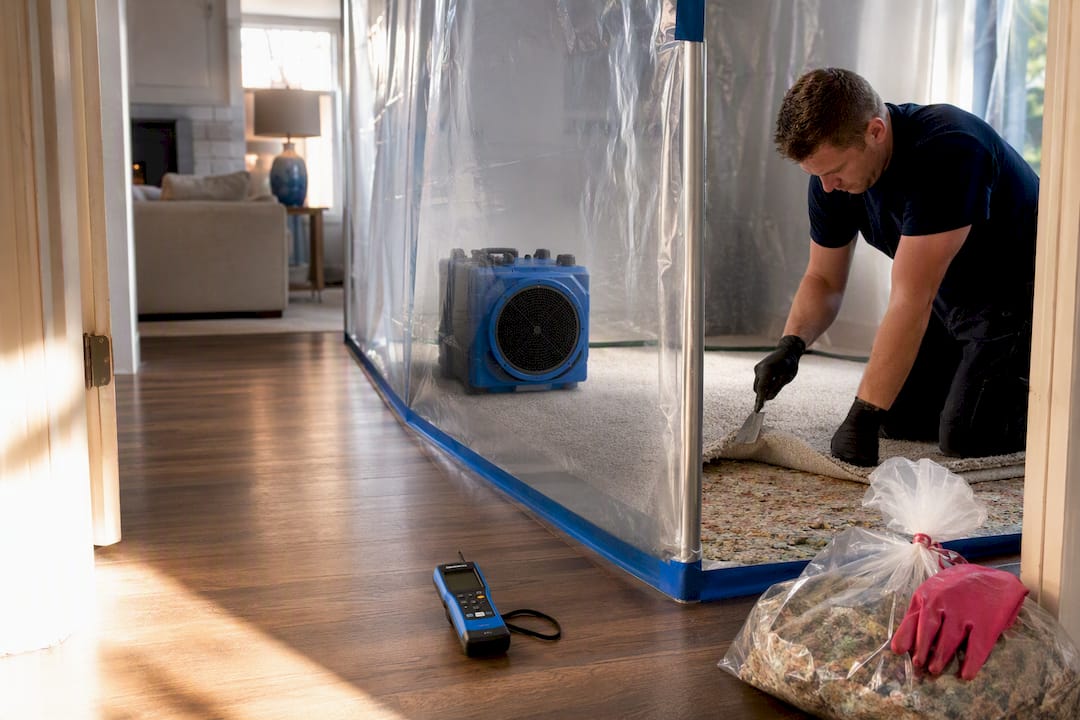
Professional mould remediation after flooding typically involves containment to stop spores spreading through the rest of the property, negative air or HEPA filtration, removal of contaminated padding, antimicrobial treatment of the subfloor, and moisture mapping to confirm everything is genuinely dry before the job’s called finished. That documentation also matters for insurance, since flood damage restoration services that provide detailed moisture readings and photos give your claim far stronger backing than your own phone photos alone.
Pro Tip: Before hiring anyone, ask three things: are they licensed and insured, what’s their containment protocol for contaminated water, and do they verify the job with a post-remediation moisture check? A contractor who can’t answer clearly is one to avoid.
Preventing carpet mould after future flooding
Once the immediate crisis is dealt with, the goal shifts to making the next flood less damaging, or avoiding a repeat mould problem in carpet that’s already been through one wet event.
- Keep indoor humidity between 30% and 50% using dehumidifiers and better ventilation in flood-prone rooms.
- Choose low-pile synthetic carpet and moisture-resistant underlay in basements, laundries, and other vulnerable spots, since natural fibres and dense padding hold water far longer.
- Fix drainage issues and clean gutters before storm season, and consider a moisture barrier under carpet laid over concrete slabs.
- Do a quick check after every heavy storm, lifting a corner of vulnerable carpet to look for dampness before it becomes a hidden problem.
What emergency drying specialists actually see on the job
The biggest mistake isn’t ignorance, it’s hesitation. Homeowners wait a day to “see if it dries on its own,” and by the time they call, the padding’s already gone. The second mistake is reaching for a household fan before anything’s been cleaned. That just moves spores around instead of drying anything properly.
Same-day emergency drying, done properly, saves carpet that’s caught early with clean water. It won’t save padding that’s already saturated with contaminated water, and it won’t undo subfloor damage that’s been sitting for days. Knowing which outcome you’re dealing with, before you spend money on either DIY gear or a call-out, is most of the battle.
— Roney
Get professional flood damage restoration in Melbourne
If your carpet has been sitting in water for more than a day, or you’re dealing with anything other than clean water, calling in help beats guessing. Flood damage restoration services in Melbourne use eco-friendly, chemical-free methods and insured technicians equipped with containment and HEPA filtration gear rather than household fans.

Our emergency carpet drying service is built for exactly the scenario this article covers: large wet areas, contaminated water, or a household where someone’s already showing symptoms from mould exposure. Call-outs may include moisture mapping, padding assessment, and documentation suitable for insurance purposes. If you’re within that critical drying window right now, don’t spend it deciding between five different YouTube tutorials. Get in touch through our flood damage cleaning service page for a same-day quote and find out fast whether your carpet’s worth saving.
This article is general information, not a substitute for advice from a qualified doctor. Consult a qualified healthcare professional about your own circumstances before acting on anything here.
Sources
- Controlling mould after a flood | SA Health
- Water-Damaged Carpets and Rugs | NC State Extension Publications
- Homeowner’s and renter’s guide to mold cleanup after disasters | CDC
- Mold in carpet: Save it or replace it? | Out of the Mold
