Ask These 4 Questions to Avoid Carpet Ripples After Cleaning
Most carpet ripples after cleaning are temporary, caused by latex displacement, and they flatten out as the carpet dries. Skip walking on the affected area, open windows or run a fan, and keep an eye on it for 24 to 48 hours. If the waves are still there once the carpet is bone dry, call your cleaner or a carpet technician rather than trying another clean.
TL;DR:
- Most carpet ripples after cleaning are temporary and resolve within 24 to 48 hours as moisture dries naturally.
- Overwetting, installation flaws, or delamination can cause persistent ripples that require professional re-stretching or replacement.
- Proper ventilation, fans, and moisture control significantly speed up drying and reduce the risk of long-lasting ripples.
- DIY fixes like repositioning furniture or using a knee-kicker work only after the carpet is fully dry, while heat or solvents can worsen damage.
- If ripples remain after two days, an inspection by a technician can determine if structural issues exist that need professional repair.
Table of Contents
- Why carpet ripples after cleaning: latex displacement, overwetting and installation faults
- How long carpet wrinkles after cleaning usually last
- Safe DIY fixes for carpet buckling after cleaning
- When carpet ripples mean permanent damage and professional repair
- Preventing carpet ripples and what to ask your cleaner beforehand
- What our technicians see on the job
- Why the panic over post-clean ripples is mostly misplaced
- How we can help with stubborn carpet ripples
- Sources
Why carpet ripples after cleaning: latex displacement, overwetting and installation faults
The most common cause has a name most homeowners never hear: latex displacement, sometimes called differential expansion. Carpet backing is bonded with a latex adhesive that contains hygroscopic fillers, often marble dust or clay. Those fillers soak up moisture during a steam clean, swell slightly, and push the backing into waves. It sounds alarming, but the same latex adhesive that ripples on absorption typically bonds more firmly once it dries out, which is exactly why the waves so often disappear on their own.
A few other culprits show up less often but matter more:
- Overwetting during cleaning. Too much water and weak extraction leave the backing saturated longer than it should be, extending the rippling and the risk of odour.
- Installation shortcuts. If the original installer skipped power-stretching, the carpet was already loose. Cleaning just exposes slack that was sitting there for years.
- Delamination. This is the one to worry about: the primary and secondary backings have physically separated, usually from age or repeated overwetting, and it will not self-correct.
- Fibre type. Wool and loop-pile carpets hold moisture far longer than synthetic cut-pile, so they ripple more visibly and take longer to settle.
Statistic to note: re-stretching by a professional typically starts around $100, climbing with room size and how much furniture needs shifting. Worth knowing before you assume the worst.
How long carpet wrinkles after cleaning usually last
Most ripples generally settle within a couple of days as the moisture works its way out. Humid weather, poor airflow, or a wool carpet can stretch that out several extra days. Uneven drying makes things look worse than they are, too. Patches that dry first shrink back while damp sections stay expanded, so the ripples seem to move around the room before they finally vanish.
Speed things up with:
- Ceiling fans or standing fans pointed across the carpet, not just up and down
- A dehumidifier running in the room, especially in Melbourne’s damper months
- Windows cracked open where weather allows, or the air conditioner on a dry setting
- Furniture kept off the area until it’s fully dry, so legs don’t press new dents into damp fibres
Pro Tip: Check the carpet edges near skirting boards first. They dry slower than open floor and are usually the last ripples to disappear, so don’t panic if the centre of the room looks fine but the corners still show waves.
Safe DIY fixes for carpet buckling after cleaning
Don’t touch anything until the carpet is completely dry. Working on damp backing risks stretching it further or tearing the latex bond. Once it’s dry, work through these in order:
- Reposition furniture and weight it down. Heavy items placed evenly across a mild ripple can press it flat over a day or two, especially near walls where the carpet has more slack.
- Try the jump method for small waves. Stand on the ripple and gently work it toward the nearest wall with your foot, pushing excess carpet into the gap between the carpet edge and the skirting.
- Rent a knee-kicker for anything bigger. These tools grip the carpet and let you drive it into the tack strip. Daily rental runs at a modest cost, which is far cheaper than a callout, but they demand real technique. Get it wrong and you can crease the pile or pop the carpet off the strip somewhere else.
What to avoid entirely: extra steaming, an iron, or a heat gun to “shrink” the ripple back. These common online tips scorch fibres and can melt synthetic backing. Harsh solvents are just as risky. They break down the latex bond you’re actually relying on to fix itself.
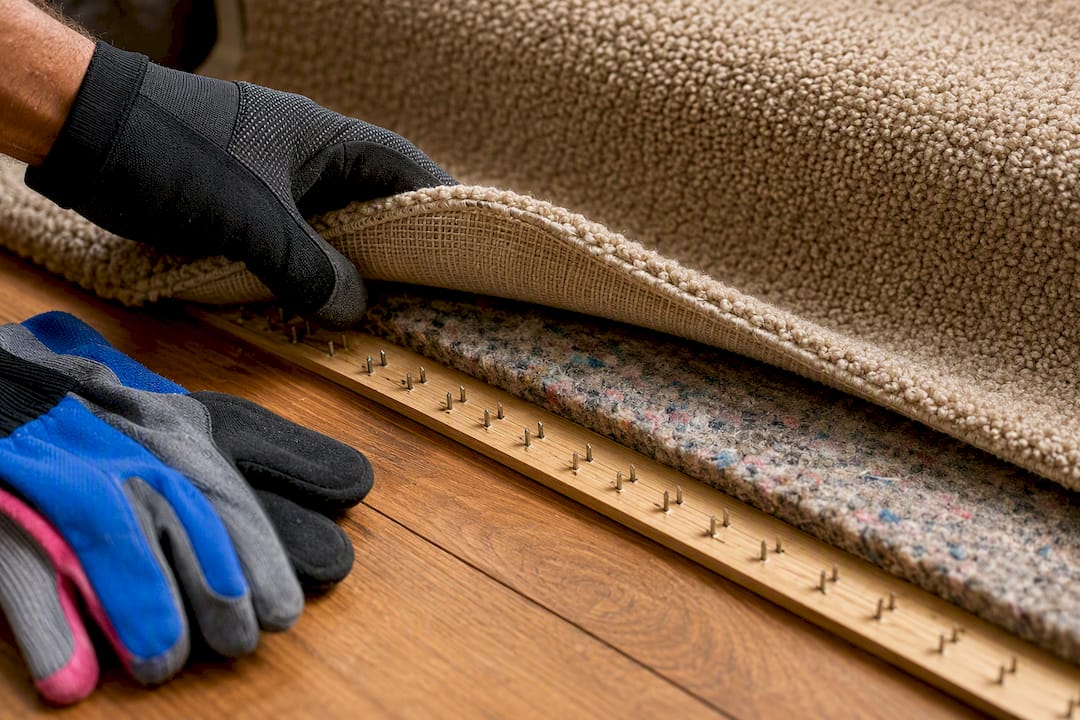
Pro Tip: If you’re lifting a carpet edge to inspect a tack strip, wear gloves. The strip’s pins are sharp enough to draw blood on a careless reach, and that’s true whether you’re checking a corner for slack or resetting an edge yourself.
When carpet ripples mean permanent damage and professional repair
A ripple that survives full drying is telling you something structural is wrong, not that the carpet needs another clean. The two usual suspects are a poor original installation, meaning no power-stretching was done when it was laid, or delamination, where the backing layers have physically come apart. Neither fixes itself, and running the carpet through a second clean tends to make a structural problem more obvious rather than better.
Signs it’s gone past a DIY fix:
- Ripples in the same spot every time, regardless of humidity or season
- A soft, spongy, or crackly feel underfoot that wasn’t there before
- Visible separation when you peel back an edge and look at the backing layers
- Carpet age past 10 to 15 years combined with heavy foot traffic
A professional re-stretch uses a power stretcher to pull the carpet taut from wall to wall, sometimes replacing worn tack strips or flattened padding at the same time. Costs start near $100 for a small room and rise with size and furniture removal. If the padding is compressed, the backing is delaminated across a large area, or the carpet is old and worn thin, replacement usually works out cheaper than repeated repairs.
Preventing carpet ripples and what to ask your cleaner beforehand
Not every cleaning method carries the same moisture risk. Low-moisture approaches like encapsulation put far less water into the backing than a standard hot water extraction, which matters most for wool, loop-pile, or older carpets already showing slack. Hot water extraction still cleans deeper for heavily soiled synthetic carpet. It just needs stronger extraction and faster drying support to avoid the rippling risk altogether.
Before you book, ask straight questions:
- What’s your extraction ratio, and how much water actually goes down versus comes back up?
- What drying time should I expect, and do you supply fans or a dehumidifier?
- Will you check for existing slack or backing issues before you start?
- Can I get that assessment in writing, so I know what was already there beforehand?
A cleaner who answers those without hesitation has done this before.
What our technicians see on the job
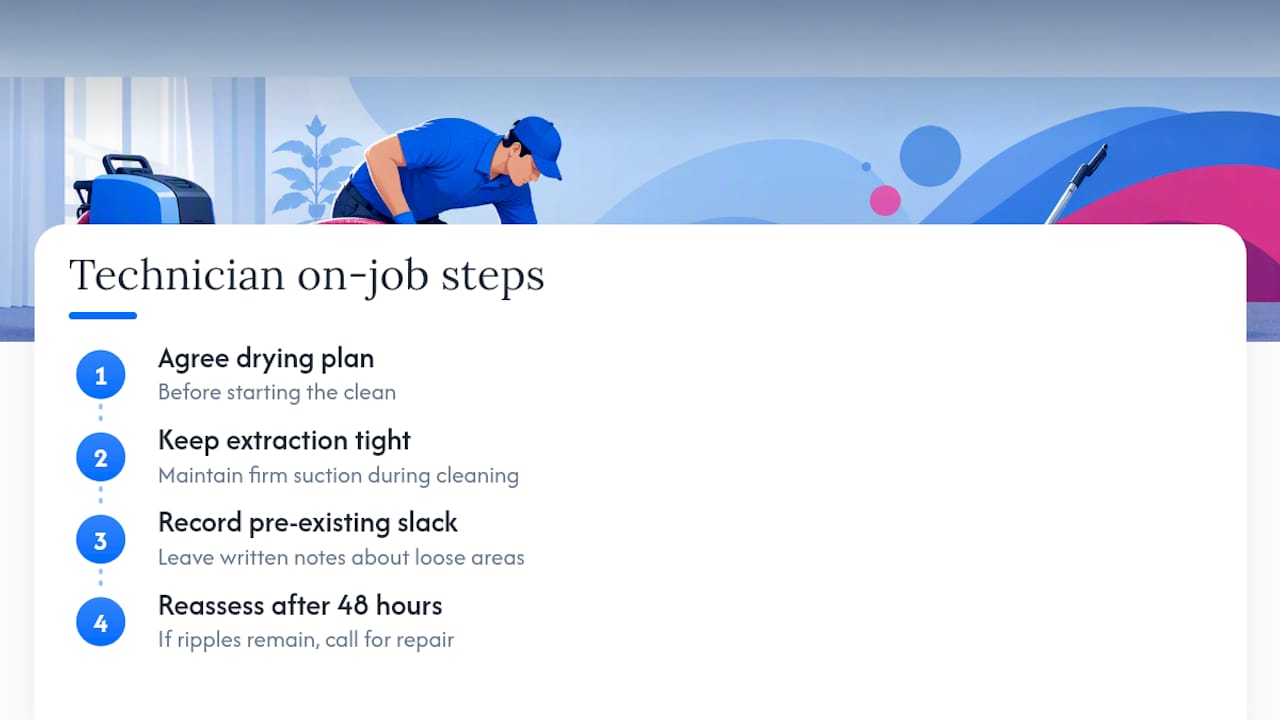
Ripples right after a clean are routine, particularly on wool carpets and rooms installed years ago without proper stretching. Our technicians work to a simple standard: agree on a drying plan before starting, keep extraction tight, and leave written notes on any pre-existing slack we spot. If ripples are still sitting there after 48 hours, that’s your cue to call, not another wait-and-see.
Why the panic over post-clean ripples is mostly misplaced
Homeowners searching for “carpet ripples after cleaning” are usually bracing for bad news, and most of the advice online doesn’t help. Half the guides jump straight to re-stretching quotes before mentioning that the vast majority of ripples are just wet backing doing exactly what wet backing does. That’s a disservice. It turns a two-day inconvenience into a manufactured crisis.
The bigger gap in conventional advice is timing. Most articles tell you what causes ripples but skip the practical sequence: wait, ventilate, check again, then act. Readers jump to renting a knee-kicker on day one when the fix was airflow and patience. My honest read is that the environmental controls, fans, dehumidifiers, keeping furniture off the area, do more heavy lifting than any DIY tool, and they cost nothing.
Where I’d push back hardest is on self-diagnosis of delamination. It’s a real cause, and it is permanent, but it’s also the rarest one. Most ripples never get that far. Give the drying window its full 48 hours before you assume the worst, and save the stretching gear for waves that are still there once the carpet is genuinely dry.
— Roney
How we can help with stubborn carpet ripples
If a ripple is still sitting there after a couple of days, or you’d rather not gamble on latex displacement versus something structural, an inspection settles it fast. Technicians check for pre-existing slack and backing condition before cleaning, and use low-moisture, eco-friendly methods on carpets more prone to rippling, wool, loop-pile, or anything already showing wear.

Every booking comes with a written note on anything we find before we start, plus same-day drying support with fans on hand so you’re not left guessing how long the wait will be. For sensitive environments like aged care, our aged care carpet steam cleaning service is built around exactly this kind of low-moisture care. If you’re closer to Melton, our local Melton carpet cleaning team covers inspections and re-stretch referrals as part of the same visit. Book an inspection and get a straight answer on whether you’re looking at 48 hours of patience or a genuine repair.
Sources
For technical background on backing behaviour and drying, see Jim’s Flooring on re-stretching, i-team’s encapsulation cleaning guide, and Service.
- How to clean carpet: the encapsulation method
- Carpet repairs and re-stretching
- How to get wrinkles out of carpet without a stretcher
