How to clean carpet tiles: the complete maintenance guide
Vacuum regularly, treat spills immediately, and schedule professional hot water extraction at the intervals your tile manufacturer recommends. That is the short version. For most residential and commercial carpet tiles in Australia, that means vacuuming high-traffic areas daily, blotting spills the moment they happen, and booking a restorative deep clean every 12–24 months depending on foot traffic.
When you need to restore tiles that routine care cannot fix, hot water extraction is the industry-standard method, recommended by manufacturers including Interface, Mohawk, and Signature Floors for full restorative results.
If you have just found a spill, do this now:
- Blot liquids immediately with a clean white cloth — never rub or scrub
- Scrape up any solid material with a blunt edge, working from the outside in
- Apply a pH-neutral spotter to a cloth first, then press it onto the stain
- Rinse with cold water, blot dry, and allow to air dry fully before walking on it
- If the stain persists after drying, do not re-wet repeatedly; consider lifting the tile for targeted treatment
Key takeaways
Consistent vacuuming removes the majority of carpet tile soil, but documented professional hot water extraction at manufacturer-recommended intervals is what protects both tile condition and warranty coverage.
| Point | Details |
|---|---|
| Vacuum first and often | Vacuuming removes most of the dry soil — daily in high-traffic zones, weekly elsewhere. |
| Treat spills immediately | Blot, do not scrub; use a pH-neutral spotter on a cloth, never directly on the pile. |
| Schedule restorative cleaning | Hot water extraction every 18–24 months for standard traffic; every 6–12 months for high-use or health-sensitive spaces. |
| Document every clean | Keep dates, methods, products, and provider details; proof of professional cleaning is often required for warranty claims. |
| Rony’s Carpet Steam | Provides professional hot water extraction with written service records across Melbourne for residential and commercial carpet tiles. |
Table of Contents
- What does a practical carpet tiles cleaning schedule look like?
- How do you prevent soil and damage before it starts?
- Why vacuuming is the most important thing you can do for carpet tiles
- How to remove spots and stains from carpet tiles
- What interim cleaning methods work between deep cleans?
- When should you schedule a restorative deep clean?
- Which cleaning products and equipment are safe for carpet tiles?
- How do you lift and replace a single carpet tile?
- Why do manufacturer warranties require a cleaning log?
- When should you call a professional cleaner?
- The maintenance approach most guides get wrong
- Professional carpet tile cleaning in Melbourne
- Sources
What does a practical carpet tiles cleaning schedule look like?
A planned maintenance programme combines preventive measures, vacuuming, spot cleaning, interim methods, and restorative deep cleaning. Skipping any layer accelerates soiling and can void manufacturer warranties.
| Frequency | Task |
|---|---|
| Daily | Vacuum high-traffic areas (entrances, corridors, open-plan desks) |
| Weekly | Vacuum all carpeted areas; inspect for spots and treat immediately |
| Monthly | Interim clean (encapsulation or dry extraction) in heavy-use zones |
| Every 12–24 months | Professional restorative hot water extraction (see Section 7) |
| As needed | Spot treatment for spills; lift and replace damaged tiles |
Traffic type drives how tightly you follow this calendar. Entrance mats, corridors, and reception areas typically need daily vacuuming and monthly interim cleans. Private offices or low-traffic residential rooms can stretch to weekly vacuuming and annual interim cleans without visible deterioration.
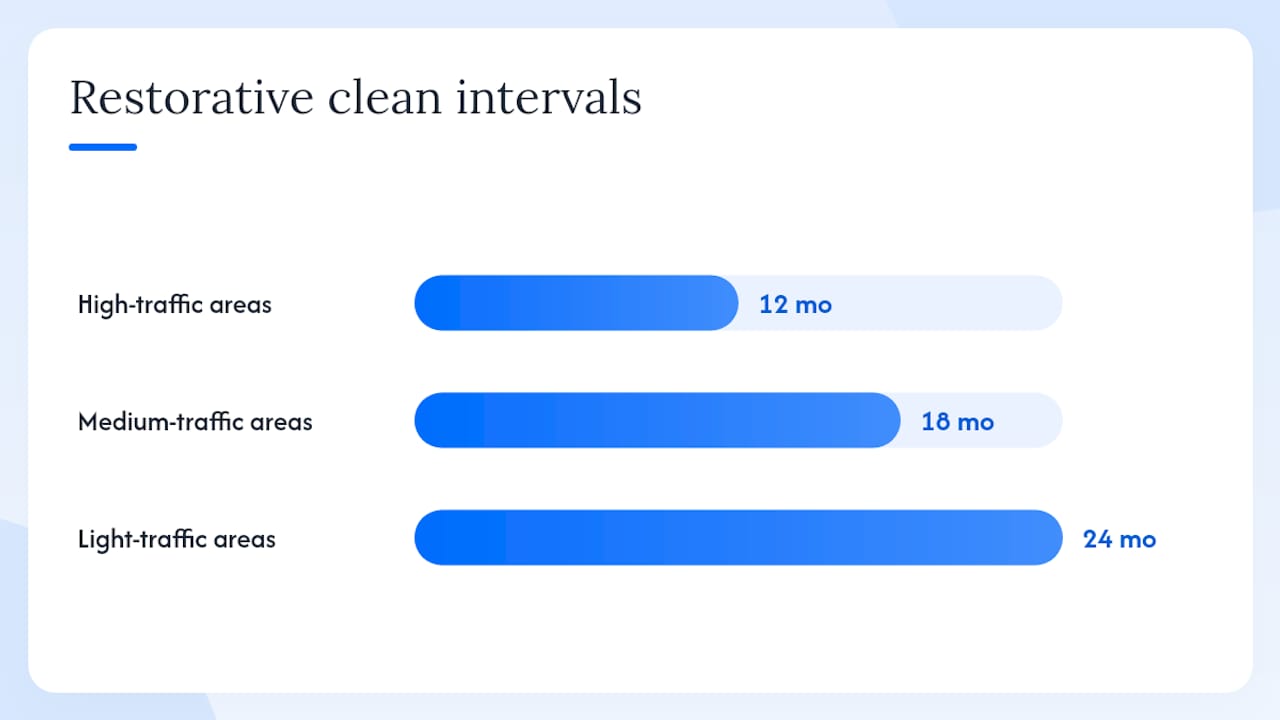
- High-traffic commercial zones: daily vacuum, monthly interim clean, restorative clean every 12 months
- Medium-traffic areas (meeting rooms, residential living areas): vacuum 3–4 times per week, interim clean every 3 months, restorative clean every 18 months
- Light-traffic areas (bedrooms, storage): weekly vacuum, restorative clean every 24 months
Pro Tip: Keep a small stock of spare tiles from your original installation batch. When a tile in a high-traffic corridor takes a beating, you can rotate it to a low-traffic spot and move a fresher tile into the corridor, evening out wear across the floor. Also, fit quality entrance matting at every external door — the more soil you stop at the door, the less you vacuum and the longer your tiles last.
How do you prevent soil and damage before it starts?
The cheapest carpet tile maintenance is the soil that never reaches the pile. Walk-off matting at every entrance is the single most cost-effective intervention available. Manufacturers typically recommend a mat zone of at least 1.5–2 metres at external entries to allow foot traffic to deposit grit before it reaches the carpet. In Australian conditions, where dry summer dust and wet winter mud both track in heavily, this matters more than most guides acknowledge.
- Place matting at all external entries and high-risk internal transitions (kitchen to carpet, wet area to carpet)
- Use both a scraper mat (outside) and an absorbent mat (inside) for maximum soil capture
- Implement a no-outdoor-shoes policy in residential settings where practical
- Conduct weekly spot checks in high-traffic zones to catch fresh stains before they bond
Furniture and equipment cause a different kind of damage. Heavy chairs, trolleys, and filing cabinets crush pile and can crack tile backing if dragged rather than lifted. Fit castor cups or felt pads under furniture legs, and always lift rather than drag when repositioning.
Pro Tip: In Australian coastal and tropical regions, humidity during the wet season can cause adhesive to soften slightly. Avoid dragging furniture across tiles during humid periods, and check that entrance mats are dried regularly so they do not trap moisture against the carpet backing.
Why vacuuming is the most important thing you can do for carpet tiles
Regular thorough vacuuming removes most of the dry soil — the insoluble grit and dust that grinds into pile fibres and causes premature wear. No other maintenance task comes close to that impact for the effort involved.
For equipment, an upright or cylinder vacuum with a rotating brush bar and strong airflow works best on most cut-pile and loop-pile carpet tiles. HEPA filtration is worth specifying in healthcare, aged care, or allergy-sensitive environments because it captures fine particulates rather than recirculating them. Avoid beater-bar settings on delicate loop tiles, which can snag and distort the pile.
Technique matters as much as frequency:
- Use slow, overlapping strokes — rushing reduces suction contact time and leaves soil behind
- For heavily soiled areas, make passes in two directions (north-south, then east-west)
- Empty the bag or canister when it reaches half capacity; a full bag cuts suction noticeably
- Check brush rolls weekly for hair and thread wrap, which reduces agitation and can scratch backing
Frequency by traffic type: vacuum daily in entrance zones and corridors, three to four times per week in open-plan offices and residential living areas, and weekly in bedrooms and low-use rooms.
How to remove spots and stains from carpet tiles
Speed is everything. A spill that is blotted within two minutes is far easier to remove than one that has dried into the pile. The goal is always to remove the substance without spreading it or forcing it deeper.
For water-based spills (coffee, tea, soft drink, wine):
- Blot immediately with a clean white cloth, pressing firmly and lifting straight up — never rub
- Scrape any solid residue from the outside edge inward using a blunt knife or spoon
- Apply a small amount of pH-neutral carpet spotter to a clean cloth (not directly to the tile)
- Press the cloth onto the stain and work from the outside in
- Rinse with cold water applied to a fresh cloth, blot again
- Place a dry towel over the area and weight it down for 30 minutes to draw out moisture
- Allow to air dry fully before walking on it
For oil-based spills and chewing gum:
- Freeze gum with an ice pack until brittle, then crack and scrape it off carefully
- For oil or grease, apply a small amount of dry-cleaning solvent to a cloth and blot gently
- Follow with a pH-neutral detergent rinse, then a plain water rinse
- Always test solvents on an inconspicuous tile first — some solvents affect dye or backing adhesive
Do not:
- Soak the tile with liquid — overwetting loosens adhesive and can cause backing delamination
- Apply cleaning chemicals directly to the pile
- Scrub in circular motions, which spreads the stain and distorts pile direction
- Use bleach, chlorine-based products, or optical brighteners on carpet tiles
Quick stain reference:
- Coffee or tea: blot immediately, pH-neutral spotter, cold water rinse
- Red wine: blot, cold water, pH-neutral spotter — act fast, do not let it dry
- Cooking oil or grease: dry-cleaning solvent on cloth, then pH-neutral rinse
- Chewing gum: freeze, crack, scrape, then solvent if residue remains
For families dealing with common household spills, the best carpet cleaning methods for families guide covers additional stain types and safe product choices.
What interim cleaning methods work between deep cleans?
Interim cleaning sits between daily vacuuming and full restorative extraction. Its job is to remove the oily, sticky soil that vacuuming cannot lift, without the drying time or disruption of a full hot water extraction. Encapsulation and dry extraction methods allow almost immediate access after cleaning and leave no sticky detergent residue, which makes them practical for commercial spaces that cannot close for hours.
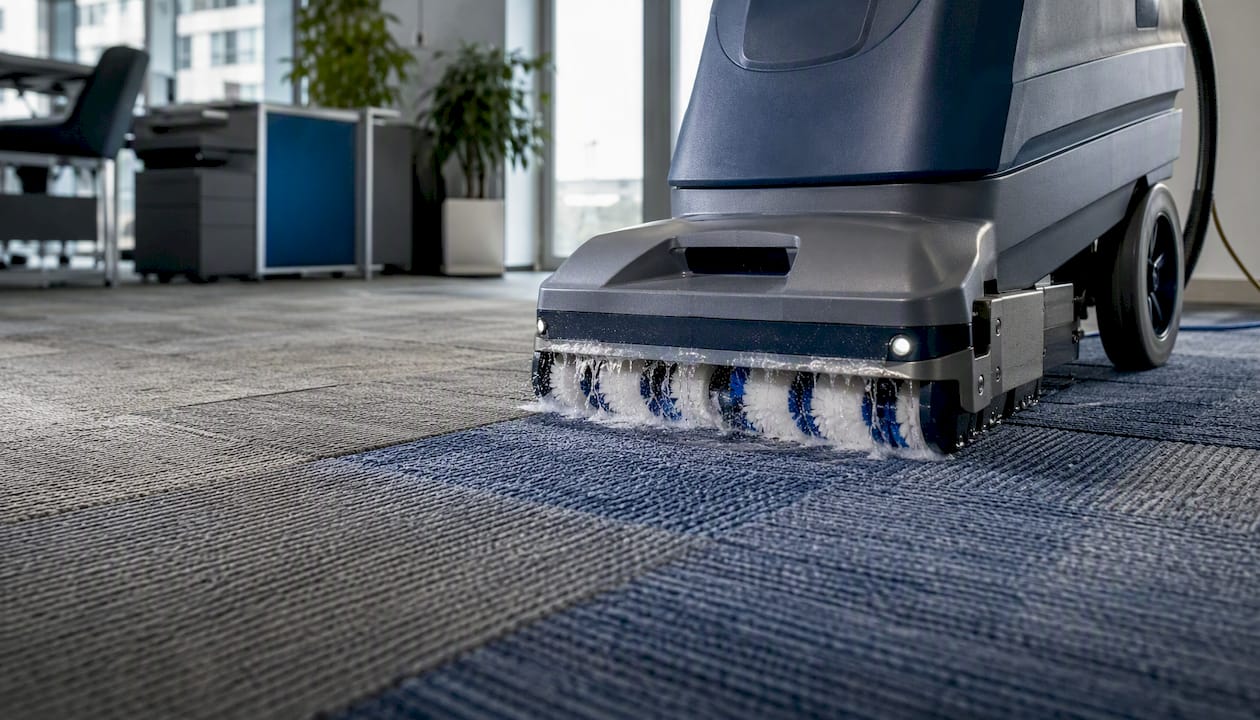
Encapsulation (low-moisture): A crystallising detergent is applied and worked into the pile with a counter-rotating brush machine. As it dries, it encapsulates soil particles into brittle crystals that are then vacuumed away. Dry time is typically 20–30 minutes. This suits open-plan offices, retail floors, and any space that needs to stay operational.
Dry extraction (absorbent compound): A slightly moistened absorbent powder is spread across the carpet and worked in with a brush machine. The powder absorbs oils and soil, then is vacuumed away. No drying time is needed, which makes it popular for event venues and hospitality settings in Australia where turnaround time is tight.
Spin-bonnet (rotary bonnet) cleaning is not recommended for carpet tiles. The rotary action can fray loop pile, distort tile backing, and leave a residue that accelerates resoiling. Several manufacturers, including Mohawk, explicitly advise against it.
Interim cleaning frequency: heavy-traffic areas benefit from interim cleaning approximately once a month, while medium-traffic zones can stretch to every 2–3 months. Check your tile manufacturer’s guide before selecting a method, as some products have specific interim cleaning restrictions.
When should you schedule a restorative deep clean?
Restorative cleaning is not the same as maintenance cleaning. It uses professional-grade hot water extraction to flush contaminants from deep within the pile and backing that no interim method can reach. Interface’s maintenance guide identifies hot water extraction as the only method that delivers full restorative results, and the process it describes is specific: pre-vacuum, pre-spray with a pH-neutral detergent, agitate, rinse with plain water, extract thoroughly, then dry with air movers.
Frequency guidance: Professional hot water extraction is typically required every 18 to 24 months as recommended by manufacturers for standard traffic. High-traffic commercial areas, healthcare settings, and allergy-sensitive spaces often need restorative cleaning every 6–12 months.
A professional restorative job should follow this sequence:
- Pre-vacuum the entire area thoroughly before any moisture is introduced
- Pre-spray a pH-neutral detergent and allow the correct dwell time
- Agitate with a brush or counter-rotating machine to loosen embedded soil
- Extract with hot water, rinsing the pile thoroughly
- Do not add cleaning fluid to the extractor tank — pre-spray separately to maintain dwell control and avoid residue
- Set up air movers and open windows to reduce drying time; tiles should be dry within 2–4 hours in normal conditions
- Keep foot traffic off the area until fully dry
Risks to watch for: overwetting is the most common mistake with DIY extraction. Too much moisture loosens adhesive, causes backing delamination, and can promote mould growth beneath tiles — a real concern in Melbourne’s humid autumn and winter months. Wrong detergents leave residue that attracts soil rapidly, undoing the clean within weeks.
Note that some specialised tile constructions require different approaches. Modulyss flags that certain products, including low-profile minituft tiles, have manufacturer-recommended methods that differ from standard hot water extraction — always check the specific product guide before booking a restorative clean.
Which cleaning products and equipment are safe for carpet tiles?
pH is the most important factor when selecting a detergent. Manufacturers consistently recommend neutral-pH cleaners (pH 6–8) for both spot treatment and restorative cleaning. Strongly alkaline cleaners (pH above 10) can damage dye sites and leave residue that accelerates resoiling. Acidic cleaners below pH 5 risk fibre degradation over time.
Products to avoid entirely:
- Chlorine bleach and chlorine-based disinfectants (strip dye, weaken fibres)
- Petroleum-based solvents used undiluted (risk of backing damage and VOC exposure)
- Optical brighteners (leave fluorescent residue that shows under UV and attracts soil)
- High-alkaline detergents marketed for hard floors
- Spray-and-leave foam products that are not designed to be rinsed out
Consumer rental extraction machines can work for occasional restorative cleaning in low-traffic residential settings, but they typically deliver lower water pressure and weaker suction than professional equipment. That means longer drying times and a higher risk of overwetting. For commercial spaces, tiles with manufacturer warranties, or any situation where drying time is a constraint, professional equipment is the better call. The rental carpet cleaner vs professional comparison covers the practical trade-offs in detail.
Testing protocol: before using any new product on your carpet tiles, apply a small amount to a cloth and press it onto an inconspicuous tile in a corner or under furniture. Wait the full dwell time, rinse, and check for colour change, pile distortion, or residue after drying. Never apply a new product directly to a visible area without this step.
How do you lift and replace a single carpet tile?
One of the genuine advantages of carpet tiles over broadloom is that a single damaged or heavily stained tile can be removed, cleaned separately, or replaced without disturbing the rest of the floor. Keeping spare tiles from the original installation batch makes this practical — colour and pile match from the same batch is far more reliable than sourcing a replacement years later.
To lift a tile safely:
- Find the corner of the tile where it meets three others — this is the easiest lift point
- Insert a stiff putty knife or floor scraper at a low angle (about 15 degrees) and gently lever the corner up
- Once the corner is free, peel the tile back slowly and evenly to avoid tearing the backing or pulling up adhesive
- Store the removed tile face-up on a flat surface to prevent curling
To clean a removed tile:
- Take it to a utility sink or outdoor area and treat the stain directly with a pH-neutral spotter
- Rinse thoroughly and blot dry with a clean towel
- Allow to dry completely flat before reinstalling — a damp tile reinstalled over adhesive can trap moisture and cause mould
When to replace rather than clean: if the pile is crushed beyond recovery, the backing is cracked or delaminated, or the stain has penetrated the backing, replacement is the better option. A tile that looks noticeably different from its neighbours after cleaning is also a replacement candidate.
Pro Tip: When your installation is completed, ask the installer to set aside at least half a box of spare tiles and note the batch number and colour code on the box. Store them flat in a dry location. Dye lots shift between production runs, so a tile from a different batch may not match even if the product name is identical.
Why do manufacturer warranties require a cleaning log?
Manufacturers distinguish between cleaning and maintenance. Maintenance is proactive and planned; cleaning is reactive. Failing to follow a documented maintenance schedule is one of the most common reasons warranty claims are rejected. Proof of professional restorative cleaning may be required when filing a warranty claim for wear, texture retention, or staining.
A minimal compliant cleaning log should record:
- Date of each cleaning event (routine, interim, and restorative)
- Method used (vacuuming, encapsulation, hot water extraction)
- Products used, including brand name and pH rating
- Name and contact details of the cleaning provider
- Equipment used (machine type, model if known)
- Photographic evidence before and after restorative cleans
- Any incidents (spills, damage, tile replacements) with dates
Keep this log digitally and back it up. A spreadsheet or a simple folder of dated photos and service invoices is sufficient. The commercial cleaning maintenance guide outlines what property managers typically need to document for multi-tenancy buildings.
Using pH-neutral detergents and testing products before use is not just good practice — it is often a specific warranty condition. Record the product name and pH in your log every time.
When should you call a professional cleaner?
DIY maintenance covers daily vacuuming, spot treatment, and low-moisture interim cleaning. Professional services are the right call when:
- Stains have not responded to two rounds of correct spot treatment
- The tiles are due for restorative hot water extraction and you do not have access to professional-grade equipment
- The floor covers a large commercial area where drying time and disruption need to be managed
- Tiles are a specialised construction (minituft, needle-felt, or high-loop) requiring specific methods
- The property is subject to a manufacturer warranty that requires documented professional cleaning
- You are approaching end-of-lease and need a verifiable service record
Before booking a professional, ask:
- Do they offer hot water extraction specifically (not just bonnet cleaning)?
- Are they insured and do they carry public liability cover?
- Can they provide a written service record for warranty purposes?
- What is their expected drying time and do they use air movers?
- Have they worked with carpet tiles specifically, or primarily with broadloom?
- Do they use pH-neutral detergents and can they confirm the products they plan to use?
For aged care facilities and healthcare environments, the requirements are stricter. Eco-friendly, low-chemical methods matter for resident safety, and the aged care carpet steam cleaning service page outlines what a compliant professional service looks like in those settings.
The maintenance approach most guides get wrong
Most carpet tile cleaning guides treat restorative cleaning as the main event and everything else as optional extras. That framing gets it backwards. Hot water extraction is powerful, but it cannot undo months of embedded grit that a vacuum would have removed in ten minutes a day. The tiles that look worst after a professional clean are almost always the ones that were under-vacuumed, not under-extracted.
The second thing guides consistently understate is the warranty angle. Many homeowners and property managers assume that booking a professional clean once every couple of years is enough to keep a warranty intact. The documentation requirement is just as important as the cleaning itself. A professional clean with no invoice, no product record, and no date log is effectively invisible to a manufacturer assessing a warranty claim.
There is also a tendency to treat all carpet tiles as interchangeable. A standard cut-pile commercial tile and a minituft or needle-felt tile have genuinely different maintenance needs. Using hot water extraction on a product that the manufacturer recommends against it is not just ineffective — it can void the warranty and damage the tile in a way that is immediately visible. Check the specific product guide before you clean, not after something goes wrong.
The practical upshot: build the maintenance habit first, document everything, and use professional extraction as the scheduled reset it is designed to be, not as the rescue operation it too often becomes.
Professional carpet tile cleaning in Melbourne
Carpet tiles in Melbourne face a specific challenge: dry summer dust tracked in from outdoor areas, followed by wet-season mud and humidity that can work moisture into adhesive if tiles are overwet during cleaning. Getting the method right matters more here than in drier climates.
Rony’s Carpet Steam provides professional hot water extraction for residential and commercial carpet tiles across Melbourne, using eco-friendly, pH-neutral detergents and trained, insured staff. Services include restorative deep cleaning, interim encapsulation cleaning, emergency stain response, and tile-by-tile treatment for damaged areas. Every job comes with a written service record you can keep for warranty documentation.
Whether you manage a commercial property in need of a scheduled restorative clean or a home with tiles that have not responded to DIY treatment, the team can assess the right method for your specific tile type and traffic level. Book a professional carpet steam clean or get a quote for Caroline Springs to get started. Always request a written service record at the time of booking.
Sources
Before using any new cleaning product or method on your tiles, check the specific manufacturer’s maintenance guide. Product construction varies enough that a method safe for one tile type can damage another.
- Maintenance guide carpet tiles – Mohawk Group EMEA
- Carpet tile maintenance guide
- Cleaning | modulyss
- Carpet tile care guide
- RESIDENTIAL & COMMERCIAL CARE GUIDE FOR CARPET TILE
Review the guide for your specific tile product before every restorative clean, not just at installation. Manufacturers update recommendations when they change pile construction or backing materials, and an older guide may not reflect the current product.
