How to remove carpet stains with baking soda
Baking soda is a natural deodoriser and mild abrasive that lifts surface-level carpet stains and neutralises odours when applied correctly. Known in cleaning circles as sodium bicarbonate, it works by binding to acidic compounds like pet urine, body oils, and food residue, then drawing them out of carpet fibres. Knowing how to remove carpet stains with baking soda means understanding what it can and cannot do. It handles surface stains and freshening well. It cannot replace professional cleaning for deep biological stains or anything that has soaked into the carpet backing.
What do you need before cleaning carpet stains with baking soda?
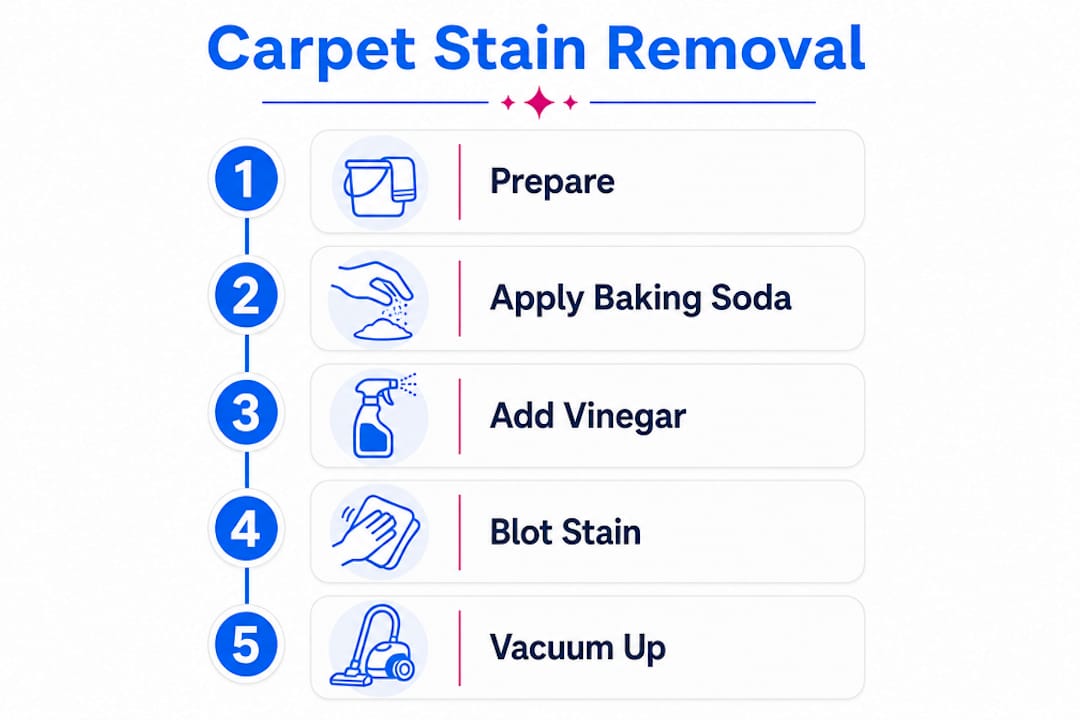
Preparation determines whether baking soda works or makes a mess. Gather everything before you start so you are not scrambling mid-treatment.
What you need:
- Baking soda (sodium bicarbonate), plain and unscented
- A vacuum cleaner with strong suction
- A soft-bristled brush or old toothbrush
- White vinegar and water (mixed 1:1 in a spray bottle)
- Clean white cloths or paper towels for blotting
- Mild dish soap for greasy stains
Before you apply anything:
- Dry vacuum the stained area first to remove loose dirt and debris. Skipping this step grinds surface particles deeper into the pile.
- Test colourfastness on a hidden patch of carpet. Apply a small amount of baking soda and vinegar solution, wait five minutes, then blot. If colour transfers to the cloth, stop and call a professional.
- Check that the carpet is completely dry. Applying baking soda on wet carpet causes the powder to clump and bond deep into fibres, making it extremely hard to remove. This traps odours rather than eliminating them.
Pro Tip: Use only moderate amounts of baking soda. A light, even dusting covers the stain without overloading the carpet fibres.
How do you remove different types of carpet stains using baking soda?
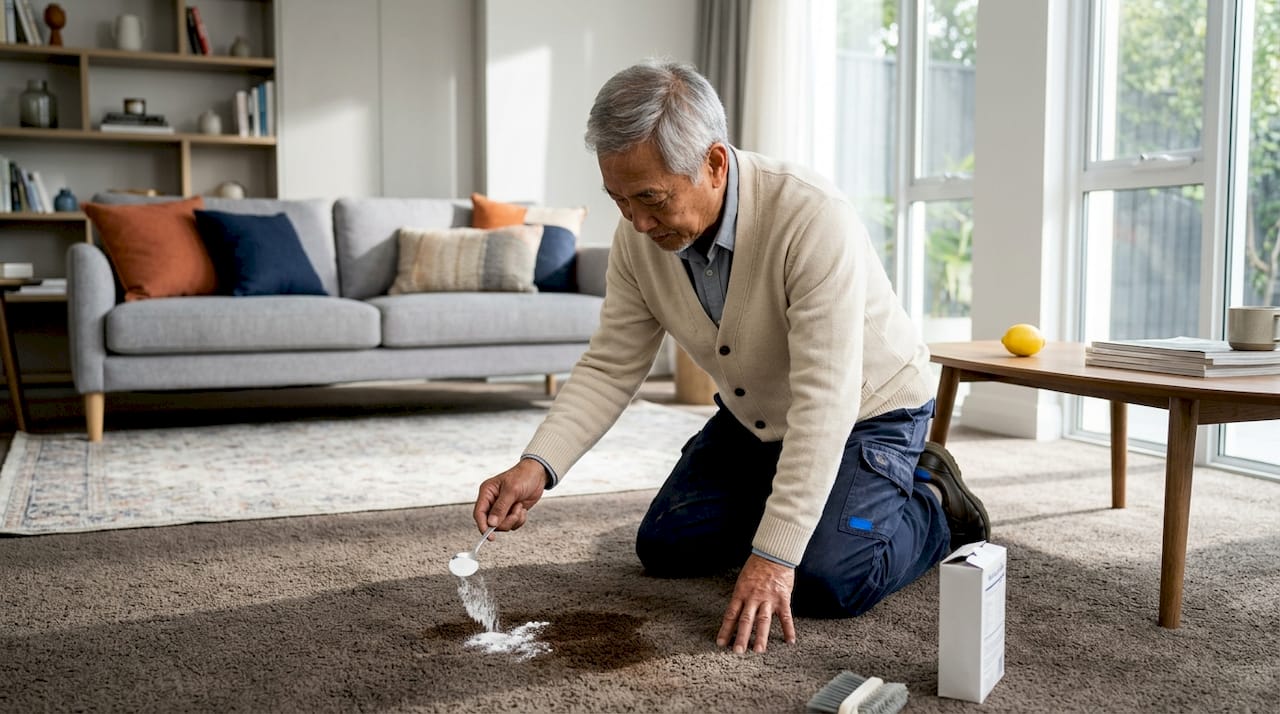
Not every stain responds the same way. Grease, wine, and mud each need a slightly different approach. Getting the method right for the stain type is the difference between a clean carpet and a faded, gritty one.
Greasy stains (butter, oil, food grease)
- Blot up as much grease as possible with a clean cloth. Press firmly and lift straight up. Do not rub.
- Sprinkle a generous but not excessive layer of baking soda directly over the stain.
- Leave it for 15–20 minutes to absorb the oils. The powder will visibly clump as it draws grease out of the fibres.
- Vacuum thoroughly with multiple passes.
- Apply a small drop of dish soap to a damp cloth and blot the remaining residue. Work from the outside of the stain inward.
- Blot dry with a clean cloth and allow to air dry fully.
Non-greasy stains (wine, coffee, mud, juice)
- For fresh liquid stains, blot immediately before applying anything. This stops the stain spreading and removes surface moisture.
- Sprinkle baking soda over the stain and cover with a damp white cloth.
- Leave for a minimum of three hours. Overnight contact produces better results for stubborn marks.
- Remove the cloth and vacuum the dried powder thoroughly.
- If a shadow remains, move to the vinegar activation method below.
Stubborn or embedded stains (the vinegar activation method)
- Sprinkle baking soda over the stain.
- Spray a 1:1 white vinegar and water solution directly over the powder. It will fizz immediately.
- Wait 5–10 minutes while the fizzing reaction loosens embedded particles.
- Gently scrub with a soft brush using small circular motions.
- Blot with a clean cloth. Never rub. Rubbing spreads the stain and damages carpet pile.
- Allow to dry completely, then vacuum.
Pro Tip: Always blot from the outer edge of the stain toward the centre. Working inward stops the stain from spreading into clean carpet.
The table below shows which method suits each stain type and how long to leave the baking soda in contact.
| Stain type | Method | Contact time |
|---|---|---|
| Greasy (butter, oil) | Dry baking soda, then dish soap | 15–20 minutes |
| Non-greasy (wine, coffee) | Baking soda with damp cloth | 3 hours to overnight |
| Embedded or stubborn | Baking soda plus vinegar spray | 5–10 minutes fizzing |
| Biological (pet urine, fresh) | Blot first, then baking soda | Overnight minimum |
For set-in carpet stains that have dried and bonded to fibres, the vinegar activation method gives the best DIY result before considering professional help.
What mistakes should you avoid when using baking soda on carpet?
Most baking soda failures come from the same handful of errors. Knowing them in advance saves you from making the stain worse or damaging your carpet.
- Over-applying baking soda. Heavy application creates vacuuming challenges and leaves residue that compacts into the pile, attracting new dirt and dulling the carpet over time. A light, even dusting is always enough.
- Applying to damp carpet. Moisture causes baking soda to clump and sink into the fibres. Once it bonds in this state, it is very difficult to extract and can trap the very odours you are trying to remove.
- Rubbing instead of blotting. Rubbing spreads the stain laterally and pushes it deeper into the pile. Always blot with a clean cloth using straight downward pressure.
- Vacuuming too quickly. Let baking soda sit for the full recommended time. Vacuuming early means the powder has not absorbed the stain or odour compounds fully.
- Expecting too much. Baking soda cannot penetrate carpet backing or padding. Deep biological stains, mould, or pet urine that has soaked through to the underlay need professional hot water extraction, not a pantry staple.
Pro Tip: After vacuuming, run your hand across the treated area. If it feels gritty, vacuum again with multiple slow passes. Residue left in the pile will attract dirt within days.
Renters dealing with pet accidents before a lease inspection should read about pet stain carpet treatment to understand when DIY methods are sufficient and when they are not. Professional carpet cleaning also plays a significant role in the move-out process for tenants who need to meet bond return standards.
How do you deodorise carpets effectively with baking soda?
Baking soda is one of the most effective natural deodorisers available for carpet because it neutralises acidic odour compounds rather than masking them. Sweat, pet urine, and body oils are all acidic. Baking soda binds to these compounds chemically and renders them odourless.
For light freshening:
- Sprinkle a thin, even layer across the carpet.
- Leave for 15–30 minutes, then vacuum thoroughly.
- This suits regular maintenance between professional cleans.
For persistent odours:
- Apply baking soda in the evening and leave overnight, giving it 8–12 hours of contact time.
- Vacuum the next morning with strong suction and multiple slow passes.
- Incomplete vacuuming leaves residue that compacts into the pile and creates a gritty texture that accumulates new dirt.
To add fragrance:
- Mix a few drops of essential oil into the baking soda before sprinkling. Lavender, eucalyptus, and tea tree are popular choices.
- Stir thoroughly so the oil distributes evenly through the powder.
- Apply and vacuum as normal. The scent is temporary but pleasant.
Baking soda does not remove deeply embedded pet odours or mould smells that have penetrated the carpet backing. For those situations, removing carpet odours properly requires a different approach entirely, often involving professional extraction.
Key takeaways
Baking soda removes surface-level carpet stains and neutralises acidic odours effectively, but it cannot replace professional cleaning for deep or biological stains.
| Point | Details |
|---|---|
| Apply to dry carpet only | Wet carpet causes baking soda to clump and bond into fibres, making removal very difficult. |
| Match method to stain type | Greasy stains need 15–20 minutes; non-greasy stains need 3 hours to overnight contact time. |
| Use moderate amounts | Over-application leaves residue that dulls carpet pile and attracts new dirt. |
| Blot, never rub | Rubbing spreads stains and damages carpet fibres. Always blot from the outer edge inward. |
| Know the limits | Baking soda cannot reach carpet backing. Deep biological stains require professional steam cleaning. |
Baking soda works, but only up to a point
I have used baking soda on carpets more times than I can count, and the results are genuinely good when the method is right. The mistake most people make is treating it as a cure-all. It is not. It is a surface treatment, and a very good one within that boundary.
The thing that surprises people most is the over-application problem. More powder does not mean more cleaning power. I have seen carpets that looked worse after treatment because the owner used half a box and then could not get it all out. The vacuum struggled, residue stayed in the pile, and within a week the carpet looked dirtier than before. A light dusting is genuinely all you need.
The vinegar activation method is worth trying on stubborn stains, but use it carefully. The fizzing reaction is satisfying and it does loosen embedded particles. The key is letting it work for the full 5–10 minutes before you touch it. Scrubbing too early just moves the stain around.
My honest advice: baking soda is a brilliant first response and a great maintenance tool. It aligns with eco-conscious living, costs almost nothing, and leaves no chemical residue. But if a stain has soaked through to the underlay, or if you are dealing with mould or heavy pet contamination, stop the DIY approach and call a professional. Knowing when to hand it over is just as important as knowing the right technique.
— Roney
When baking soda is not enough

Baking soda handles surface stains and everyday odours well. When a stain has soaked through to the carpet backing or padding, no amount of sodium bicarbonate will reach it. That is when professional hot water extraction becomes the right call.
Com provides professional carpet steam cleaning across Melbourne, using modern equipment that reaches deep into carpet fibres to remove residue, bacteria, and odours that DIY methods cannot touch. Before booking, make sure all baking soda powder is fully vacuumed out. Residue left in the pile can interfere with the steam cleaning process. Com’s team also offers guidance on how to prepare for carpet cleaning so your carpets get the best possible result from every service.
FAQ
Can baking soda remove old or set-in carpet stains?
Baking soda works best on fresh stains. For set-in stains, the vinegar activation method improves results, but stains that have bonded to carpet backing typically need professional steam cleaning to fully remove.
How long should baking soda sit on a carpet stain?
Greasy stains need 15–20 minutes of contact time. Non-greasy stains like wine or coffee benefit from a minimum of three hours, with overnight contact producing the best outcome.
Is it safe to use baking soda on all carpet types?
Baking soda is safe for most carpet types, but always test on a hidden area first. Avoid applying it to damp carpet, as moisture causes clumping that is difficult to extract and can trap odours.
Why does my carpet feel gritty after using baking soda?
A gritty texture means baking soda residue remains in the pile. Vacuum again with strong suction and multiple slow passes. Residue left in the carpet attracts new dirt and dulls the pile over time.
When should I call a professional instead of using baking soda?
Call a professional when a stain has soaked through to the carpet underlay, when biological odours persist after overnight treatment, or when mould is present. Baking soda cannot penetrate carpet backing, and those situations require hot water extraction.
