How to Remove Smoke Soot from Walls: A Melbourne Homeowner’s Guide (2026)
Last Tuesday, a family in South Yarra discovered that even a small kitchen flare-up can leave a layer of oily, toxic residue across every room in the house. It’s a stressful situation that leaves many Melbourne homeowners wondering if their surfaces will ever look clean again. You probably worry that trying to remove smoke soot from walls yourself will smear the stains or strip the paint entirely. It’s a valid concern because standard household cleaners often make the damage permanent and lock in those acrid smells.
We agree that your home should be a healthy, fresh-smelling sanctuary, not a reminder of a fire. Discover the professional techniques used by Melbourne experts to safely remove soot and smoke damage from your walls without ruining your paintwork. This guide shares the exact tools and non-toxic sanitization methods our team uses to provide a deep-cleansing result. We’ll walk you through a step-by-step process that prioritizes your family’s health and restores your peace of mind.
Key Takeaways
- Understand why using water as a first step can permanently stain your surfaces and how soot’s acidic nature requires a specific dry-cleaning approach.
- Master the use of professional restoration tools like HEPA-filter vacuums and dry chemical sponges to safely remove smoke soot from walls.
- Learn the essential sequence of ventilation and top-to-bottom extraction techniques used by experts to protect your home’s indoor air quality.
- Discover how to identify “smoke ghosts” and thermal tracking that signal deep structural damage beyond the reach of standard DIY cleaning.
- Know when to contact Melbourne’s local experts for affordable, 24/7 professional restoration to ensure your property is fully sanitized and soot-free.
Understanding Soot Damage: Why Water Isn’t Your First Step
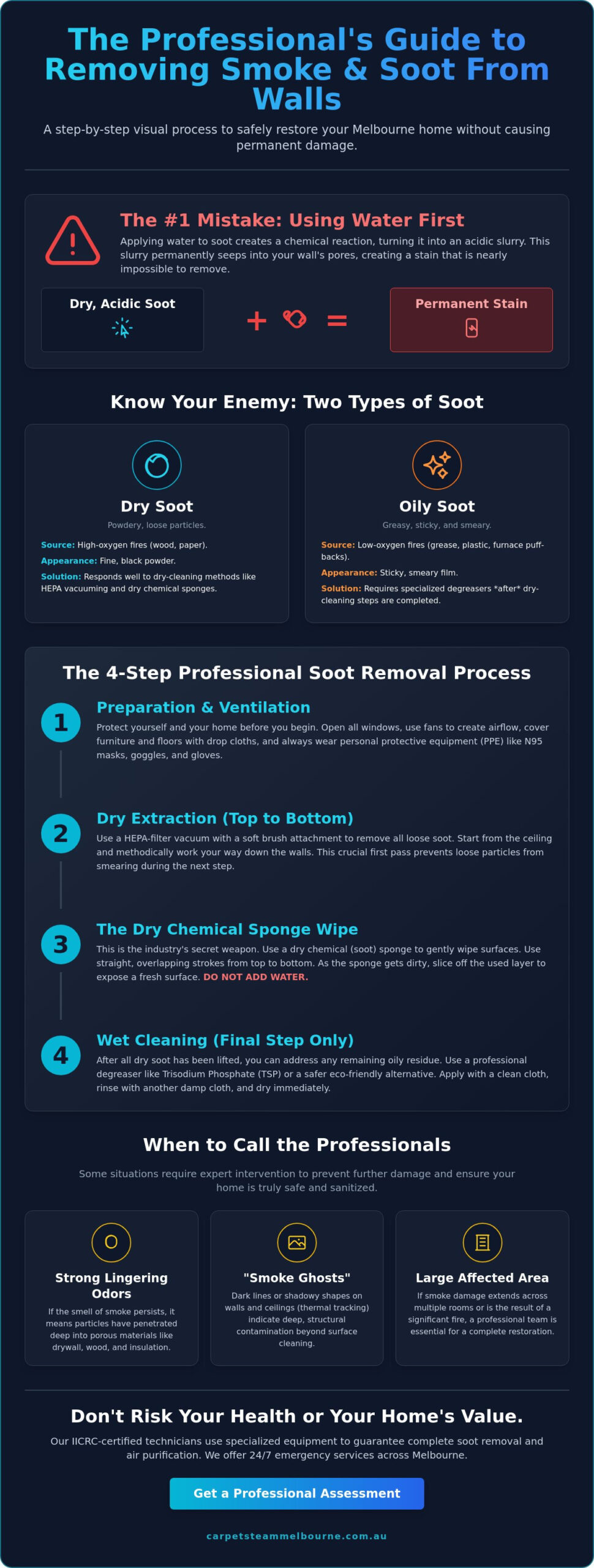
Soot is a complex byproduct of fire that requires a specific approach. It’s a fine, carbon-based particulate that behaves very differently from standard household dust. To understand the chemical nature of these particles, it helps to look at what is soot: a mixture of acids, chemicals, and metals. Because soot is acidic and abrasive, it doesn’t just sit on your paint. It actively tries to bond with it. If you attempt to remove smoke soot from walls using a wet sponge right away, you’ll likely create a permanent mess.
The “Smear Factor” is the biggest risk for Melbourne homeowners. Adding water to dry soot creates a liquid slurry. This slurry seeps into the microscopic pores of your plaster or wallpaper, making it much harder to remove smoke soot from walls without leaving a permanent shadow. You need to act within 24 to 48 hours. This window is critical because the acidic nature of the particles will begin to etch into the wall surface, causing physical damage that requires more than just a clean.
Dry Soot vs. Oily Soot: Identifying Your Damage
Identifying the type of residue is your first professional step. Dry soot typically results from wood-burning fireplaces or paper fires. It’s powdery and responds well to dry cleaning methods. Oily soot is far more stubborn. This usually comes from kitchen grease fires or furnace malfunctions. It’s greasy, smeary, and requires specialized degreasers to lift the bond from the surface. Test a small, inconspicuous area with a dry chemical sponge. If the soot smudges immediately, you’re dealing with an oily residue that needs a professional-grade solution.
The Health Risks of Lingering Smoke Particles
Indoor air quality is a major concern in Melbourne homes following a fire or heavy smoke exposure. These particles are often smaller than 2.5 micrometres, making them invisible but dangerous. They linger in the air and on surfaces, posing a risk to your respiratory health. Soot toxicity is the concentration of fine particulate matter that contains harmful chemicals and carcinogens capable of entering the bloodstream through the lungs. Complete extraction is the only way to restore a healthy home environment for your family and pets.
Essential Tools and Materials for Professional Wall Cleaning
Success starts with the right equipment. You can’t remove smoke soot from walls using standard household sponges and a bucket of soapy water. Professional restoration requires specific materials designed to trap fine particulates rather than spreading them across the surface. Professional cleaners in Melbourne rely on high-grade tools to ensure a deep-clean that protects the underlying paint and plaster. Getting the right gear ready before you start will save hours of frustration and prevent permanent staining.
A HEPA-filter vacuum is your first line of defense. Standard vacuum cleaners often exhaust fine soot particles back into the air; this effectively coats your entire room in a secondary layer of dust. A true HEPA vacuum captures 99.97% of particles as small as 0.3 microns. This extraction step is non-negotiable. You must remove loose debris before any liquid touches the wall. Once the surface is vacuumed, you’ll need a large supply of white cotton cloths. Using white fabric allows you to monitor soil transfer in real-time. If the cloth shows grey streaks, you’re still pulling soot; if it stays white, the area is clean.
Choosing your cleaning agent depends on the severity of the fire damage. Trisodium Phosphate (TSP) is the heavy-duty choice for stubborn, greasy soot. It’s powerful but requires careful handling. Many Melbourne homeowners now prefer eco-friendly degreasers as a safer alternative. These non-toxic solutions provide excellent results without the harsh fumes, which is vital for homes with children or pets. If the damage is extensive and the DIY approach feels overwhelming, our expert technicians provide the specialized equipment needed for a total restoration.
The Magic of the Dry Chemical Sponge
Dry chemical sponges, also known as soot sponges, are the secret weapon of the restoration industry. These sponges are made of vulcanized rubber and work like an eraser to lift dry soot from porous surfaces. You don’t use water or soap with these; they’re designed to be used completely dry. Using moisture too early can liquify the soot and bake the stain into the wall. You can find professional-grade soot sponges at Melbourne retailers like Bunnings or specialized cleaning supply stores in suburbs like Campbellfield or Dandenong. Always use a top-down, overlapping stroke and flip the sponge frequently to expose a clean surface.
Personal Protective Equipment (PPE) Requirements
Safety is the priority when you remove smoke soot from walls. Soot isn’t just dirty; it’s a cocktail of carbon, chemicals, and acidic residues that can irritate your lungs and skin. Professional-grade protection is a must for any homeowner. Follow these PPE standards to keep your environment healthy:
- N95 or P2 Masks: These are essential to prevent the inhalation of microscopic soot particles during the dry cleaning phase.
- Nitrile Gloves: Protect your hands from chemical degreasers and acidic soot that can cause contact dermatitis.
- Eye Protection: Safety goggles prevent falling debris and cleaning solutions from entering your eyes when cleaning ceilings.
- Long-Sleeved Clothing: Minimise skin exposure to ensure no soot particles are absorbed or tracked through the rest of your home.
Step-by-Step Guide: How to Remove Soot from Walls Safely
Cleaning up after a fire or a faulty heater is stressful for any Melbourne family. You need a clear, methodical plan to remove smoke soot from walls without causing permanent staining or smearing. Soot is acidic and oily, meaning it bonds quickly to paint and plaster. Follow these professional steps to restore your home environment safely.
- Step 1: Create a cross-breeze. Open windows at opposite ends of the room. Use high-velocity fans to pull air out. This clears 95% of loose airborne particulates before they can settle on your furniture.
- Step 2: HEPA vacuuming. Use a vacuum equipped with a HEPA filter. Hold the brush attachment 1 centimetre away from the wall. Work from the top down. Do not let the nozzle touch the surface yet, as this can grind the carbon into the paint.
- Step 3: Dry chemical sponge. This is the most critical stage. Use a dry soot sponge to lift the residue. Avoid using water at this point, as it can turn soot into a permanent slurry.
- Step 4: Wet-cleaning with TSP. Once the dry soot is gone, use a Trisodium Phosphate (TSP) solution to cut through the remaining oily film.
- Step 5: Final rinse and assessment. Wipe the walls with fresh water. Check for “ghosting” or persistent odours. If the smell remains, you will need a professional-grade odour-sealing primer before repainting.
Mastering the Dry Extraction Phase
You must start at the ceiling and work your way down. This ensures that any falling debris lands on dirty sections of the wall rather than areas you’ve already cleaned. Use firm, overlapping vertical strokes with your dry chemical sponge. Never scrub in a circular motion. This “lifting” technique pulls the soot into the sponge’s pores. When the sponge surface turns black, flip it over. You can use a utility knife to trim off the dirty outer layer, revealing a fresh cleaning surface underneath.
The Wet Wash: Mixing and Applying TSP
Trisodium Phosphate is the industry standard for heavy smoke damage. For standard Melbourne homes, mix approximately 15 grams of TSP per litre of warm water. For severe fire damage, increase this to 30 grams per litre. Use two buckets: one for your cleaning solution and one with plain water for rinsing your sponge. This prevents you from spreading dirty water back onto the wall. Be careful not to saturate the drywall. Excess moisture can seep into the plaster, leading to mould growth or structural softening within 48 hours. Always finish with a clean water rinse to remove any chemical film that might prevent paint from adhering later.
If the damage feels overwhelming, remember that professional help is available. Our Melbourne team provides same day service to help you remove smoke soot from walls using industrial-grade air scrubbers and non-toxic cleaning agents. We focus on your peace of mind and a healthy home environment.
When DIY Isn’t Enough: Assessing Structural Smoke Damage
While light surface cleaning works for minor candle soot, significant fire incidents require a deeper assessment of your home’s skeleton. You might notice “smoke ghosts” or thermal tracking appearing as dark, streaky lines on your plasterboard. These patterns follow the path of your wall studs. They occur because temperature differences between the studs and the wall cavity attract soot through thermophoresis. If you see these outlines, it’s a clear sign that you cannot simply remove smoke soot from walls with a bucket of soapy water; the damage is structural.
Melbourne’s specific climate makes timing critical. With local humidity levels often hovering between 50% and 65%, any moisture left behind from fire-suppression efforts or high-pressure cleaning can react with soot to create a corrosive acidic film. This environment triggers mould growth within 48 hours. Porous materials like unfinished Tasmanian Oak or standard fibreglass insulation act like sponges. They trap volatile organic compounds (VOCs) and microscopic smoke particles that stay active for years if they aren’t professionally treated.
Signs You Need Professional Fire Restoration
If smoke odours return 7 to 10 days after a thorough cleaning, the source is likely hidden. Soot often enters HVAC ductwork or settles deep into ceiling cavities, recirculating toxins every time your heater runs. For a total recovery, carpet steam cleaning melbourne specialists provide the deep-cleansing and sanitisation needed to extract these contaminants from your carpets and upholstery, ensuring your indoor air quality returns to safe levels.
The Role of Odour-Sealing Primers
Standard acrylic paints don’t have the chemical makeup to block smoke molecules. Without a proper barrier, smoke oils will bleed through your new paint job within months, leaving yellow stains and a persistent burnt smell. Professionals use a process called encapsulation. We recommend high-quality Australian-available brands like Zinsser B-I-N (shellac-based) or Dulux Precision Stain Blocker. These primers create a permanent seal that locks odours inside the substrate. It’s a non-negotiable step for any Melbourne homeowner looking to remove smoke soot from walls permanently.
Don’t let hidden soot ruin your home’s air quality and structure. Book a professional inspection with our local Melbourne cleaning experts today for a 100% satisfaction guarantee.
Professional Wall Washing and Restoration in Melbourne
Professional wall washing is the backbone of our restoration process. When fire damage strikes, the structural integrity and air quality of your home are at risk. We provide a 24/7 emergency response for Melbourne residents because soot becomes harder to remove the longer it sits. Our team doesn’t just wipe surfaces; we perform deep-cleansing restoration to remove smoke soot from walls and prevent permanent staining. We understand the urgency of these situations. Our local experts arrive quickly to neutralise acidic residues that can eat through paint and plaster within hours of a fire event.
Combining wall cleaning with our professional carpet and upholstery care ensures a complete recovery. Smoke particles settle into every fabric and fibre in your home, creating a secondary source of odour and allergens. By treating the entire environment, we eliminate the lingering smell of charred materials. If you’re a renter, this level of detail is vital. We help ensure your bond is protected with expert end of lease cleaning if soot is present, giving you peace of mind during a stressful transition. We focus on delivering a spotless finish that meets the highest property management standards in 2026.
Our Specialised Cleaning Technology
We use commercial-grade air scrubbers equipped with HEPA filters to capture 99.97% of fine soot particles from the air. This prevents re-contamination after the walls are clean. For textured walls and hard-to-reach corners, our high-pressure steam extraction melts away greasy residue without damaging the underlying paintwork. Everything we use is eco-friendly and non-toxic. It’s safe for Melbourne families and pets, so you can return to a healthy home environment immediately. Our technology is designed to remove smoke soot from walls efficiently, even in complex architectural spaces with high ceilings or intricate cornices.
Booking Your Same-Day Service
Our Rockbank-based team reaches all Melbourne suburbs quickly. We know that speed is critical after a fire damage incident. When we arrive, we conduct a professional on-site damage assessment to determine the best cleaning method for your specific wall types. We provide a clear plan of action and a 100% satisfaction guarantee on all our work. You won’t have to deal with hidden fees or delays. We’re a hardworking, no-nonsense service provider dedicated to restoring your home to its original condition. Call us now for a free, no-obligation quote for smoke restoration and let our local experts handle the hard work for you.
Restore Your Melbourne Home to Pristine Condition
Effective restoration starts with the right technique. You’ve learned that using water too early can trap oils in your paintwork and that dry chemical sponges are the industry standard for initial soot removal. Proper safety protocols, including the use of P2 respirators, are essential for protecting your health during the process. When DIY methods aren’t enough, our team provides a professional and affordable way to remove smoke soot from walls across all Melbourne suburbs.
We offer same-day emergency service to address damage before it becomes permanent. Our specialists use non-toxic, pet-safe sanitisation methods that ensure your living space is healthy for every family member. Every job we undertake is backed by a 100% Satisfaction Guarantee, ensuring your property is restored to the highest standards. Don’t let smoke damage compromise your home environment or your air quality. Book Your Professional Smoke Damage Restoration in Melbourne Today and let our local experts handle the hard work. We’re ready to help you breathe easy again.
Frequently Asked Questions
Can I use a regular vacuum to clean soot off walls?
No, don’t use a standard household vacuum because it lacks the filtration needed to trap fine soot particles. Most domestic vacuums exhaust these tiny particles back into your room’s air or smear the oily residue deeper into the plaster. To safely remove smoke soot from walls, you need a vacuum with a HEPA filter that captures 99.97% of particles as small as 0.3 microns.
Is it safe to sleep in a room with smoke-damaged walls?
It’s not safe to sleep in a room with visible soot because these particles contain toxic chemicals like carbon and sulfur. Inhaling these fine particulates can cause respiratory distress or aggravate existing conditions like asthma. The Victorian Department of Health warns that lingering smoke residue can irritate the lungs and skin until a professional deep-cleansing is completed.
Will sugar soap remove soot from my walls?
Sugar soap is effective for the final wet-cleaning stage, but you must never apply it to dry soot. If you use liquid cleaners first, the soot turns into a permanent black slurry that stains the paint. Always use a dry chemical sponge to lift the bulk of the residue before using a sugar soap solution to remove smoke soot from walls effectively.
How do I get rid of the smoke smell after cleaning the soot?
Eliminating the odour requires neutralizing the molecules rather than masking them with supermarket sprays. While cleaning the walls removes the source, professional-grade ozone generators or thermal fogging are often necessary to reach porous surfaces. Melbourne experts typically recommend keeping windows open for 48 hours to ensure constant airflow while using activated charcoal bags to absorb remaining scents.
Does insurance cover professional soot removal in Melbourne?
Most standard building and contents insurance policies in Australia cover professional soot removal following a fire or localized incident. You should check your Product Disclosure Statement (PDS) for specific smoke damage clauses. Ensure you document the damage with photos and obtain a professional quote from local experts to support your claim through providers like AAMI or NRMA.
Can I just paint over the soot stains?
No, painting directly over soot is a mistake because the oils will bleed through the new layer of paint within weeks. Even multiple coats of standard emulsion won’t hide the dark streaks or seal in the persistent odour. You must clean the surface thoroughly and apply a specialized oil-based stain-blocking primer, such as Zinsser B-I-N, before applying your final topcoat.
How long does it take to professionally clean a smoke-damaged room?
A professional team usually takes 4 to 8 hours to deep-clean a standard 12sqm bedroom depending on the severity of the damage. This timeframe includes the dry-sponging phase, chemical cleaning, and initial deodorization steps. Larger living areas or rooms with intricate cornices can take up to 1.5 days to restore to a safe, soot-free condition.
What is a dry chemical sponge and where can I buy one?
A dry chemical sponge is a specialized tool made from vulcanized natural rubber designed to lift soot without moisture. These sponges work like an eraser to pull particles out of the paint surface rather than pushing them in. You can buy them at major Australian hardware stores like Bunnings or through local restoration supply companies for approximately A$10 to A$20 per sponge.
