Why carpet cleaning reduces allergens in your home
Your carpet looks clean. It probably isn’t. Beneath the surface fibers, allergens like dust mites, pet dander, mold spores, and pollen pile up invisibly, and they stay there long after you’ve run a vacuum over the room. This is exactly why carpet cleaning reduces allergens in ways that regular maintenance simply cannot match. Carpets trap allergens deep in fibers that vacuuming alone doesn’t remove. For Melbourne homeowners already dealing with seasonal pollen and humidity, that hidden buildup can quietly drive allergy symptoms all year long.
Table of Contents
- How allergens accumulate in carpets and impact your home’s air
- Why professional carpet cleaning removes allergens deeper than vacuuming
- Effective ways to maintain allergen-reduced carpets in Melbourne homes
- Expert precautions and aftercare to enhance carpet allergen control
- Why simply vacuuming isn’t enough: rethinking carpet allergen control
- Professional carpet cleaning services in Melbourne for lasting allergen relief
- Frequently asked questions
Key Takeaways
| Point | Details |
|---|---|
| Deep allergen removal | Professional carpet cleaning removes up to 97% of allergens embedded deep in carpet fibers, improving indoor air quality. |
| HEPA vacuum benefits | Using a HEPA-filter vacuum regularly reduces surface allergens by over 80%, supporting allergy relief between cleanings. |
| Maintenance matters | No-shoes policies, doormats, and frequent cleaning habits help prevent new allergens from accumulating inside your home. |
| Post-cleaning care | Proper drying and limited traffic after cleaning prevent mold growth and prolong allergen reduction benefits. |
| Balanced approach | Combining professional cleaning with lifestyle changes delivers the most effective long-term allergen control in carpets. |
How allergens accumulate in carpets and impact your home’s air
Think of your carpet as a filter. Every time someone walks through the door, opens a window, or lets the dog inside, airborne particles drop into the pile and stay there. The problem is that unlike an air filter you can swap out every few months, carpet fibers hold onto those particles indefinitely unless you actively remove them.
Carpets are among the most contaminated surfaces in homes, trapping dust mites, pet dander, mold spores, and pollen that trigger reactions like sneezing and nasal congestion. What makes this worse is that foot traffic doesn’t just compress those allergens deeper into the pile. It also kicks them back into the air at ankle and breathing height, where they’re inhaled directly.
The most common allergens found in Melbourne carpets include:
- Dust mite waste: Microscopic particles from dust mites are one of the leading triggers for asthma and year-round allergies. A single gram of carpet dust can contain thousands of mite waste particles.
- Pet dander: Even if your pet doesn’t go in a particular room, dander travels on clothing and air currents. It sticks to carpet fibers and stays active for months.
- Mold spores: Melbourne’s humidity creates ideal conditions for mold spores to settle and grow inside carpet padding, especially in poorly ventilated rooms.
- Pollen: During spring and summer, pollen enters through doors and windows and embeds in carpet fibers, continuing to trigger symptoms long after the season ends.
Carpet type matters too. High-pile carpets, like shag or frieze styles, trap significantly more allergens than low-pile or looped options because the longer fibers create more surface area for particles to cling to. If you have high-pile carpet in a bedroom or living area, your allergen load is likely higher than you realize. Proper carpet padding with a dense, closed-cell structure can reduce how deeply allergens penetrate, but it doesn’t eliminate the problem.
Pro Tip: If you have allergy sufferers in your home, consider carpet cleaning for allergies as a targeted treatment rather than a general maintenance task. Frequency and method both matter for real symptom relief.
Why professional carpet cleaning removes allergens deeper than vacuuming
Most homeowners vacuum regularly and feel like they’re doing enough. The reality is that standard vacuuming removes surface debris but leaves the deeper allergen layer almost entirely untouched. That layer is where the real health impact lives.
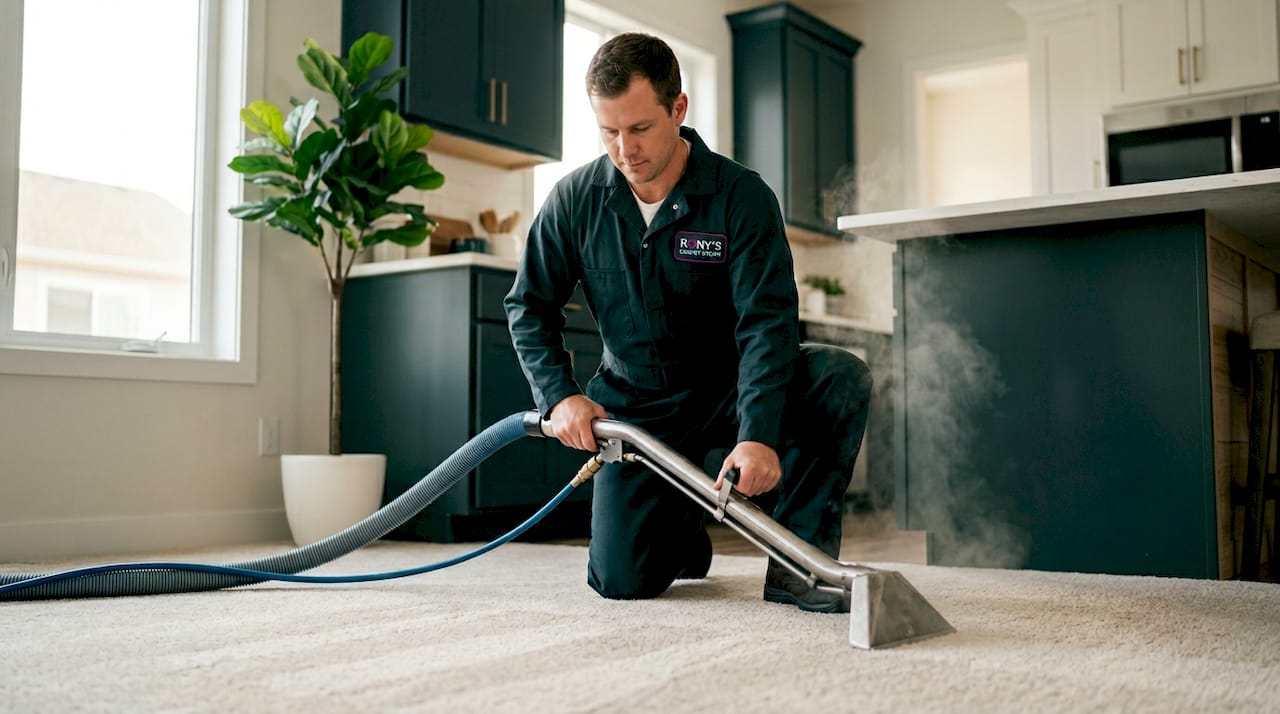
Professional hot water extraction, commonly called steam cleaning, works differently. A machine injects hot water and cleaning solution deep into the carpet pile under pressure, then extracts it along with the loosened allergens, bacteria, and debris. Hot water extraction removes up to 97% of allergens and 90% of bacteria from carpets, far surpassing what vacuum cleaning alone achieves.
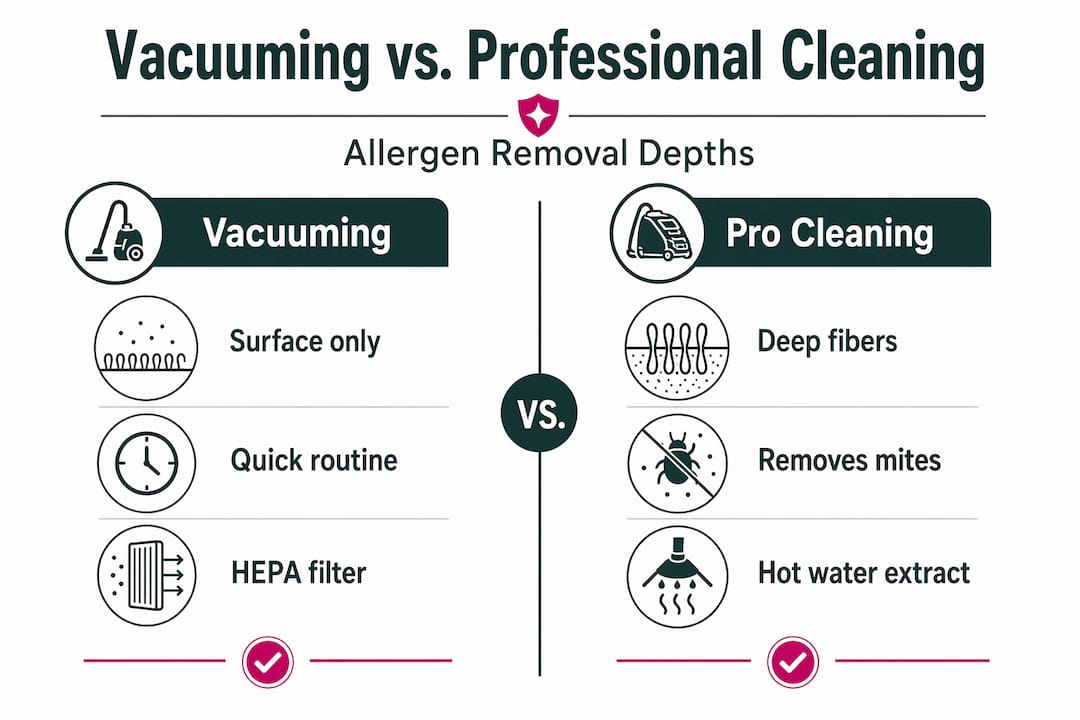
Here’s how the two approaches compare:
| Feature | Regular vacuuming | Professional hot water extraction |
|---|---|---|
| Allergen removal depth | Surface only | Deep into carpet pile |
| Dust mite waste removal | Partial | Near complete |
| Mold spore removal | Minimal | Significant |
| Pet dander removal | Surface level | Deep fiber extraction |
| Bacteria reduction | Low | Up to 90% |
| HEPA particle capture | Yes (with HEPA vacuum) | Combined with pre-vacuum |
Before a professional clean, technicians typically pre-vacuum using HEPA-filter equipment. HEPA vacuums trap 99.97% of particles down to 0.3 microns, reducing allergens by over 80% with regular use. That pre-treatment step matters because it removes loose surface debris before the hot water extraction begins, allowing the extraction process to focus on deeply embedded contaminants.
Here’s what a professional allergen-focused carpet clean typically involves:
- Pre-inspection: The technician assesses carpet type, pile height, and any visible staining or moisture damage.
- HEPA pre-vacuum: Removes loose surface particles and prepares the pile for deep extraction.
- Pre-treatment spray: A cleaning agent is applied to break down embedded allergens, oils, and biological matter.
- Hot water extraction: High-pressure hot water penetrates deep into the pile and is immediately extracted along with dislodged allergens.
- Post-inspection: The technician checks for remaining spots and ensures adequate moisture removal.
Pro Tip: Ask your cleaning technician about carpet steam cleaning methods specifically. Not all professional services use true hot water extraction. Some use dry cleaning or bonnet cleaning methods that clean the surface but leave deep allergens behind.
Effective ways to maintain allergen-reduced carpets in Melbourne homes
Professional cleaning gives you a clean baseline. What you do between appointments determines how long that baseline holds. Melbourne’s mix of warm summers, humid periods, and high pollen seasons means allergens re-enter your home faster than in drier climates.
Removing shoes before entering and using doormats reduces the 30-40% of indoor contaminants that enter homes via shoes. That single habit has a measurable impact on how quickly your carpet reloads with allergens after a professional clean.
Practical habits that make a real difference:
- No-shoes policy: Outdoor shoes carry pollen, mold spores, and soil bacteria directly into carpet fibers. Removing them at the door is the single highest-impact habit change you can make.
- Doormats at every entry: Use both an outdoor scraper mat and an indoor absorbent mat. Together they capture a significant portion of what shoes carry in.
- Weekly HEPA vacuuming: Vacuuming with HEPA filters weekly and washing bedding regularly maintain low indoor allergen levels between professional cleans.
- Wash bedding frequently: Bedding sits close to carpet and transfers allergens back and forth. Washing sheets and pillowcases weekly in hot water reduces the overall allergen load in carpeted bedrooms.
- Keep windows closed on high-pollen days: Melbourne’s spring pollen counts can be extreme. Closing windows during peak pollen hours (typically 5am to 10am) prevents a fresh allergen load from settling into your carpet daily.
- Clean pets regularly: Bathing dogs weekly and brushing cats outdoors significantly reduces the amount of dander and pollen they track onto carpet surfaces.
Pro Tip: Pair your maintenance routine with eco-friendly carpet cleaning tips that avoid harsh chemical residues. Some cleaning products leave behind residue that actually attracts more dust and debris, shortening the time between effective cleans.
Expert precautions and aftercare to enhance carpet allergen control
Getting a professional clean done is only half the job. What happens in the hours immediately after cleaning has a direct impact on whether allergens stay gone or come back quickly. This is especially relevant in Melbourne, where humidity can slow carpet drying and create conditions for mold growth inside the pile.
After deep cleaning, avoid the area for 20 minutes to let allergens settle, and dry carpets within 2-6 hours using air movers to prevent mold in humid climates. That drying window is critical. A carpet that stays damp for 12 or more hours in a humid environment can develop mold inside the padding, which creates a new allergen problem that’s harder to fix than the original one.
Follow these steps after every professional clean:
- Stay off the carpet for at least 20 minutes after the technician finishes. This allows any disturbed particles to settle and the surface to begin drying without foot traffic pushing moisture deeper.
- Open windows and run ceiling fans to increase airflow across the carpet surface. Cross-ventilation dries carpet significantly faster than still air.
- Use air movers or portable fans directed at the carpet surface if you have them. Aim for full drying within 2-6 hours.
- Avoid placing furniture back immediately. Furniture legs trap moisture underneath and can cause localized mold growth or rust staining from metal feet.
- Check for damp spots the next day. Run your hand across the carpet in corners and under furniture placement areas. Any remaining dampness needs additional airflow before the room returns to normal use.
Pro Tip: If your home has poor ventilation or you’re cleaning during Melbourne’s humid summer months, ask your technician about carpet drying tips and whether they offer air mover rental or post-clean drying assistance as part of the service.
Why simply vacuuming isn’t enough: rethinking carpet allergen control
Here’s something most people don’t want to hear: if you’re vacuuming regularly and still sneezing every morning, your vacuum might actually be making things worse. Standard vacuums without HEPA filtration can exhaust fine allergen particles back into the air through the motor and bag seams. You pick up debris from the carpet and redistribute it at breathing height.
Vacuuming with HEPA filters is essential but alone cannot reach the deep allergens that impact asthma and allergy symptoms. That’s the honest truth. Even a perfect HEPA vacuum only addresses what it can physically reach, and allergens embedded in the lower third of a carpet pile are beyond its reach.
What we see consistently is that homeowners invest in better vacuums but skip professional deep cleaning, expecting one to substitute for the other. They don’t. They serve completely different functions. Vacuuming maintains the surface. Professional hot water extraction resets the entire allergen baseline.
The lifestyle piece is equally underrated. A professional clean followed by a no-shoes policy, weekly HEPA vacuuming, and regular pet grooming produces results that neither cleaning alone nor habits alone can match. It’s the combination that actually moves the needle on allergy symptoms. Homeowners who commit to professional carpet cleaning benefits alongside consistent daily habits report noticeably better indoor air quality within weeks.
The mistake is treating carpet cleaning as a cosmetic task. It’s a health maintenance task. The sooner Melbourne homeowners make that mental shift, the sooner their indoor air quality reflects it.
Professional carpet cleaning services in Melbourne for lasting allergen relief
If you’ve been managing allergies with vacuuming alone, a professional clean will show you the difference immediately.
At Carpet Steam Melbourne, we use truck-mounted hot water extraction equipment and HEPA pre-vacuuming to remove allergens from deep within your carpet pile. Our team understands Melbourne’s specific climate conditions and tailors every clean to your carpet type and home environment. Whether you need a professional carpet steam cleaning near me booked same-day or a scheduled seasonal treatment, we deliver results that last. Our lasting carpet steam cleaning process is designed to keep allergen levels low between visits. Explore our effective carpet cleaning solutions and book a clean that actually protects your family’s health.
Frequently asked questions
How often should I have my carpets professionally cleaned to reduce allergens?
Most experts recommend deep cleaning carpets once or twice per year to effectively remove embedded allergens and maintain healthier indoor air quality. Homes with pets, young children, or allergy sufferers may benefit from quarterly professional cleaning.
Can regular vacuuming with a HEPA filter replace professional carpet cleaning?
No. HEPA vacuums trap 99.97% of fine particles but cannot reach deeply embedded allergens the way professional hot water extraction does. Both are necessary, but they serve different functions.
What household habits can help maintain low allergen levels in carpets?
Removing shoes and using doormats reduces allergens tracked indoors, while weekly HEPA vacuuming and washing bedding regularly maintain low allergen levels between professional cleans. Keeping pets groomed and windows closed during high-pollen periods adds further protection.
Is mold a concern after carpet cleaning in humid climates like Melbourne?
Yes, and it’s a real risk if drying is neglected. Dry carpets within 2-6 hours using air movers and avoid foot traffic for 20 minutes post-cleaning to prevent mold growth in Melbourne’s humid conditions.
