Professional Water Restoration in Melbourne: A Step-by-Step Recovery Guide
At 2:00 AM on a Tuesday, a homeowner in St Kilda discovered a burst flexi-hose had already submerged their living room in three centimetres of water. You’re likely feeling that same surge of panic right now, worrying about permanent structural damage or the hidden health risks of toxic spores. It’s a proven fact that mould begins to colonise damp building materials within just 24 to 48 hours of initial saturation, making immediate professional intervention critical for your family’s safety.
We understand that the stress of property damage is compounded by confusion over insurance and the urgent need for a fast, reliable solution. This guide provides the exact professional water restoration steps you need to take to save your Melbourne property and avoid the high costs of secondary damage. We’ll walk you through the entire recovery process, from emergency water extraction to deep-cleansing sanitisation, ensuring your home remains a healthy environment. Follow these expert recovery stages to secure your peace of mind and protect your investment with our 100% satisfaction guarantee.
Key Takeaways
- Secure your property immediately by following critical safety protocols, including isolating electricity and stopping water flow at the source.
- Explore the professional water restoration process that utilizes thermal imaging and high-pressure extraction to eliminate moisture deep within carpets and subfloors.
- Navigate Melbourne’s specific climate challenges, such as high humidity and flash flooding, to ensure your drying times are optimized for local conditions.
- Evaluate the cost-benefit of professional sanitisation versus DIY methods to prevent long-term mould growth and protect your property’s value.
- Get 24/7 expert guidance on restoring your home quickly with eco-friendly, pet-safe treatments that guarantee a healthy living environment.
Immediate First Steps: What to Do Before the Water Restoration Team Arrives
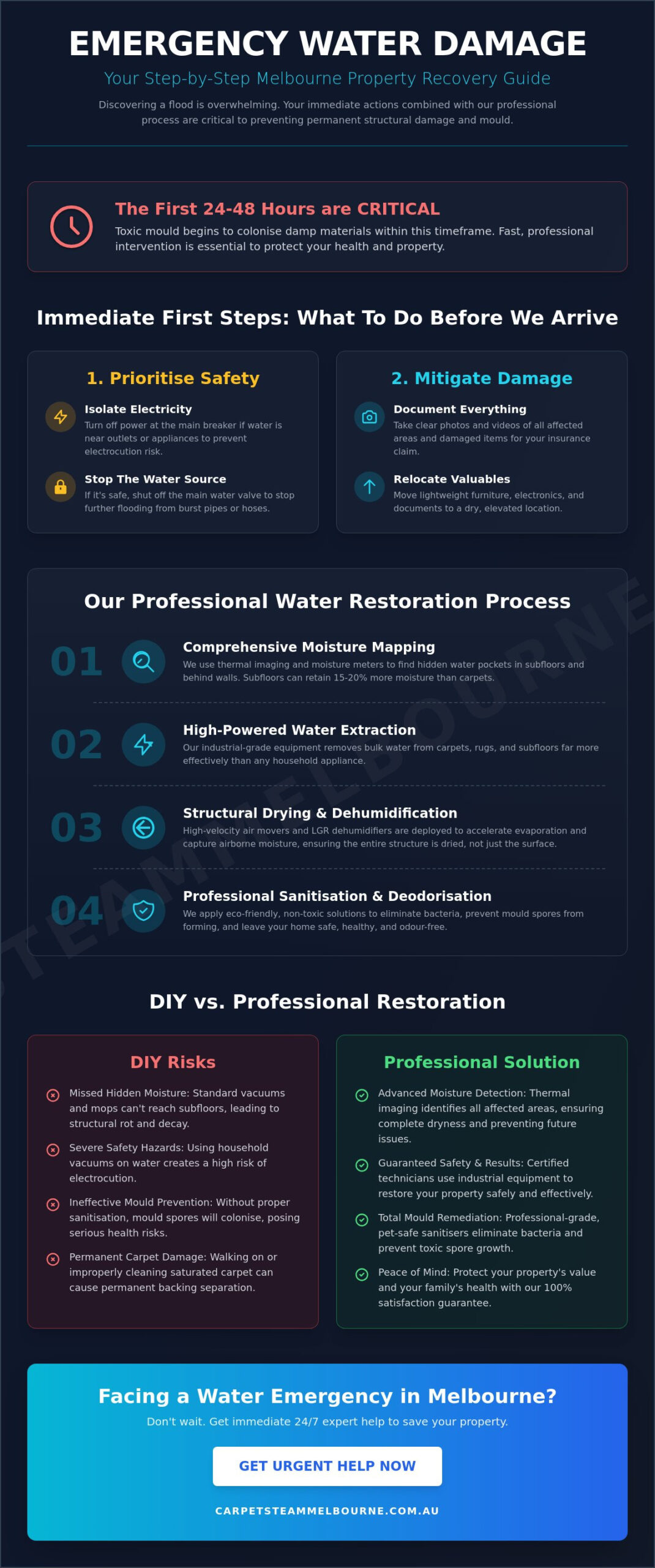
Discovering a flood in your Melbourne home is an overwhelming experience. You need to act fast to minimize long-term structural issues and mould growth. While you wait for our water restoration experts to arrive, your immediate actions can save thousands in repair costs. Most property damage escalates within the first 24 hours, so taking these specific steps provides the best chance for a full recovery.
Prioritise your family’s safety first. Turn off the electricity at the mains immediately if water is anywhere near power outlets, submerged cables, or appliances. If you can safely reach the source, such as a burst pipe or a leaking washing machine, shut off the main water valve to stop the flow. For more technical background on why rapid response is vital, you can consult this comprehensive guide to water damage which details the various stages of property saturation.
Once the area is safe, grab your phone. Document every inch of the affected space with clear photos and high-definition videos. Your insurance provider requires this evidence for a successful claim. After documenting, start moving lightweight furniture, electronics, and sensitive documents to a dry, elevated area. It’s vital that you don’t walk on wet carpets more than necessary. Walking on saturated fibres can cause the backing to separate from the pile, leading to permanent structural failure of the floor covering.
Safety and Hazard Assessment
Look up before you enter a flooded room. Check for sagging ceilings, as these indicate heavy water trapped in the roof cavity. This poses an immediate collapse risk that requires professional extraction. You must also verify the water category. Clean water from a burst tap pipe is lower risk, but “black” water from sewage or external flooding is hazardous. If you suspect contamination, wear protective gloves and a mask. Our water restoration team uses industrial-grade sanitization to handle these biohazards safely.
Initial Mitigation Actions
Use clean towels to soak up surface water on hard floors. Never use a standard household vacuum to suck up water; this creates a severe electrocution risk and will destroy the motor. Open your windows to increase ventilation if the Melbourne weather is clear and dry. This helps lower the indoor humidity. Finally, lift floor-length curtains off the ground. Pin them up or drape them over the rod to prevent permanent staining from wet floorboards or bleeding carpet dyes.
The Professional Water Restoration Process: Extraction to Sanitisation
Effective water restoration requires more than just a mop and a bucket. When your Melbourne home suffers a leak or flood, speed is the most critical factor in preventing permanent damage. Our local experts follow a rigorous four-step recovery process to ensure your property returns to a safe, healthy state. We act fast to protect your investment and your family’s health.
- Step 1: Comprehensive moisture mapping using thermal imaging and moisture meters to find hidden pockets of water.
- Step 2: High-powered water extraction to remove bulk liquid from carpets, rugs, and subfloors.
- Step 3: Industrial-grade structural drying using high-velocity air movers and LGR dehumidifiers.
- Step 4: Professional sanitisation using non-toxic solutions to kill bacteria and prevent mould spores.
Advanced Moisture Detection
Surface appearances are often deceptive. A carpet that feels dry to the touch doesn’t mean the subfloor or the wall cavity is safe. In many cases, subfloors retain 15% to 20% more moisture than the surface material, which leads to structural rot if ignored. We use thermal imaging as a non-invasive way to find hidden leaks by detecting temperature variations behind plasterboard and under floorboards. Our team uses precision moisture probes to monitor the drying progress over the critical 48-72 hour recovery window. We don’t stop until every reading meets the dry standard for your specific building materials.
Industrial Drying Technology
We focus on structural drying rather than just drying the surface carpet. Our technicians deploy industrial air movers that create high-velocity airflow across wet surfaces. This process accelerates evaporation by stripping away the layer of saturated air sitting directly above the floor. To manage this evaporated moisture, we use LGR (Low Grain Refrigerant) dehumidifiers. These machines pull water vapour from the air to prevent secondary damage, such as warped timber furniture or peeling paint. While our equipment works, you can review the official FEMA flood safety guide to ensure your family remains safe from electrical hazards and contaminated water during the recovery phase.
Once the structure is completely dry, we apply professional sanitisation. This step is vital because stagnant water can host dangerous pathogens within hours. We use eco-friendly, pet-safe treatments that kill 99.9% of bacteria and neutralise odours at the source. This deep-cleansing approach ensures your home isn’t just dry, but truly healthy. If you’ve discovered a leak, don’t wait for mould to grow. Get a professional water damage assessment today to secure your property with our same-day service guarantee.
DIY vs. Professional Restoration: Making the Right Choice for Your Home
Speed is the most critical factor when your home faces water damage. You have a strict 48-hour window to dry your property before permanent mould infestation and structural decay begin. While a quick mop-up might seem sufficient, professional water restoration provides deep-cell drying that household tools cannot achieve. Failing to extract moisture from the subfloor often results in “wet dog” odours and expensive structural rot that can cost thousands of AUD to repair later.
Health risks are a major concern for Melbourne families. Following EPA guidelines on flood cleanup is vital for maintaining indoor air quality and preventing respiratory issues caused by hidden spores. Professional teams use industrial-grade dehumidifiers and moisture probes to ensure your home is truly dry, not just dry on the surface.
When is DIY Safe?
DIY efforts are only appropriate for small “Category 1” incidents. This refers to clean water from a broken pipe or a sink overflow that covers less than 2 square metres. You can manage these situations if the water hasn’t reached the underlay or subfloor. Basic surface cleaning works well for minor upholstery drips or small spills on tiled areas where the liquid is easily contained and dried within an hour.
When You Must Call a Professional
Don’t risk your health with “grey” water from washing machines or “black” water from sewage backups. These contain pathogens that require professional sanitisation. If flooding reaches your skirting boards or spreads across multiple rooms, professional flood damage restoration melbourne is essential. This ensures you get insurance-backed results and a 100% satisfaction guarantee on the recovery process. In more serious incidents involving contaminated water or hazardous materials, understanding the facts around professional scene cleanup in Melbourne can help you make safer, more informed decisions about when DIY approaches fall dangerously short.
Choosing a professional service also safeguards your insurance claim. Most Australian insurers require detailed reports from IICRC-certified technicians to validate a claim. Our local experts provide the necessary documentation and moisture readings to prove the job was done to Australian standards. Consider the cost-benefit: a professional extraction service is a small investment compared to the A$10,000 or more it costs to replace entire sections of floorboards and wall framing. We offer same day service to Melbourne residents to stop damage before it becomes a permanent financial burden. For a comprehensive step-by-step approach to documenting your property and meeting the latest national standards, review our water damage restoration Melbourne 2026 recovery checklist to ensure your claim and recovery process are handled correctly.
- IICRC Certification: Ensures technicians follow global standards for water restoration and safety.
- Industrial Equipment: High-speed air movers dry properties 4 times faster than domestic fans.
- Thermal Imaging: Detects hidden pockets of moisture behind walls that lead to structural failure.
- Non-toxic Sanitisation: Uses pet-safe and eco-friendly solutions to kill bacteria without harming your family.
Restoration Challenges Specific to the Melbourne Climate
Melbourne’s temperamental weather creates unique hurdles for property recovery. Effective water restoration requires more than just sucking up puddles; it demands a deep understanding of local atmospheric conditions. From the damp winters of the Dandenongs to the flash floods in the flat Western Suburbs, every local environment dictates a different technical approach.
Humidity and Evaporation Rates
During Melbourne winters, the average relative humidity often climbs above 75%. This level makes natural evaporation nearly impossible for a soaked property. Without professional heat drying, moisture stays trapped in floorboards and structural timbers. This leads to “secondary damage,” where high humidity triggers mould growth on walls and ceilings within 48 to 72 hours. Our local experts monitor daily Bureau of Meteorology (BOM) forecasts to calibrate industrial dehumidifiers and air movers. We adjust our equipment based on real-time data to ensure your home reaches the dry standard as quickly as possible.
Local Suburb Considerations
Specific geographic factors impact how we manage water restoration across different zones. Suburbs like Rockbank and Point Cook face high risks of flash flooding during the spring storm season between October and December. Rapid urban development in these growth corridors sometimes leads to drainage bottlenecks in “new build” estates. In areas like Aintree, heavy rain can overwhelm local systems, pushing water into garages and ground floors unexpectedly. Once the standing water is removed, professional carpet steam cleaning Aintree services are essential to sanitise the fibres and remove bacteria carried in by floodwaters.
- New Build Drainage: Growing corridors often have settling soil that can impact external drainage pipes.
- Older Home Dampness: Properties in established areas often suffer from poor subfloor ventilation, leading to rising damp after heavy rain.
- Western Suburbs Flash Flooding: Flat terrain in Rockbank and Aintree makes these areas prone to fast-moving surface water.
Navigating Victorian insurance requirements is another critical step. Most local insurers require a comprehensive water damage report that includes moisture readings and thermal imaging. We provide this documentation to help speed up your claim process. Our team understands the specific standards set by the Victorian Managed Insurance Authority (VMIA) and private insurers alike. We focus on getting your home safe and dry while ensuring you have the paperwork needed for a successful recovery.
Don’t let moisture linger in your home. Contact our Melbourne experts for a professional water restoration assessment and get your property back to its best state today.
Why Best Carpet Steam Cleaning Melbourne is Your Restoration Partner
Choosing the right team for water restoration determines whether your property recovers fully or suffers permanent structural damage. Best Carpet Steam Cleaning Melbourne operates a 24/7 emergency response team that serves all of Melbourne and surrounding Victoria. We understand that flood water doesn’t wait for business hours. Our technicians arrive equipped with industrial-grade high-pressure extraction units to remove standing water before it seeps into structural foundations or wall cavities.
We combine our deep expertise in carpet steam cleaning melbourne with advanced, complex flood recovery protocols. This dual approach ensures your floors aren’t just dry, but also hygienically clean and safe for your family. Our team provides direct assistance with insurance documentation and professional damage assessments. We supply the detailed reports your provider needs to streamline the claims process. You get a professional and affordable solution that prioritises your home’s safety and your peace of mind.
Certified Technicians and Local Expertise
Our philosophy focuses on restoration over replacement. This approach saves Melbourne homeowners thousands of dollars by salvaging high-quality carpets and underlays that other companies might simply discard. We use 100% non-toxic and pet-safe sanitisation agents to treat every surface after water removal. Since we are a local Rockbank-based team, our response times are significantly faster than national franchises. We offer a 100% satisfaction guarantee because we know our local community relies on our results. Your family’s health remains our top priority during every step of the water restoration process.
Booking Your Emergency Service
Requesting an urgent quote is simple and fast. Contact our dispatch team, and we will provide a site inspection immediately. Same day service is our standard, not an exception, because we know the clock is ticking. Here is what you can expect during the first 60 minutes of our arrival:
- Full moisture mapping of the affected area to find hidden dampness.
- Immediate deployment of high-volume water extraction pumps.
- Detailed briefing on the recovery plan and estimated timelines.
- Application of eco-friendly antimicrobial treatments to stop bacteria.
Secure your property now before mould begins to grow, which typically happens within 24 to 48 hours of the initial soak. Call our expert team today to protect your investment and restore your home to its original condition. We are ready to help you recover quickly and effectively.
Secure Your Melbourne Home’s Recovery Today
Acting fast is the most important step you can take when dealing with unexpected flooding. Melbourne’s high humidity levels can lead to visible mould growth in as little as 24 to 48 hours, so waiting even one day increases the risk of permanent structural damage. Professional water restoration goes beyond surface drying by removing trapped moisture from subfloors and wall cavities that DIY methods often miss. This thorough approach prevents long-term decay and ensures your property remains a safe environment for your family.
Our IICRC-trained technicians provide a 24/7 emergency response across all Melbourne suburbs to tackle these issues immediately. We use eco-friendly and pet-safe sanitisation products that are tough on bacteria but gentle on your household. You can rely on our local experts to handle the heavy lifting with efficient, professional, and affordable service. Don’t let water damage linger when expert help is just a phone call away.
Contact Best Carpet Steam Cleaning Melbourne for 24/7 Emergency Water Restoration
We’re ready to help you restore your peace of mind and your home’s health today.
Frequently Asked Questions
How long does the water restoration process typically take in Melbourne?
Most water restoration projects in Melbourne take between 3 and 5 days to complete. The first 24 hours focus on urgent water extraction, while the remaining time involves industrial dehumidification and air moving. We monitor moisture levels daily using thermal imaging to ensure every layer is dry. This specific timeframe prevents structural damage and stops mould growth before it starts.
Will my insurance cover the cost of professional water restoration?
Most standard Australian home insurance policies cover professional water restoration for sudden events like burst pipes or appliance failures. You should check your Product Disclosure Statement for specific accidental damage clauses. We provide detailed digital reports and moisture readings to help streamline your claim. Contact your provider immediately to lodge the claim, as delaying the process can lead to secondary damage.
Can I stay in my house while the drying equipment is running?
You can stay in your home, but the industrial fans and dehumidifiers produce constant noise around 70 decibels. These machines must run 24 hours a day to be effective. The drying process also increases the indoor temperature to help evaporate moisture faster. If the water damage affects 50% or more of your living space, you’ll likely find it more comfortable to stay elsewhere.
What is the difference between clean water and black water restoration?
Clean water comes from broken pipes or rain, while black water contains sewage, chemicals, or rising floodwater. Black water restoration requires specialized PPE and high-level sanitization because it carries a 100% higher pathogenic risk. We categorize water into three classes based on the IICRC S500 standard. This determines whether materials like carpets can be restored or if they must be disposed of safely.
Is it possible to save a carpet that has been soaked for more than 48 hours?
Saving a carpet soaked for over 48 hours is difficult because bacteria levels double every 20 minutes in moist environments. If the source was clean water, we use deep-cleansing steam methods and antimicrobial treatments to salvage the fibres. However, if the backing has delaminated or the water was contaminated, replacement is the safest option. Our Melbourne team assesses the carpet’s integrity to give you an honest recommendation.
Why does my room smell musty even though the carpet feels dry?
A musty smell indicates that moisture remains trapped in your underlay or subfloor, even if the top fibres feel dry. Mould can begin growing within 24 to 48 hours in these hidden layers. We use professional moisture probes to detect these pockets of dampness that aren’t visible to the eye. Our non-toxic sanitization process eliminates these odours at the source rather than just masking them.
How much does emergency water extraction cost in Melbourne?
Emergency water extraction in Melbourne typically starts with a call-out fee ranging from A$300 to A$600, depending on the time of day. Total costs fluctuate based on the volume of water and the equipment required for the specific class of damage. We offer professional and affordable rates with transparent quotes before work begins. This ensures you receive high-quality service without unexpected financial stress during an emergency.
Do I need to replace my underlay after a flood?
You almost always need to replace your underlay after a flood because it acts like a giant sponge. Standard foam underlay loses its structural integrity and traps bacteria once it’s saturated. Replacing the underlay is a cost-effective way to ensure your floor is 100% sanitized and free from future mould issues. We provide same-day service for underlay removal and subfloor drying to protect your home environment.
